Toward the Light
Post outline
- God and religion
- Natural religion
- Monotheism
1. God and religion
- God (aka the quantum vacuum, consciousness, Akasha, the Force, etc) is our Creator.
- We are all religious, even so-called atheists. The word “religion” comes from the Latin “religio” which means a state of obligation, reverence or adoration. In this sense we are all religious. In particular, Marxism, socialism and multi-racialism is hard core religion; it demands total faith, submission and obedience.
- Ultimately all that matters is the extent to which our religion is biologically viable — for our race, species and the Nature upon which all our lives depend.
- If the flow of spiritual Force via organic religious roots is corrupted, we can die as a nation, race and species.
- Viable religion cannot be contrived or forced onto people. The violent imposition of an alien Semitic religion (Christianity) onto Europeans, who in turn corrupted the successful religions of non-Europeans, has had disastrous consequences for people and Nature.
- Viable religion is race-specific. Personality (habitual ways of thinking, feeling and behaving), including its religious expressions at individual and group levels (nation, race, species), is genetically predisposed, i.e. organic religion is the result of evolutionary processes.
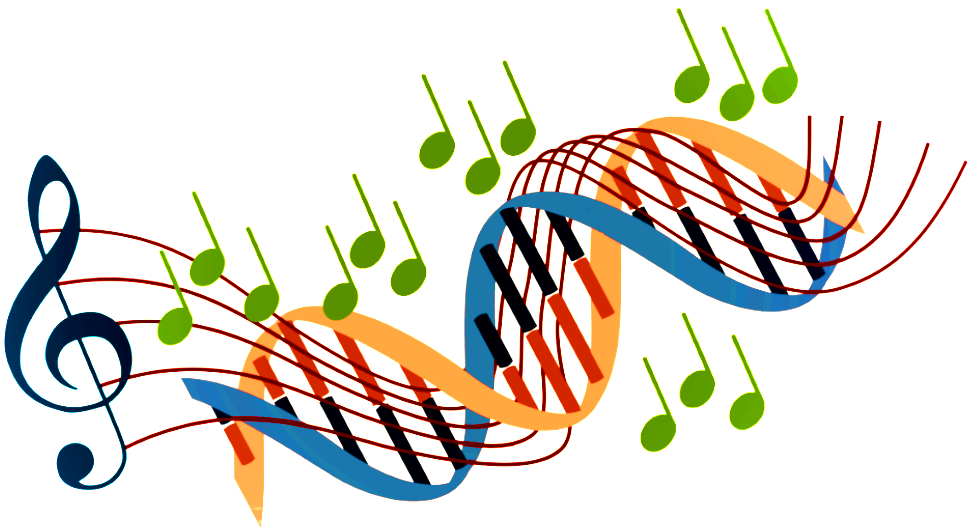
- It seems that our genome serves a ‘barcode’ function, with access to the collective unconscious (God etc) determined by our DNA structure.
- Within this evolutionary process, the activities of individual organisms transform the collective unconscious.
- In other words, our God / gods are evolving and a viable religion would evolve accordingly.
- In Jungian psychology these genetically predisposed ideas, images and patterns of thought are called archetypes.
(References in the post Odinism and recovery from the Christian catastrophe)
2. Natural religion
- Natural religion (paganism), particularly the highly sophisticated natural religion of Europeans (Odinism, Wotanism) is essentially a profound understanding of the laws of Nature and of our purpose in life.
- The gods and other icons symbolize humankind’s struggle from egocentric limitations toward the highest evolutionary levels of super-conscious awareness.
- Odinism is the religion of our Forebears. It was the main religious belief over all northern Europe and part of the central regions as well as the British Isles, i.e. Odinism is the ancestral religion of many or most people living in what are now Norway, Sweden, Denmark, Iceland, England, Scotland, Ireland, Wales, France, Belgium, the Netherlands, Germany, Russia, Austria, northern Italy and Spain.
- Odin (Wotan) is the central figure in this religion. The name Odin is etymologically connected with the Latin “vadere” and means movement, or source of movement, power, a manifestation of the highest god as ‘the mover of things’. He is the supreme god, god of Heaven, Heaven itself; the fountain-head of wisdom and founder of poetry, writing, and culture; lord of battle and giver of the highest blessings, especially of victory; later, of magic and sorcery. His is the creative power: out of Ash and Elm he made man and woman.
- All peoples of ancient times were pagan: the Mesopotamians, Egyptians, ancient Greeks, Romans, and Teutons (Germanic peoples — their modern representatives include the Germans, Dutch, Flemings, Danes, Swedes, Norwegians, Icelanders, Anglo-Saxons of England and lowland Scotland, and all their descendants in the New World), Celts and Slavs.
- The polytheistic Hindu and Shinto faiths of India and Japan respectively, are forms of paganism that survived into modern times, as are the animist religions of sub-Saharan Africa.
- Polytheism (the belief in many gods and goddesses) is a common feature of ancient religions. These pagan or ‘natural’ religions are in contrast to the ‘prophetic’ or ‘revealed’ religions founded much later by individuals like Confucius, Buddha, Moses, Jesus and Mohammed.
- Paganism is the only universal form of religion.
(References in the post Odinism and recovery from the Christian catastrophe)
Further to the last point above, the universality of paganism extends beyond Earth. As was shown in the post The Code, there is historical support for equating Odin with Anu, the supreme god in the natural religion of the Anunnaki (highly advanced extraterrestrial beings).
3. Monotheism
As Stanley Wilkin (2019), University of London, states in Jesus and Bel Christianity and the Continuation of Paganism:
- All monotheistic religions (e.g. Christianity) have similar backgrounds.
- Believers in the monotheistic religions feel certain that their religion is the finest and final religious expression.
- However, their religious institution primarily concerns power.
- Monotheistic religions are concerned with control and little more.
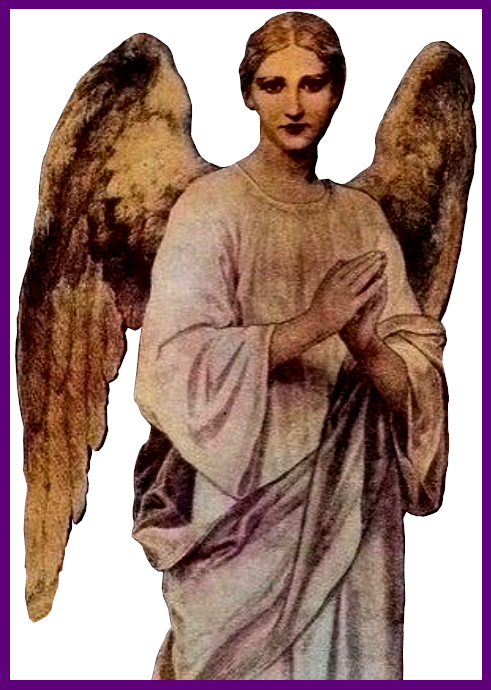
Wilkin (2019) also notes that the Anunnaki are commonly depicted with wings, and the concept of winged angels can be traced to the Anunnaki.














 Aspects of Mind