Toward the Light

Thank you for visiting this site!

I am now setting up a new site, Toward the Light. It’s still far from complete but I think it’s time to share the link.

My aim with the new site is to update information from this site and to post articles on new subjects.

Perhaps you would like to look at the new site. If you like it, you might want to subscribe.

It seems unlikely that I will post anything more on this site. In particular, I shall continue the Family from afar series on the new site. The four FFA articles to date are already on the new site and I intend posting more articles in that series soon.

I hope to see you soon at Toward the Light!

Kind regards,
AoM

Family from afar 4: Symbols of our gods

Pleiades — central to our true religion

Previous posts in this series:
Family from afar 1: Long-heads of Europe
Family from afar 2: Long-heads of Asia
Family from afar 3: Long-heads of America

This post concerns ancient religion, art, and symbols of relevance to the next post, Family from afar 5: Long-heads of Egypt.

Post outline

  1. ET god symbols: an Egyptian sculpture
  2. ET god symbols: an Egyptian tomb
  3. ET god symbols: Rapa Nui and Tula sculptures
  4. ET god symbols elsewhere
    4.1 Turkey: Karahan Tepe
    4.2 Turkey: Gobekli Tepe
    4.3 Turkey: Nevali Cori
    4.4 Mexico
    4.5 Bolivia
    4.6 Mesoamerica: Mayans
    4.7 Other
  5. References
  6. Appendix

1. ET god symbols: an Egyptian sculpture

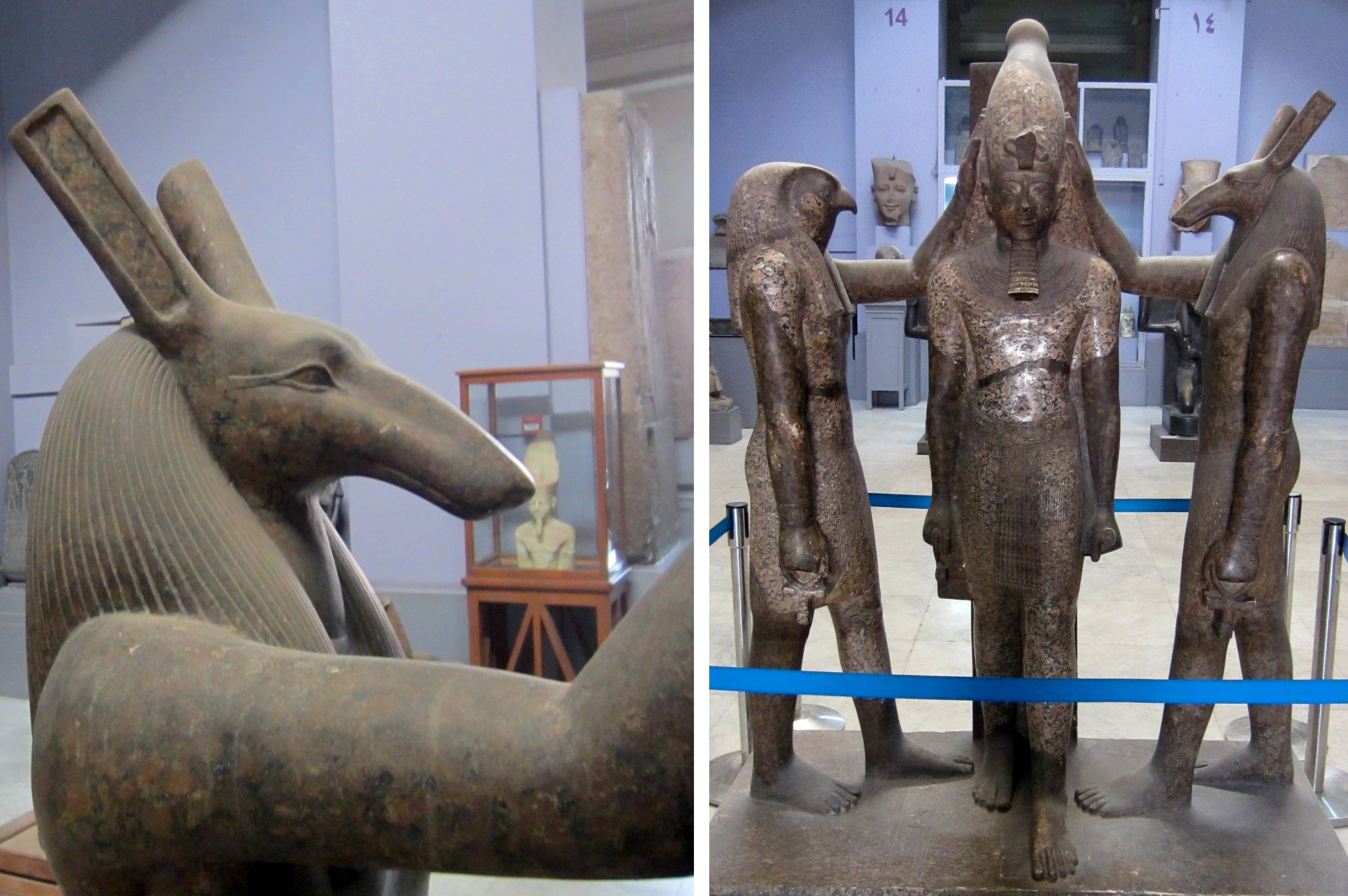
According to ancient Egyptian religion, the god Set (Seth, Setekh, Sut, Sutekh, Sety) had white skin and red hair, and people with red hair were his followers.1 Set is one of the most ancient Egyptian gods, the son of Nut and Geb, and the brother of Osiris, Horus the elder, Isis, and Nephthys.1 The earliest known representation of Set is on a carved ivory comb from the Amratian period (Naqada I, from c. 4,000 to 3,500 BCE).1,2

Set was most often depicted as a “Set animal” or a man with the head of a Set animal. There is no consensus about what exactly this animal is.1,2


Set and Horus crowning Ramesses III

Notable symbols in this sculpture include Set’s long geometric ears and the Ankh.

Long ears

The shape of Set’s ears comprise the rectangle (shape of the exterior and the interior) and the semicircle (the mound shape along the back of the ear). The square, or where necessary the rectangle, corresponds to the cross formed by the four cardinal points (north, south, east, west). Therefore the rectangular shape (outline and inner depression) of Set’s ears represents the conjunction of opposites (positive – negative, superior – inferior, life – death) and spiritual ascension.3 As this shape occurs in the ear, including the interior of the ear, the transcendence and spiritual ascension is by means of spiritual hearing.

In Egyptian hieroglyphics a semicircle with a base (the shape of Set’s ears if observed from the ends) refers to the sun’s orbit. It symbolizes the Origin counterbalanced by the End, or birth counterbalanced by death.

In combination, the rectangular and semicircular shapes of Set’s ears symbolize transcendence and spiritual ascension by spiritual hearing in worldly life and upon departure from this realm.

The Ankh


The Ankh

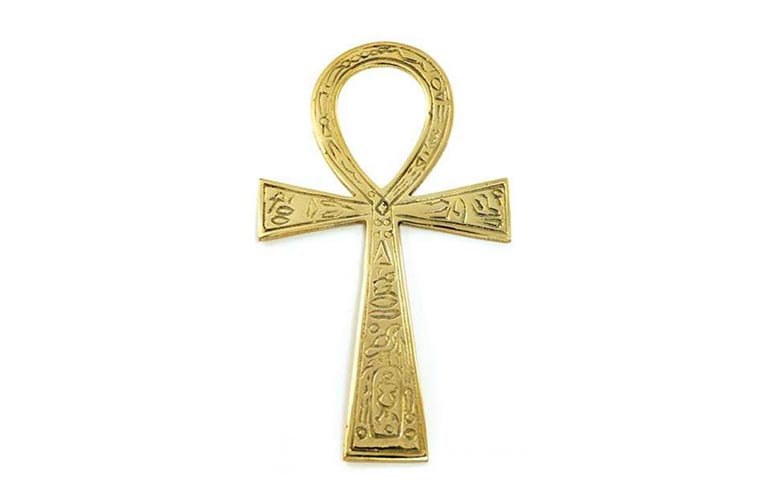
The Ankh represents eternal life. It was often used in Egyptian tomb paintings and other art, and it was associated with the cult of Isis.4 As a form of cross, the Ankh represents conjunction of opposites (positive – negative, superior – inferior, life – death) and spiritual ascension.3

2. ET god symbols: an Egyptian tomb


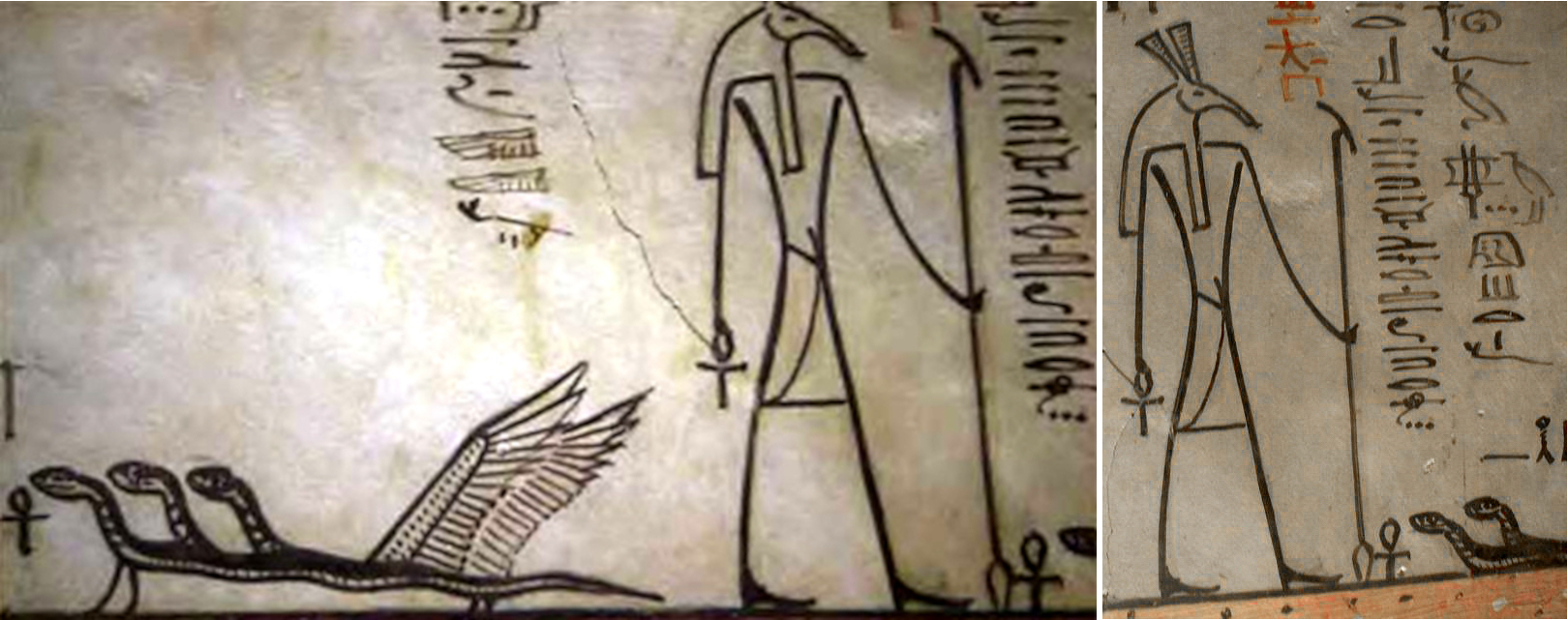
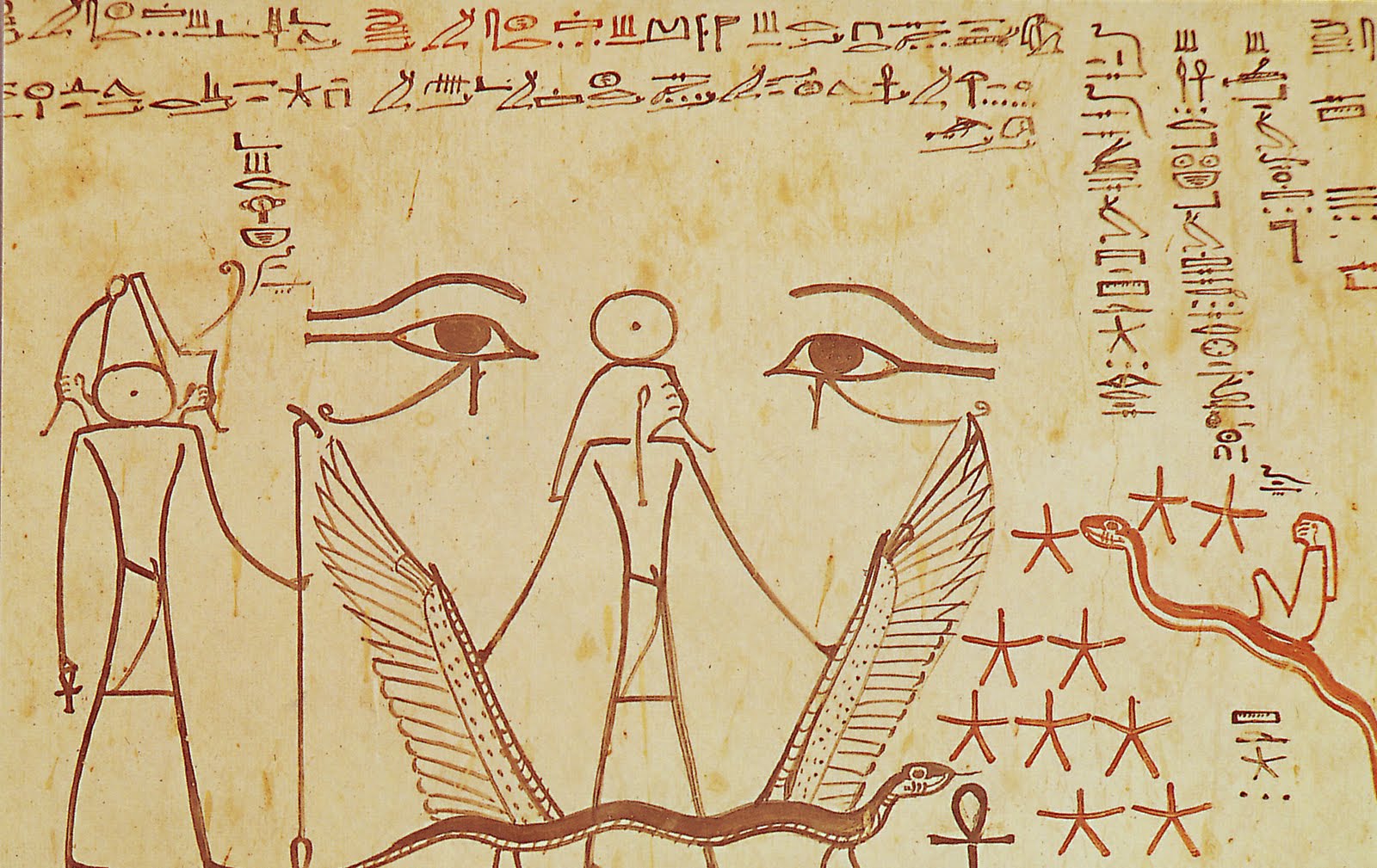
Mural 1. A mural from the tomb of Thutmose III


Mural 2. Another mural from the tomb of Thutmose III

Mural 1

Notable features in this image include (a) the representation of Set (identifiable by his head), (b) the Ankh in Set’s right hand (also near his left foot and elsewhere), (c) the ‘Was’ symbol (the staff in Set’s left hand), (d) serpents (snakes approaching Set on the ground, and three winged snakes taking flight to his rear), and (e) a pair of wings (above the snakes’ wings).

Mural 2

Notable features in this picture include (a) Set (identifiable by his ears), (b) the Ankh in Set’s right hand (and elsewhere in the picture), (c) the ‘Was’ symbol (the staff in Set’s left hand), (d) a winged snake whose wings are held onto by Thutmose III, (e) a snake that seems to be flying upward with Thutmose III sitting on its back, (f) a large circle with a dot centre above the head of Thutmose III in the centre of the picture and another such circle behind the head of Set, (g) a large pair of stylized eyes within the space occupied by the person holding onto the snake’s wings, (h) twelve symbols (eleven ‘stars’ with five points and the Ankh) clustered in the area of the snakes’ heads (direction of travel), and (i) symbols directly below the seated person’s feet (from top to bottom): a horizontal rectangle containing seven vertical marks, the Egyptian hieroglyphics symbol for a hemisphere, a ‘star’, and three horizontal dots.

Set, long ears, and the Ankh are discussed above. The remaining symbols of greatest relevance to this article are discussed below. The other symbols referred to in Mural 2 (large circles with dot centres, the eyes, eleven ‘stars’ and the Ankh, and the symbols directly below the seated person’s feet) are discussed in the Appendix.

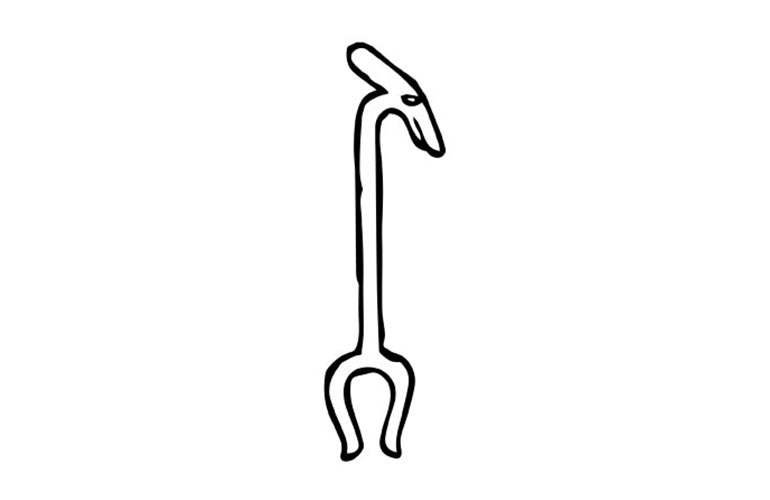
The ‘Was’


The ‘Was’ symbol

The crooked top of the staff represents the shape of Set’s head. The staff symbolizes power, the dominion of gods, and the continuance of a king’s prosperity.4

3. ET god symbols: Rapa Nui and Tula sculpture


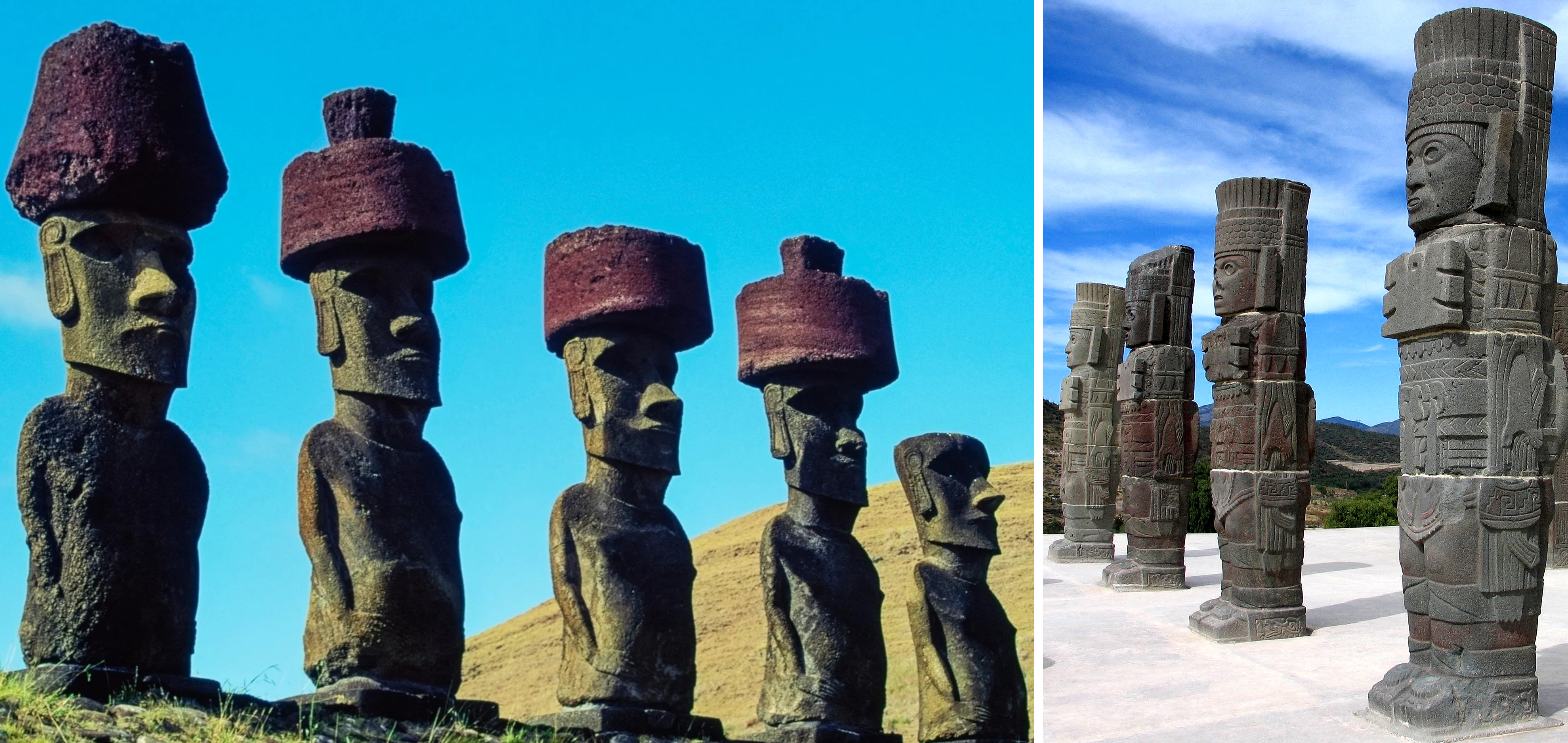
Statues of Rapa Nui and Tula

The monolithic human figures on Rapa Nui (Easter Island) were carved by the Rapa Nui people between the years 1,250 and 1,500 CE.5,6 The massive statues (“Atlantean figures”) in Tula (now the southwest of the Mexican state of Hidalgo) are in what was the ancient capital of the Toltec civilization, which ruled Mexico and flourished from about 850 to 1,150 CE.6

The Rapa Nui and earlier Atlantean figures are similar in that they both show beings with long ears. Further, the rectangular long ears of the Atlantean figures are comparable to the rectangular long ears of Set in the sculpture pictured above.

Alexander Koltypin is eminently qualified to write on this subject. He graduated with honours from the Moscow Geological Prospecting Institute of S. Ordzhonikidze, participated in geological expeditions for fifteen years, published many popular science books, was editor-in-chief for several science magazines, is Director of the Scientific Center of Fundamental Researches in Natural Science at the International Independent University of Environmental and Political Sciences (IIUEPS), is a member of the Academic Council of IIUEPS, a member of the editorial board of the bulletin MNEPU and other scientific works, and for many years Mr Koltypin has collected, analyzed and systematized scientific data on different aspects of the Unknown, with findings that went far beyond the bounds of traditional scientific theories and Internet pseudo-scientific hypotheses.7

Mr Koltypin’s research led him to write as follows in his article Long ears as a sign of divinity (Koltypin, 2010):8

  • The only surviving lifetime portraits of Aryan gods are the stone statues of long-eared beings on Rapa Nui. Those statues represent fair-skinned, white-bearded people, with the Aryan straight narrow nose, sharply outlined lips, protruding chins, and red hair (denoted by the red stone pukao — the element placed on top of the statues’ heads).
  • The Rapa Nui statues depict Aryan gods who descended to Earth at the end of the Mesozoic Era, i.e. about 66 million years ago. These long-eared white gods were so long-lived that humans saw them as immortal.
  • The gods’ lengthened ears represent acute worldly and spiritual hearing.
  • Almost all portraits of the white gods and demigods, as well as Buddhist saints, depict them as long-eared, very often with large, weighty earrings.
  • Statues, bas-reliefs and images of long-eared white gods (Indra, Varuna, Vishvakarman, Vaishvanara, Virochana and many others, named and unnamed) are found in India, Indochina, China, Polynesia, Melanesia, and South America.
  • To humans, the Aryan gods’ long ears were a sign of divinity. The custom of artificially lengthening ears was emulated by humans globally, including the inhabitants of Rapa Nui, the Marquesas Islands, Melanesia, and the ruling caste of the Incas.
  • The enormous influence of the Aryan gods on the populations around them can still be seen in humans of today.


Long ears in India


Long ears (and long heads) in Africa

4. ET god symbols elsewhere

Ancient peoples’ sky-god religion is attested to in many aspects of their lives, including their reverence for the snake. As of about 10,000 BCE, various versions of the sky-god religion sprang up around the world and they all associated the snake with gods and ultimately the Anunnaki, although these Aryan ET beings were often known by other names. The Sumerians associated the snake with the Anunnaki gods and the snake is found in legends and religious art in the Ancient Middle East, Egypt, Central Asia, North America, South America, West Africa, and East Africa.9,10,11

4.1 Turkey: Karahan Tepe

At Karahan Tepe (an archaeological site close to Göbekli Tepe, Turkey), a site dated to 11,000- 9,000-BCE,12,13 is art featuring snakes. The prominence of Karahan’s snake art indicates that the snake was especially significant to the local population. Further, the lines of zigzagging avenues of stones on the hill could represent the snake’s descent to the valley below. If so, this would symbolize a snake-like craft descending to Earth from the heavens.14


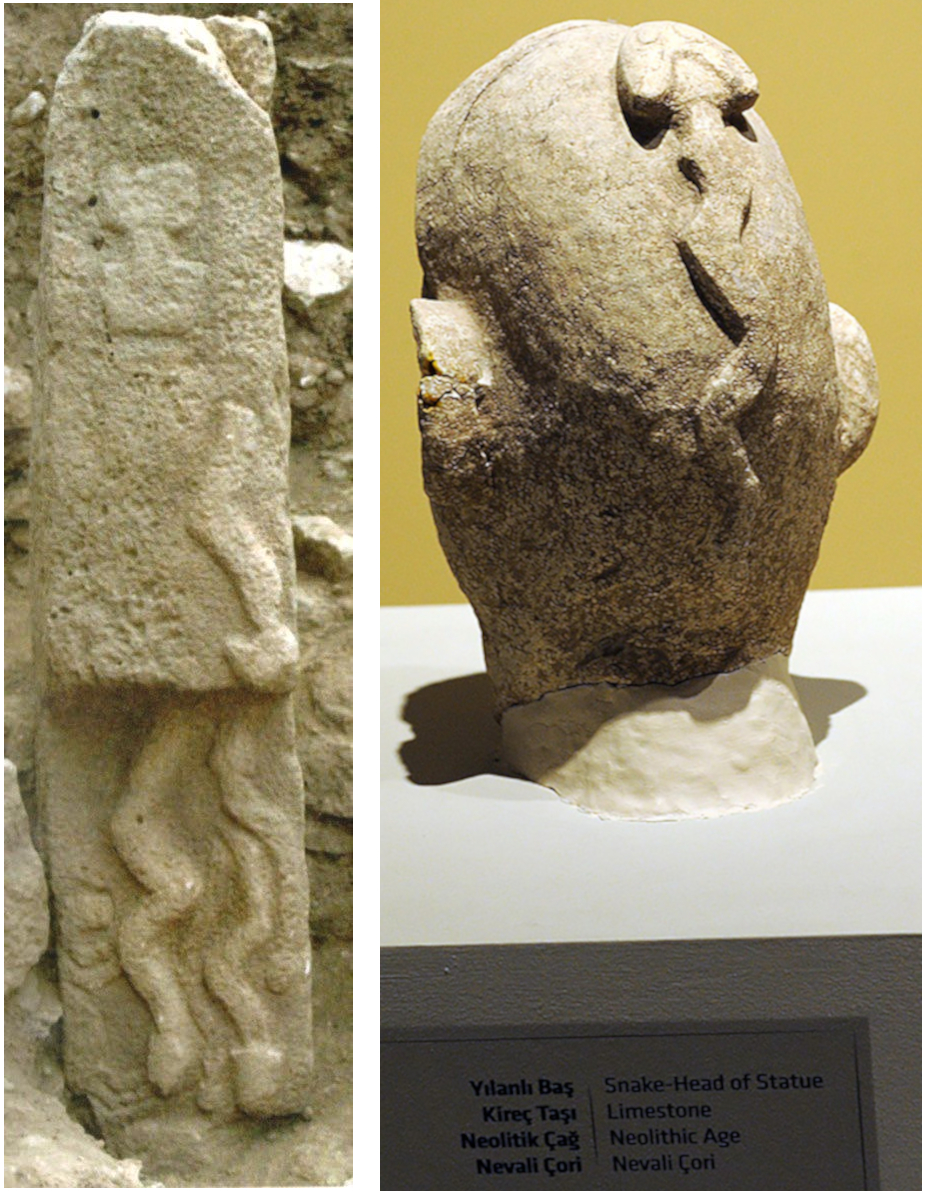
Carvings of snakes at Gobekli Tepe (L) and Nevali Cori (R)

4.2 Turkey: Gobekli Tepe

As at nearby Karahan Tepe, the snake is the creature most commonly depicted at Gobekli Tepe (‘Potbelly Hill’), a settlement in modern-day Turkey that was inhabited from c. 9,500 to at least 8,000 BCE.14,15 The following symbols are visible in the Gobekli Tepe carving shown above: (a) a relatively large upward-facing top part of a snake (viewed from underneath) that curves forward toward the front of its nose (the hooded snake shape and left eye are clearly visible), (b) an I-shape symbol (below the snake’s jaw-line) that is embodied by the snake, and (c) four smaller snakes below the I-shape. These symbols are discussed below.

  • Large snake
    The relatively large size and skyward orientation of this snake suggest a supreme god, namely the sky god or sky father known as An (Sumerian) and Anu (Akkadian) of the Anunnaki16 and which is likely represented by the huge face sculpture in the Cydonia region of Mars (image and explanation in the post Family from afar 1: Long-heads of Europe). However, perhaps more likely considering that the smaller snakes seem to be leaving from and returning to the large snake, the large snake represents a mother-ship from which the smaller craft operate.
  • Symbol I
    The symbols H and I are the same basic shape (one is the other turned 90 degrees), H is a double T, and T indicates the connection of below with above and then the Cosmos. To clarify, the T forms half of a cross, with the other half in the spirit world. Many of the Mayan temples have T-shape windows and doorways to represent portals into the spirit world.17
  • Four snakes
    The four snakes have dome-like heads, similar in shape to that reported in some anti-gravity craft sightings. However, the heads most likely represent disc-shape ET craft with a trail from the sides and rear. Three of the snakes / craft are descending, and one (bottom right) is ascending. As was noted above in relation to the large snake, it seems most likely that these craft are shown leaving from and returning to a mother-ship, represented by the large snake.

This carving represents snake-like ET craft, most likely a mother-ship and smaller craft, that arrived in the vicinity of Earth from the cosmos.

4.3 Turkey: Nevali Cori

Another early example of the culturally important snake was found at the now flooded Nevali Cori, an early Turkish site in Hilvan Province that is dated to 8,400-8,000 BCE. Among the statues and artefacts discovered at Nevali Cori is a life-size stone sculpture of a humanoid head with a snake against the back of the head and the snake’s head against the top of the humanoid head.14 The humanoid head and snake are shown in the image above.

As with the snake symbols discussed above in relation to Gobekli Tepe, it is notable that the shape of the snake’s head is dome-like (as reported in some anti-gravity craft sightings), but the shape most likely represents a disc-shape ET craft with the rear obscured by a comet-like trail. It is also apparent that there are four circles around the perimeter of the snake’s head. Concerning the meaning of these circles, the circle denotes oneness, wholeness, cosmos, the sun, and it can also be associated with the number twelve, e.g. the twelve signs of the zodiac and the twelve major gods of many natural religions.3 In the present context, it seems most likely that the circles refer to the craft’s origin in the cosmos.

Concerning the humanoid head shape, it is notable that the head is narrow with a pronounced ‘occipital bun’. This suggests that the sculpture is of someone with a long head, i.e. the head is dolichocephalic (this subject is discussed in the post Family from afar 1: Long-heads of Europe). This head shape of an apparent god is interesting in view of other evidence (the long skulls of people who were apparently close descendants of the Aryan gods) indicating that the gods had long heads and bigger brains than humans of today.

Due to its close association with a snake (especially a snake with an ET craft-shape head with circles suggesting a cosmic origin, and what looks like a long-head humanoid), this sculpture represents an ET god, specifically an Aryan god of the ET race known as the Anunnaki.

4.4 Mexico


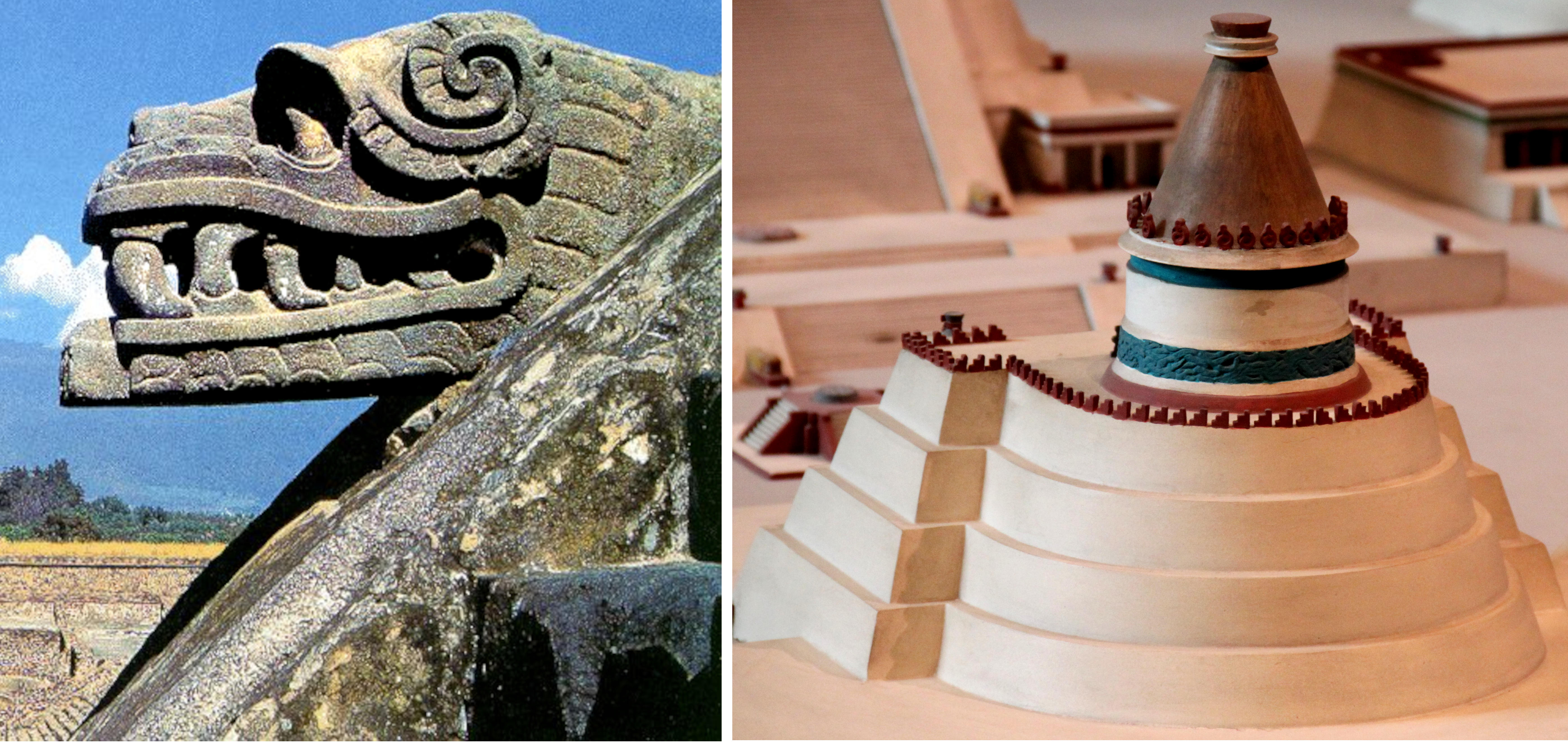
L Temple of the Feathered Serpent in Teotihuacan, R Model of Quetzalcoatl’s temple in Tenochtitlan

The Temple of the Feathered Serpent is in Teotihuacan, Mexico, and the model is of Quetzalcoatl’s temple in Tenochtitlan, Mexico.

The name Quetzalcoatl means “the feathered serpent” and according to the Aztecs (a civilization that flourished in central Mexico from 1,300 to 1,521 CE) Quetzalcoatl is a white, white-robed, bearded man who carries a sceptre, and he will return when a comet is seen in the heavens.11

Quetzalcoatl’s ‘sky/serpent temple’ in Tenochtitlan (shown as a model above) was an Aztec representation of a space craft. It was in the form of a cylinder on a pyramid base with its entrance in the shape of a snake’s open jaws. When the Aztecs celebrated the god Quetzalcoatl, the priest or person representing him emerged before the congregation of worshippers from a ‘flying, circular object’ which had long ago been seen as a snake flashing across the sky.11

This flying object-snake association is consistent with the name for comets in Mexico: in Mexico comets were called ‘flaming serpents’.11 This flying object-snake association is also evident in the Bible (Isaiah 14:29): “Rejoice not thou, whole Palestina, because the rod of him that smote thee is broken: for out of the serpent’s root shall come forth a cockatrice [a serpent hatched from a cock’s egg and having the power to kill by its glance], and his fruit shall be a fiery flying serpent.” (King James Bible)

4.5 Bolivia


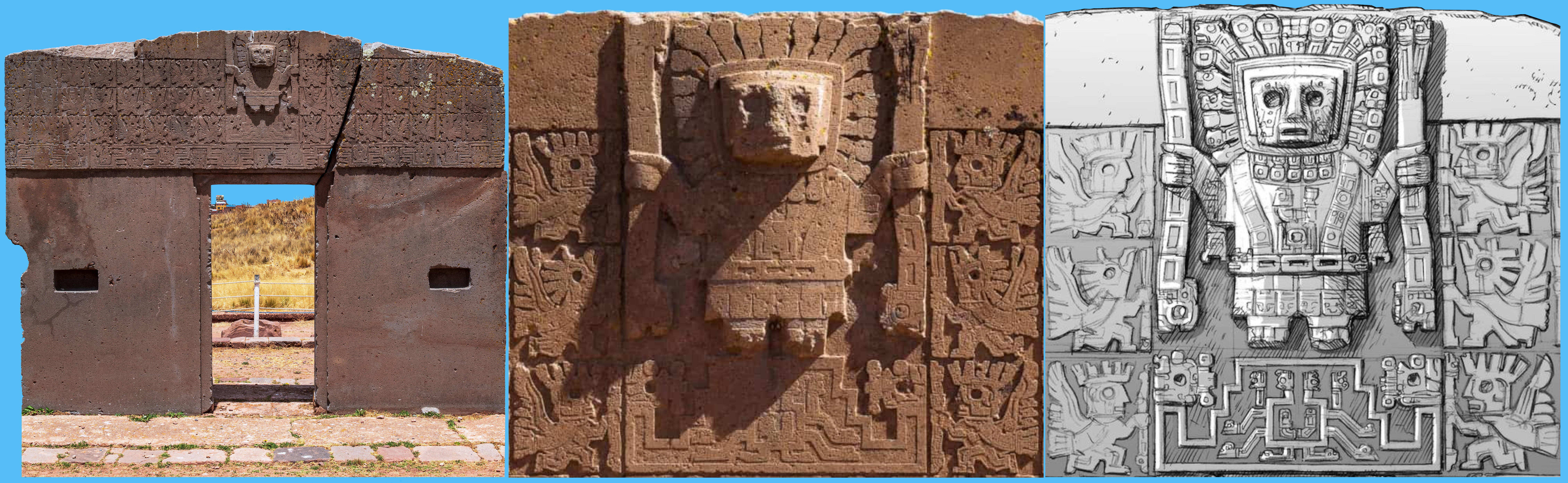
The Gate of the Sun in Tiwanaku

The Gate of the Sun is a monolithic gateway at the site of Tiwanaku in Bolivia where an Andean civilization of Bolivia thrived around Lake Titicaca from about 500-950 CE.18 However, the Gate of the Sun has been dated to 300 or 200 BCE or possibly about 110 CE.19,20,21,22 The above images show a full front view of the gate, a section of the gate with the god and some surrounding features, and an artist’s illustration that shows details of that section more clearly.

The Gate of the Sun is the best-known surviving example of a solar structure. It features carvings of deities and astronomical symbols of the Tiwanaku pantheon. The gate is part of a greater astronomical complex with massive stone pillars and ruined buildings, all aligned to the June and December solstice sun rise and set.23

The central figure is most likely the Inca god Viracocha or a deity who evolved into him.23 Viracocha was the supreme god of the Incas, the father of all other gods, and he created the earth, sun, moon, planets, heavens, stars and all living beings. Viracocha was typically described as a tall, white, bearded man who wore a long white robe and and carried a staff.23,24 Like the Aztecs, it seems that the Incans linked this god to the snake. In the Serpent Temple at Cassamarca (in the northern highlands of Peru) there was a stone snake, there were effigies of snakes on many Incan buildings, Viracocha was depicted holding twin snake staffs, and in the gardens of Cuzco’s (a city in southeastern Peru) sacred Coricancha temple, there are carved effigies of a snake, a condor, and a puma.11

On the gate this man is radiating 24 linear sun-rays and holding two downward-pointing twin snake ‘staffs’. To the sides of the man are 48 carved squares, each containing a winged character, 32 with human faces and 16 with condor heads.23

The rectangular area

The vertical sides of this large rectangular area are indicated by the twin snake ‘staffs’. Within this area we can see:

  • From above all the other visible symbols, the god is descending by means of the downward-pointing (the snake heads are pointing toward the earth) snakes (associated with ET craft and gods, as explained earlier) onto which he is holding.
  • The man’s head is enveloped by headgear such as might be worn by an astronaut.
  • Like the sacred number 12 featured in the number (12 x 2 = 24) of rays from his head, the number 12 is also featured in the temple-like structure onto which he is descending. Within that structure (an implied square as lines drawn vertically downward from the edges of the top line form a square) are 12 creatures: 6 snakes (3 on each side), 4 human-like figures (2 on each side on the highest level), and 2 creatures within the inner square.

The meaning of the number twelve, which occurs three times within the rectangle (and another four times in the 48 carved squares and winged characters outside the rectangle), is practically identical to that of a circle, which denotes oneness, wholeness, cosmos, and the sun.3 In the present context, the number 12 (associated with the circle and sun) is consistent with the purpose of the gate as a solar structure and the sun-rays from the god’s head.

Rectangles and squares. There are many rectangles and squares featured on the gate. This includes the large rectangular area referred to above and the two squares comprising the temple-like structure below the god. As was noted above, the square, or where necessary the rectangle, corresponds to the cross formed by the four cardinal points (north, south, east, west) and represents the conjunction of opposites (positive – negative, superior – inferior, life – death) and spiritual ascension.3 The cardinal points represented by the square / rectangle is consistent with the astronomical alignment of the gate and the spiritual significance of the cross is consistent with the spiritual importance of this god.

Outside the rectangular area

The god is shown descending into the midst of 32 winged characters with human faces and 16 winged characters with condor heads. The beings are kneeling toward the god in postures of reverence.

Since antiquity, birds and wings have been used to denote flight and also beings from another world. Winged gods are featured in Assyrian religious art and in Christianity angels are always depicted with wings. In particular, across the Northern Hemisphere and North America, the eagle was associated with gods; in South America, the condor was a companion of the Aryan god Viracocha; there is a huge image of a condor among the mystical drawings in Peru’s Nazca Desert;25 and in Sumerian and ancient Egyptian religion, wings represent gods’ ability to fly.16,26 In the case of funerary art, in ancient Egypt wings symbolize the journey of the soul, the afterlife, and protection by the goddess Isis, who was often shown with wings spread out to indicate her ability to fly and protect souls of the dead.26

In the context of the Gate of the Sun, the meaning of wings is consistent with the arrival of a being from another world and the condor in particular is a companion of the Aryan god Viracocha.

In essence, although this information-rich solar structure offers the opportunity for more detailed interpretation, the Gate of the Sun shows an extraterrestrial Aryan god arriving on Earth.

4.6 Mesoamerica: Mayans

Kukulcan is a prominent Aryan god in Mayan religion (the Maya civilization arose in antiquity and ended in 1697 CE). As with the name Quetzalcoatl (the Aztecs’ Aryan god), Kukulcan means “the feathered serpent.” Kukulcan is a snake in his natural form but he can transform into an Aryan man with long white hair standing about 6 feet tall. Mayan writing and sculptures portray Kukulcan as a thoroughly European-looking man. Kukulcan civilized the Mayans by teaching them subjects including agriculture and medicine.27

4.7 Other

In Africa snake worship is as old as the hills. For example, among the West African Ashanti there are sky-god snake legends that are very similar to those of Central America25 and the Lebe or Lewe (fr. Lébé), a primordial ancestor of the Dogon tribe, arose from a serpent.28,29

Leonard Farra (2014, The mystery of serpent worship)11 provides more information about the association of snakes and gods in various cultures.

5. References

  1. Hill, J. (2008). Set (Seth), Ancient Egypt Online.
  2. te Velde, Herman (1967). Seth, God Of Confusion: A study of his role In Egyptian mythology and religion, Brill academic pub, translation by Mrs. G.E. van Baaren-Pape.
  3. Cirlot, Juan E. (1962, extensively revised in 1971). A dictionary of symbols.
  4. Cleopatra Egypt Tours (2021). Important ancient Egyptian symbols and their meanings.
  5. Fischer, Steven R. (2005). The island at the end of the world, London: Reaktion.
  6. Sutherland, A. (2020). Obscure history of Atlantean statues in ancient Toltecs’ city of Tula, Ancient Pages.
  7. Koltypin, A. His Books and Website on the “Unknown” – Earth before the Flood: Disappeared Continents and Civilizations.
  8. Koltypin, A. (2010). Long ears as a sign of divinity.
  9. Farra, Leonard (2012). The Ancient astronauts and a new history of man.
  10. Farra, Leonard (2012). Extraterrestials, the Flood and the Giants.
  11. Farra, Leonard (2014). The Mystery of Serpent Worship.
  12. Demirören news agency (2020). New Karahan tepe settlement may be older than Göbekli tepe, Daily Sabah, 27 Nov 2020.
  13. Thomas, Sean (2022). Is an unknown, extraordinarily ancient civilisation buried under eastern Turkey?, Spectator Magazine, 8 May 2022.
  14. Farra, Leonard (2015). My thoughts about Gobekli Tepe.
  15. Breuers, J., & Kinzel, M. (2022). Tracking the Neolithic in the Near East. Lithic Perspectives on Its Origins, Development and Dispersals, In Nishiaki, Y., & Maeda, O. (2022), The Proceedings of the 9th International Conference on the PPN Chipped and Ground Stone Industries of the Near East, Tokyo, 12th–16th November 2019.
  16. Wilkin, Stanley (2019). Jesus and Bel Christianity and the Continuation of Paganism.
  17. Tartaria tablets (2021). Symbols T, H, I close meanings in Gobekli Tepe and Mesoamerica /South-West North-America.
  18. Stone-Miller, Rebecca (1996). Art Of The Andes, New York: Thames & Hudson
  19. Marsh, Erik (2012). A Bayesian re-assessment of the earliest radiocarbon dates from Tiwanaku, Bolivia, Radiocarbon, 54 (2), 203–218.
  20. Browman, David (1980). Tiwanaku expansion and economic patterns, Estudios Arqueológicos, 5, 107–120.
  21. Janusek, John (2003). Vessels, time, and society: Toward a ceramic chronology in the Tiwanaku heartland, In Kolata, Alan (ed.). Tiwanaku and its hinterland: Archaeological and paleoecological investigations of an Andean civilization, 2, 30–89.
  22. Stanish, Charles (2003). Ancient Titicaca, Los Angeles: U of California Press.
  23. Cowie, Ashley (2016). Unearthing the Inca’s lost sun path, 22 Dec 2016.
  24. Farra, Leonard (2014). Machu Picchu’s E.T Connection.
  25. Farra, Leonard (2014). ETs and a new history of early civilised man.
  26. Seti (2023). Unlocking The Symbolic Meaning Of Wings: Exploring Their Spiritual And Cultural Significance.
  27. Farra, Leonard (2012). Alien Contact – Fact or Fiction?
  28. Heusch, Luc de (1985). Sacrifice in Africa: A Structuralist Approach, (trans. Linda O’Brien, Alice Morton), Manchester U Press.
  29. Imperato, Pascal James (1978). Dogon Cliff Dwellers: The Art of Mali’s Mountain People, Kahan Gallery.

6. Appendix

The Mural 2 symbols referred to that were not discussed above are explained below.

Large circle with dot centre

This symbol is above the head of of the person (Thutmose III) in the centre of the picture and also behind the head of Set.

The circle denotes Heaven, oneness, wholeness, cosmos, the All, eternal order, eternity, continuity, cyclic processes, stability, the sun. The point within the circle represents the mystic Centre — the starting-point and finishing-point of all things.1

The eyes


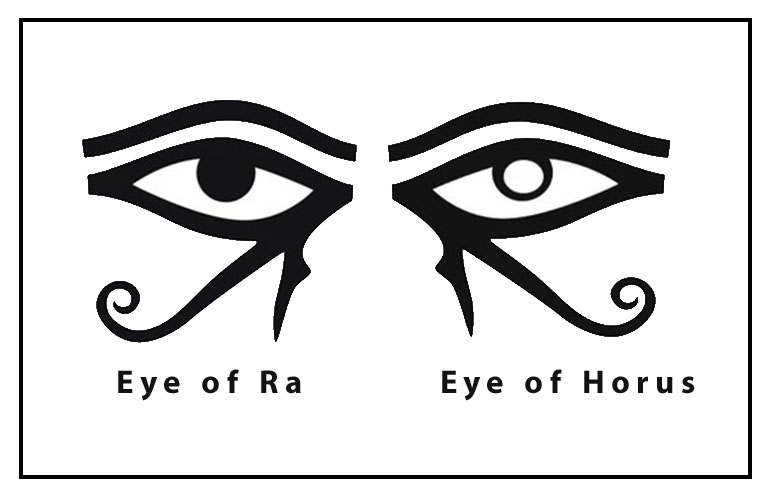
The eye of Ra and the eye of Horus

This symbol is within the space occupied by the person (Thutmose III) holding onto the serpent’s wings.

The right eye is known as the Eye of Ra (sun god), it symbolizes the sun, and it represents divine perception, divine providence, and the eternal cycle of life. The left eye is known as the Eye of Horus (sky god who has the head of a falcon), it symbolizes the moon, and it represents divine perception, protection, healing, and wisdom. The eyes are often depicted in the curved shape of a falcon’s eye, with the eyeliner extending beyond the eye socket.2,3

The eye symbol was used in rituals and ceremonies to invoke the protective power of the gods. In particular, the Eye of Horus was used in funerary art to guide the soul of the deceased to the afterlife. As a symbol of healing, the Eye of Horus was associated with the goddess Sekhmet (goddess of healing and medicine) and used in medical practices and rituals.2,4

Eleven ‘stars’ and the Ankh

These twelve symbols are clustered in the area of the snakes’ heads (direction of travel) and the eleven ‘stars’ have five points.

Odd numbers and their geometric forms (e.g. triangle, pentagon) indicate dynamism; the number five in particular corresponds to the five Elements (four material Elements + spirit or quintessence) and it denotes love, health and humanity. Further, the number five is analogous with the human figure (four extremities + head).1

In the present context, this symbol most likely represents a 5-point star. The 5-point star was used in Mesopotamia since at least 2,500 BCE. The five points represent the five elements: earth, air, water, fire, and spirit. This star was associated with the Sumerian goddess Inanna in her role as the queen of heaven and it symbolized her divine authority and power.3

Concerning the number twelve (twelve symbols), it is suggested that after the numbers three (triangle) and four (square), the next most important numbers are seven (their sum) and twelve (their multiplication).1 The number twelve is associated with the circle (cosmic order). The importance of this number is indicated by examples such as the twelve signs of the zodiac, hours on the clock-face, months of the year, and major gods of many natural religions.1

Symbols below the seated person’s feet

These symbols are directly below the seated Thutmose III’s feet (from top to bottom):

A horizontal rectangle containing seven vertical marks
The Egyptian hieroglyphics symbol for a hemisphere
A 5-point ‘star’
Three horizontal dots

Rectangle containing seven marks

The square, or where necessary the rectangle, corresponds to the number four and a cross formed by the four cardinal points (north, south, east, west) and it represents the conjunction of opposites (positive – negative, superior – inferior, life – death) and spiritual ascension.1

The number seven is the sum of the square (4) + triangle (3), with the number three represented by the three dots at the base of these symbols. The significance of the number seven is shown by examples such as the seven colours of a rainbow, days of the week, notes of the diatonic musical scale, and directions of space.

Symbol for a hemisphere

In Egyptian hieroglyphics the symbol for a hemisphere (a semicircle with the diameter as the base) refers to the sun’s orbit. It symbolizes the Origin counterbalanced by the End, or birth counterbalanced by death. In the present context, the symbol most likely refers to the end of Thutmose III’s life in this world.

A 5-point ‘star’

As was noted above in relation to the eleven ‘stars’, this symbol most likely represents a 5-point star. The 5-point star was used in Mesopotamia since at least 2,500 BCE. The five points represent the five elements: earth, air, water, fire, and spirit. This star was associated with the Sumerian goddess Inanna in her role as the queen of heaven and it symbolized her divine authority and power.3

Three horizontal dots

The triangle and the corresponding number three represents spirit, spiritual synthesis, and communication between the material world and heaven.1 The position of the three horizontal dots at the base of the symbol formation below the seated Thutmose III’s feet is consistent with what is now known as the primacy of consciousness (the primacy of spirit).

In essence, the combined meanings of the symbols discussed in the body of this article and in this appendix can be summarized as follows in relation to the murals: The two murals in the tomb of Thutmose III record the departure of his soul to eternal life with Divine guidance and support.

Appendix references

  1. Cirlot, Juan E. (1962, extensively revised in 1971). A dictionary of symbols.
  2. Seti, (2023). The fascinating history and symbolism behind the Egyptian eye symbol, Shunspirit, 26 Jul 2023.
  3. Seti (2023). The intriguing meaning behind the eye of Ra symbol, Shunspirit, 23 Jul 2023.
  4. Cleopatra Egypt Tours (2021). Important ancient Egyptian symbols and its meanings.


Family from afar

Family from afar 3: Long-heads of America

Pleiades — central to our true religion

Previous posts in this series:
Family from afar 1: Long-heads of Europe
Family from afar 2: Long-heads of Asia

Unless otherwise indicated, the images presented below are from Cosmick Traveler.1,2


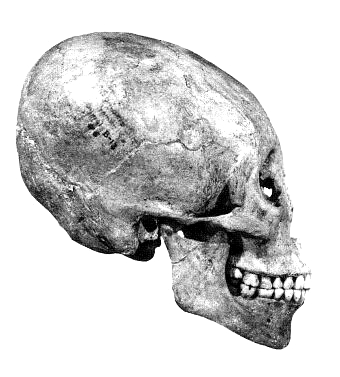
Long skull found at Lake Superior

This skull was found at Lake Superior Copper Mines, USA.1


Sanders Mound long skull

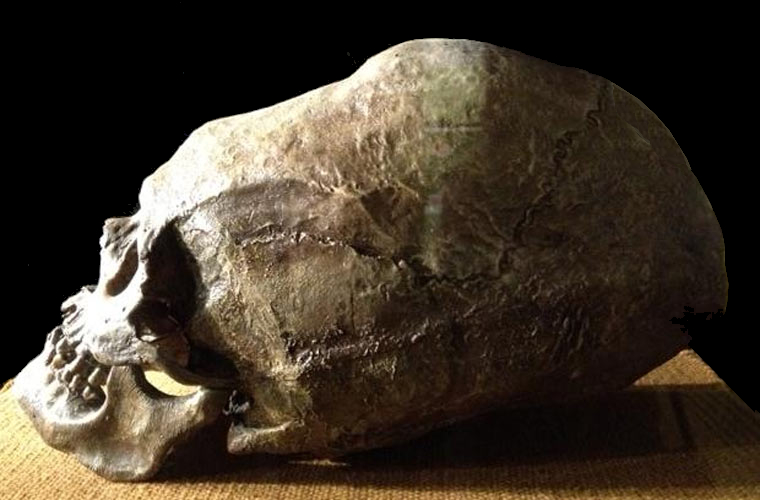
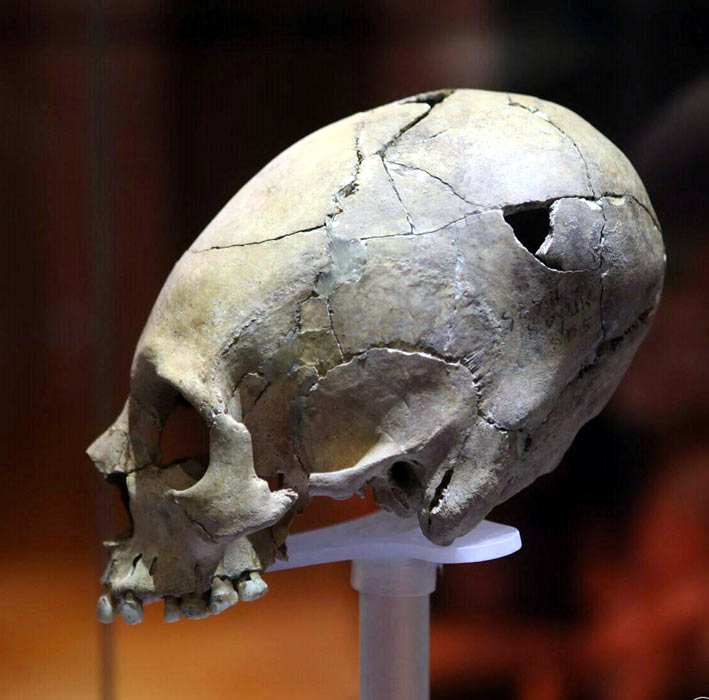
This skull was excavated ca. 1932 in Lamar County, Texas, USA.1 It has a brain capacity of about 2000 cc, which is a significantly larger brain capacity than occurs in normal humans. The skull does not show any evidence of artificial cranial deformation.3 Further, the length of the interparietal bone (os interparietale or Inca bone or os inca var.), a dermal bone situated between the parietal and supraoccipital, and which gives this skull its length, is genetically determined.4


Long skull in Cusco, Peru

I could not find more information about this skull.


Long skull in Oruro, Bolivia

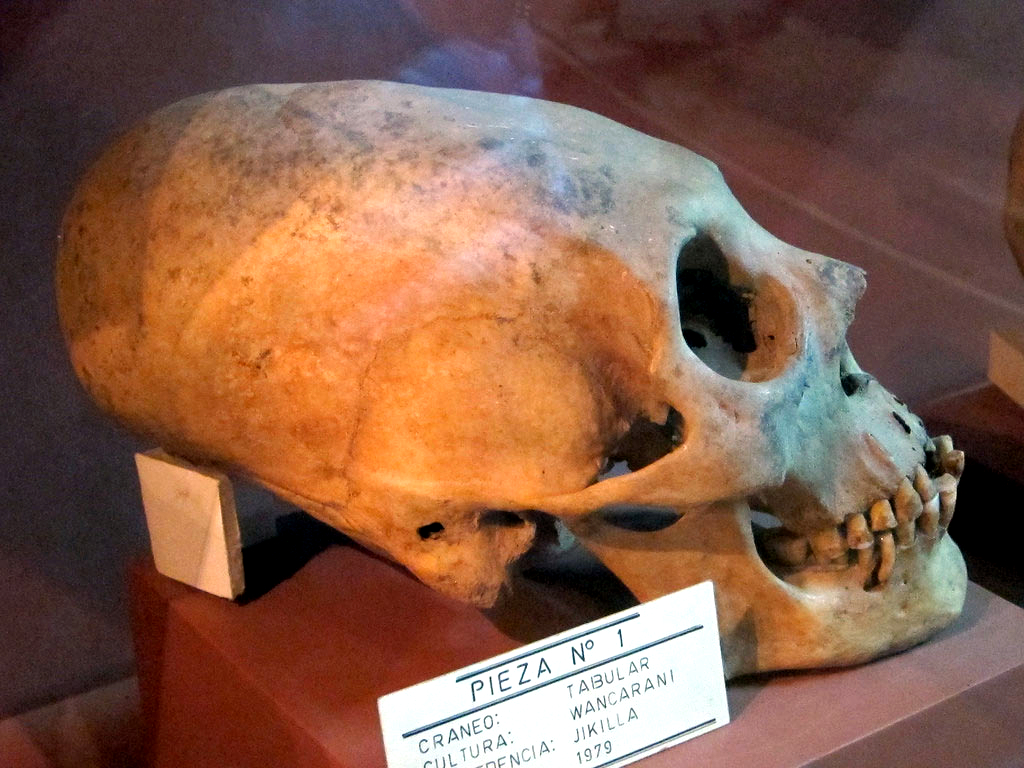
This long skull is in the Archaeological Museum in Oruro, Bolivia. The skull is of the Wankarani culture, a group that lived south of Lake Titicaca some 1,000 years BCE.5


Long skull in Argentina

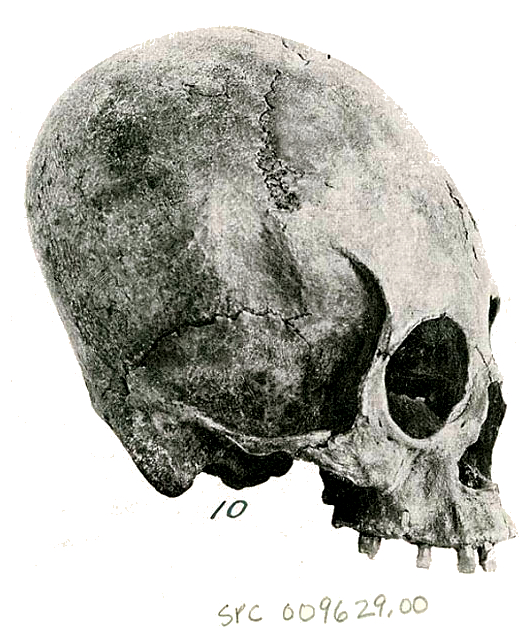
This is an old photomechanical print from National Anthropological Archives, Smithsonian Institution, showing a Diaguita skull from Argentina.2 The Diaguita culture existed from 300 to 700 CE.6


Long skull in Chile

This long skull is in the Museo Regional de Iquique, Chile.2 The skull dates to 500-1000 BCE.7


Long-skull skeleton in Bolivia

This long-skull skeleton is in the Cochabamba Archaeology Museum, Bolivia.2


Long-skull Paracas remains

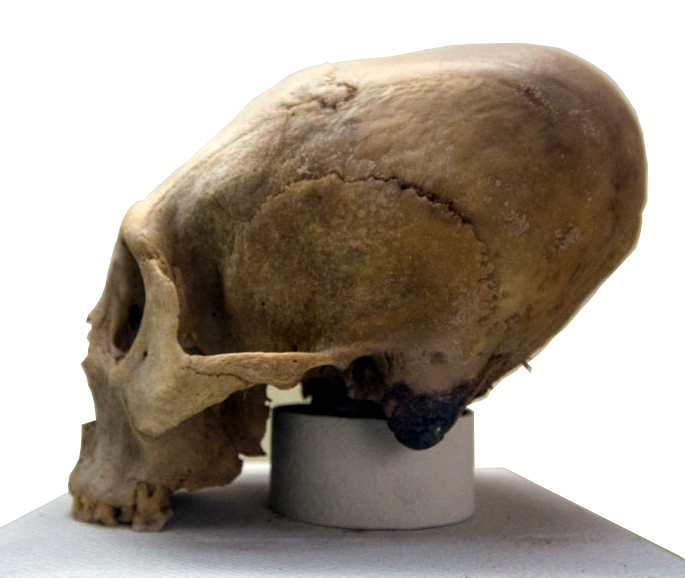
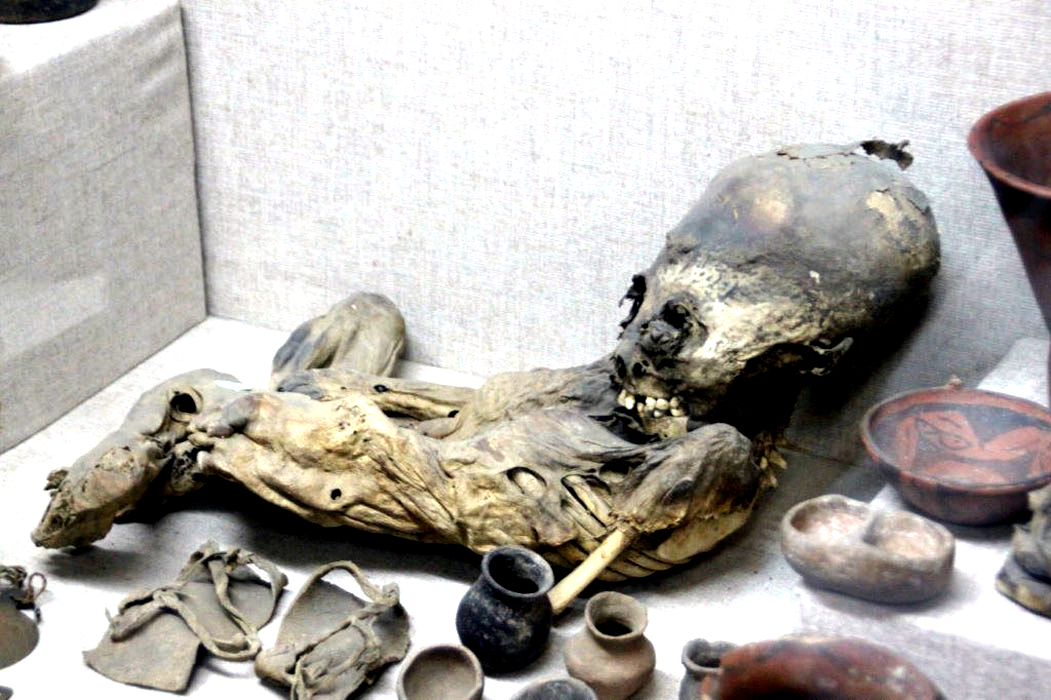
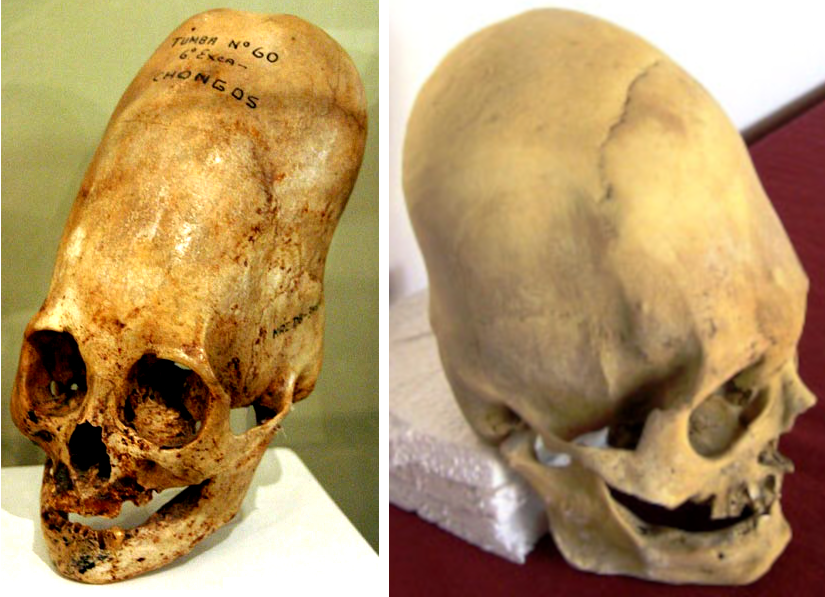
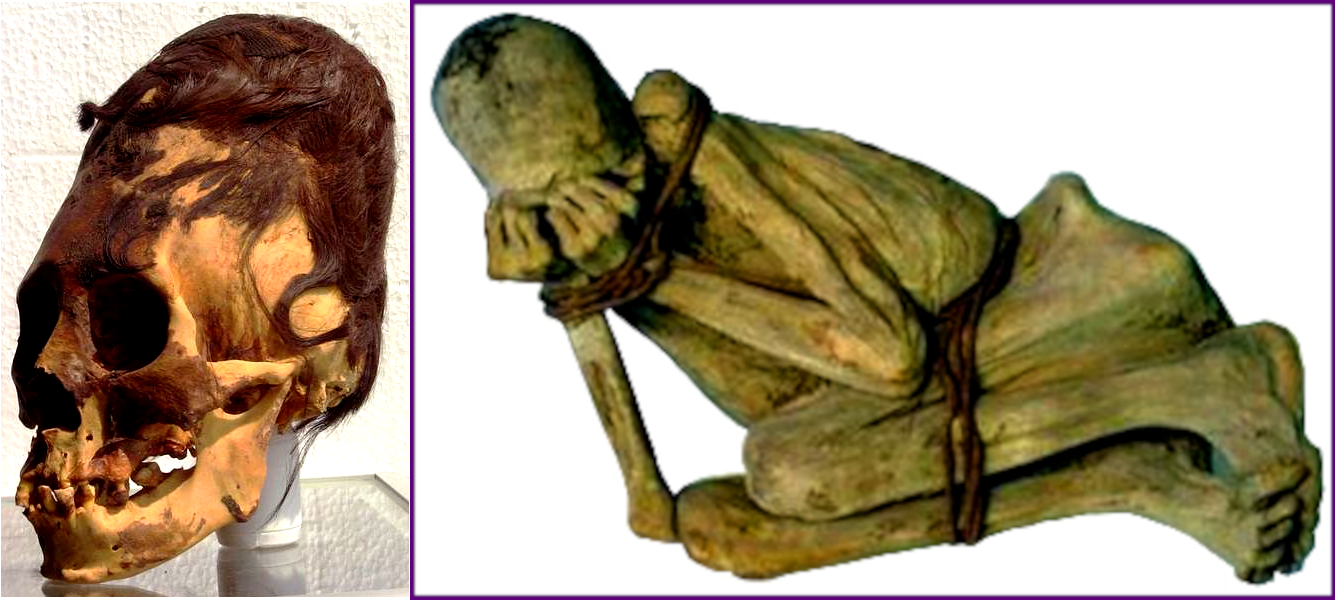
Shown in the above images are some of the long skulls and full body remains from the Paracas desert of Peru.

In 1928 the archaeologist Julio C. Tello discovered a cemetery in the Paracas desert of Peru containing over 300 skulls. Studies of these Paracas skulls showed that they are:

  • Dated to about 1,000 BCE in some cases.
  • The largest long skulls found anywhere on Earth.
  • At least 25% larger and up to 60% heavier than normal human skulls.
  • Not artificially deformed by techniques (head binding or head flattening) used by some tribes.
  • Structurally different to normal human skulls — (a) only one parietal plate (normal human skulls have two), (b) the foramen magnum (hole in skull through which spinal cord passes) is back towards the rear of the skull (in a normal skull it is closer to the jaw line) and also smaller than normal, and (c) some of the Paracas skulls have a very pronounced zygomatic arch (cheek bone), different eye sockets, and no sagittal suture (connective tissue joint between the two parietal bones of the skull).
  • Genetically very different to humans and (a) the mitochondrial DNA (inherited from the mother) in hair samples showed a Haplogroup (genetic population group) found most frequently in Eastern Europe, and at a low frequency in Western Europe and (b) a similar analysis of bone powder from the most elongated skull showed a Haplogroup that originates in Mesopotamia,8 i.e. where the Nephilim lived according to ancient Sumerian and biblical texts.
  • Dark red and blond-haired. This is consistent with the DNA results — red hair originates in Europe and the Middle East. Also, their red / blond hair is 30% thinner than native American hair.8,9
  • Nephilim and Nephilim x human hybrids.8

According to biologist Brien Foerster (2018)10 the Paracas were a royal family, had light-coloured skin, probably sensitive eyes, and they lived in underground houses due to the extreme sunshine.


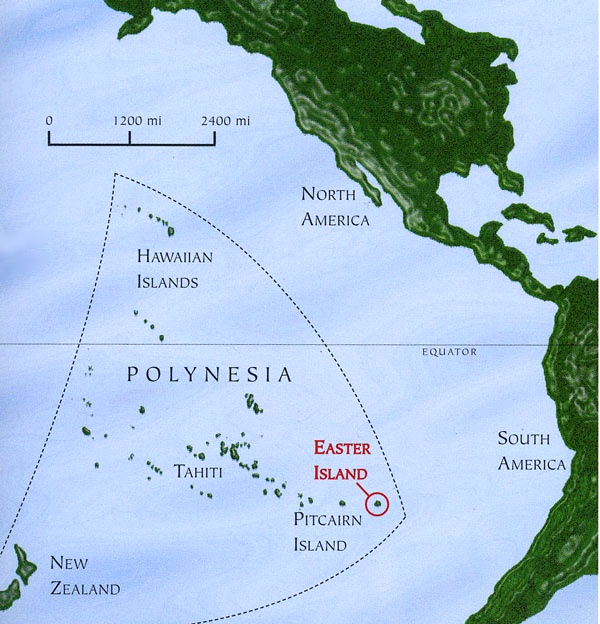
Easter Island in relation to South America

When English geographer, explorer and writer Sir Clements Robert Markham addressed the Royal Geographical Society in 1870, he explained that when the Spanish conquered
Tiwanaku (archaeological site in western Bolivia), they found ruined platforms, similar to those of Easter Island (Rapa Nui), and that on them were enormous, ornate, long-eared statues wearing crowns.11

Mrs Scorseby Routledge (one of the first scholars to visit Easter Island) and others visited Easter Island in 1913 and saw that there were two races of people on the Island: (a) tall, red-haired, white-skinned people with European features, their ears stretched down to their shoulders with discs or chocks in their earlobes, and in some cases wearing white feather headdresses, and (b) Polynesian people. The two races were known as the Long Ears and the Short Ears.11

According to the Island’s legends, the first migration came from the east (South America) and the second from the west (the direction of Polynesia). For reference, there was a widespread custom of ear extension in South America. For example, the Incan nobility, also stretched their ears and wore discs in their earlobes. In other words, Long Ears were the first people on the island (Thor Heyerdahl, 1978, Early Man and the Ocean, in Farra, 201511).

Note: The custom of ear extension could have been an Aryan influence as it was so widespread. For example, ear extension was also evident in Moche culture (Peru), a gold disc was worn in the ears of Mayan rulers, men and women in India wore ear plugs, some Melanesian tribes deformed their ear lobes, and many African tribes stretched their ears and often wore a disc in them. Similarly, Buddha is depicted with long ears.11

Further evidence of the South America – Easter Island connection: (a) Easter Island’s sweet potato came from the Andes and its tapioca also came from South America; (b) some of the Island’s stonework is the same or similar to that of early Peru; (c) in particular, the Cyclopean work of the burial platforms is identical to that of Cuzco (including colossal stones as in the old temple of the Sun in Cuzco) and the adjacent regions in the Andes; and (d) the Island’s stone towers are similar to those found in the Titicaca basin, Bolivia (Thor Heyerdahl, 1978, Early Man and the Ocean, in Farra, 201511).

According to Jean Michael Schwartz (1979, The Secrets of Easter Island, in Farra, 201511), the tall long-head, white people with European features, who the Spanish first encountered in the Incan empire, were said to be the survivors of the race which preceded the Incas and who built Tiwanaku.


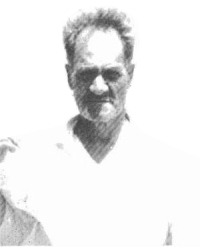
Nicolas Pakomio of Easter Island in 1964/5

Image credit: Robert Langdon, 1995, The significance of Basque genes in Easter Island prehistory, Rapa Nui Journal: Journal of the Easter Island Foundation, Volume 9, Article 3, Issue 1, March 1995.12

Nicolas Pakomio, an Easter Island resident, is pictured above at about age 67. He was photographed during the Canadian Medical Expedition to Easter Island in 1964-65. Researchers who met Mr Pakomio in 1964-5 described him as having blue eyes, red hair, and fair skin. This photograph and information about Mr Pakomio is included in an article by Robert Langdon (1995).12 Although the article does not refer to Mr Pakomio’s long head, it is clear from the photograph that Mr Pakomio is descended from a race of long-head people.

The history of Easter Island indicates that Mr Pakomio’s ancestors would have been a race of long-head Aryans in South America. Specifically, the information of Jean Michael Schwartz (1979, The Secrets of Easter Island, in Farra, 201511) referred to above suggests that Mr Pakomio is descended from survivors of the race which preceded the Incas and who built Tiwanaku.

On a related point, this picture of Nicolas Pakomio is the most recent example I have seen of a living Aryan person with such a pronounced vertically-orientated long skull. Normally such skulls are only seen in museums. It is also notable that Mr Pakomio has the characteristically strong Aryan jaw seen in long skulls found all over the world.

References

  1. Cosmick Traveler. Elongated Skulls from North America.
  2. Cosmick Traveler. Elongated Skulls from South and Middle America.
  3. Greater Ancestors (2011). Sounders Mound elongated skull, 27 Dec 2011.
  4. Ghost hunting theories (2017). Where the Giants Lived: Evidence of Their Presence, 11 Aug 2017.
  5. Foerster, Brien (2017). Massive Elongated Humanoid Skulls Of Oruro Bolivia, Hidden Inca Tours.
  6. Wikipedia: Diaguita
  7. Wikipedia: Deformed craniums
  8. Holloway, April (2016). New DNA Testing on 2,000-Year-Old elongated Paracas skulls changes known history, Ancient Origins, 23 Jul 2016.
  9. Gaia (2017). What are the Paracas skulls? Explore the ancient mystery, 22 Sep 2017.
  10. Megalithic Marvels (2018). DNA results released from the Paracas elongated skulls, 3 Feb 2018.
  11. Farra, Leonard (2015). Easter Island Revealed.
  12. Langdon, Robert (1995). The significance of Basque genes in Easter Island prehistory, Rapa Nui Journal: Journal of the Easter Island Foundation, Volume 9, Article 3, Issue 1, March 1995.


Family from afar

Family from afar 2: Long-heads of Asia

Pleiades — central to our true religion

This post continues the discussion about our long-head ancestors started in the preceding post, Family from afar 1: Long-heads of Europe.

The information presented below and most of the images are from Cosmick Traveler.


One of many long skulls in the Archaeological Museum in Antakya, Turkey


An example of long skulls found in the Siberian city of Omsk

During the 1990s, near the city of Omsk in Siberia, long skulls were found in burial mounds dated to the 4th century CE.


The skeleton of a long-skull woman found in Arkaim, Russia

This skeleton of a long-skull woman was found in Arkaim, near Chelyabinsk in central Russia. The skeleton is dated to the second or third century CE, and the settlement is dated to about 2,000 BCE. The settlement was about 20,000 square metres in size, had a central square surrounded by two circles of houses separated by a street, and was protected by two circular walls.

According to historian K. K. Bystrushkin (2003), the site is comparable to Stonehenge in that both sites enabled ancient people to study the stars. However, Bystrushkin considers the Arkaim site to be more advanced than Stonehenge as Stonehenge allows for observations of 10 astronomical phenomena using 22 elements, but Arkaim enables observations of 18 phenomena using 30 elements. Therefore ancient people at Arkaim could have observed and tracked more celestial events than was possible at Stonehenge.

Eventually the Arkaim settlement was burned down and abandoned.


One of the long skulls on display in the Pyatigorsk museum, Russia

This long skull was found at the Khasaot burial ground in the vicinity of Kislovodsk, in the North Caucasus region of Russia. The burial site dates to the 3rd – 5th centuries CE.


One of the long skulls in the Museum of Kislovodsk, Russia

This is one of the long skulls found in a valley on the outskirts of Kislovodsk, a city in South Russia.


The remains of a long-skull 1.5-year-old boy

This long-skull skeleton of a 1.5-year-old boy was found near the village of Yakovenkovo in the eastern part of the Crimean Peninsula. His grave dates to the second century CE.


Family from afar

Family from afar 1: Long-heads of Europe

Pleiades — central to our true religion

Post outline

  1. Introduction
  2. Long-head and round-head differences
  3. Long-head and round-head migrations
  4. Long-heads and the Frisians
  5. Baby long-heads
  6. Long-heads in Europe
  7. Long-heads in Malta
  8. References
  9. Appendices

1. Introduction

A series of posts about our ancestry will be offered for consideration. This includes information about our human long-head ancestors, from whom we can learn much about our god-like creators.

Following is a summary of information from “Cosmick Traveler” (Dirk Gillabel),1 an authority in this field from whose site I obtained many of the scientific references and images used in my posts on this subject:

  • Human races of long-head (dolichocephalic) people lived all over Earth and they were a different subspecies (“race”) to that of other humans. Old archaeological publications available online evidence archaeologists’ awareness that the whole of Europe was populated by long-head people.
  • The long-heads were matriarchal, peaceful, and highly knowledgeable and skilled, especially in stone-work.
  • The long-head people were intuitive, energy-sensitive, worked with energy lines and places of power, and built numerous earth works and stone megaliths.
  • In some places these people were the rulers and in other places they lived in small communities.
  • Humans with round skulls (brachycephalic) multiplied, spread all over the world, and took over the territory of the long-head people.
  • The round-head people were patriarchal and warring, they thrived on conquest, and it seems that the round-head people were the first to work metal. They made metal weapons with which they subjugated or exterminated the long-head people.
  • Although many long-head people were murdered and exterminated by the round-heads, as happened in England, on the European continent there is abundant evidence of both races living together and interbreeding, causing the gradual disappearance of the long-heads.
  • Humans of today are primarily descended from the round-head people.

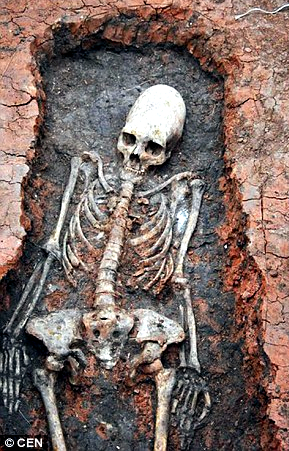
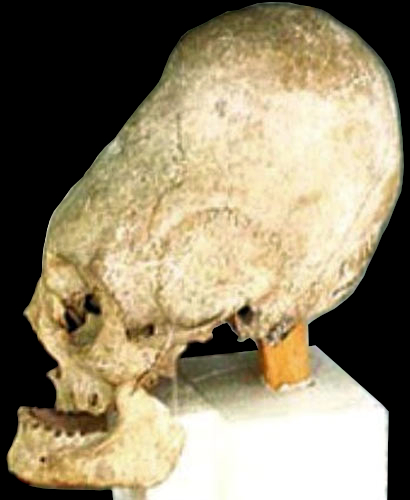
Sometimes the long skulls are incorrectly referred to as “elongated.” However the long skulls of interest are not elongated, as occurs by means of artificial cranial deformation. They are naturally long skulls.

In Appendix 1 are three examples of scientists who carefully examined long skulls and concluded that those long skulls do not show any signs of deformation and that they are natural. One of those scientists is Dr Graves (1834),2 who wrote: “. . . these skulls belonged to a race of mankind now extinct, and which differed from any now existing.” (p 477)

In Appendix 2 are images to illustrate the methods and results of artificial cranial deformation.

2. Long-head and round-head differences

2.1 Cephalic index
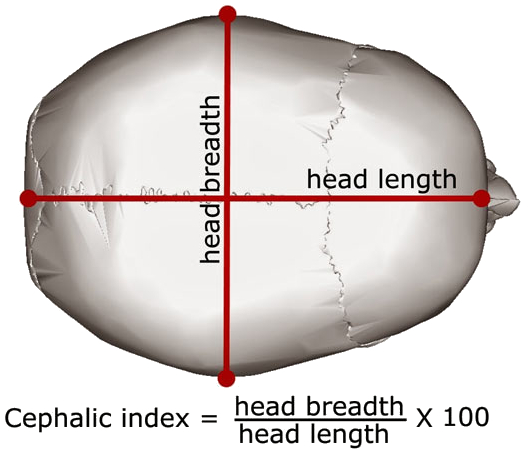

The cephalic index

The cephalic index, or cranial index, is the ratio of the maximum width of the head multiplied by 100 divided by its maximum length, in the horizontal plane, or front to back.3
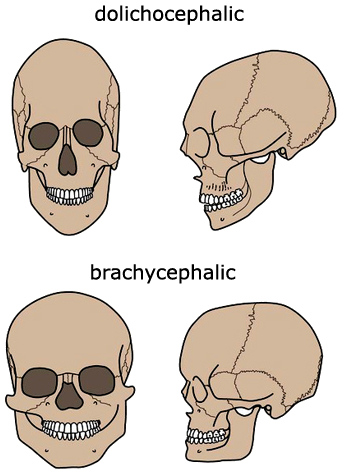

Dolichocephalic vs brachycephalic skulls

Brachycephalic skulls (round skulls) are typical for present day humans (Homo sapiens). Their cephalic index is larger than 81-83, i.e. the width of the face is slightly smaller than the length of the skull.3

Dolichocephalic skulls (long skulls) have a cephalic index smaller than 71-73, i.e. the length of the skull is much larger than that of round skulls. Dolichocephalic skulls can differ from brachycephalic skulls to the extent that the long skulls can be seen as belonging to another human subspecies. The long skulls vary (a) in length from medium to large, and (b) in orientation, sometimes extending in the horizontal plane and sometimes extending upward from from a slanting forehead.3

Mesocephalic skulls are often ovoid in shape and between the shapes of round and long skulls. Mesocephalic skulls are the result of interbreeding between round-skull and long-skull people.3

2.2 Sagittal suture

The long-skulls show “greater liability to premature obliteration of the sutures. This can hardly be regarded as other than a race-character, which these skulls exhibit in common with those of other dolichocephalous peoples” (Thurnam, 1866, p. 35).4

2.3 Foramen magnum

In the long skulls, “the position of the foramen magnum [hole in skull through which spinal cord passes] too is remarkable, for it will be found to be considerably anterior to the centre of gravity” (Bellamy, 1842, p 98).5

2.4 Red hair

Long-head Egyptian dynastic rulers studied, and the Paracas aristocracy, had several members with red hair, and both lived among people with dark hair. For example, Queen Tiye, mother of the famous Egyptian pharaoh Akhenaton, was long-headed with red hair; Ramses II was long-headed with red hair; and apparently, the Ramses lineage (long-head people with red hair) believed themselves to be divine descendants of the god Seth (who had red hair), with their red hair as proof of their lineage.3

There is reason to believe that the Ramses’ claim to godly ancestry might be true. Seth (one of the most ancient gods of the ancient Egyptian pantheon) and all the other ancient Egyptian gods — before they became heroes or myths — are extraterrestrial beings [i.e. the Anunnaki, who people revered as gods] according to many students of this subject.6

Of possible significance, DNA analysis of the Neanderthal genome has shown that Neanderthals had red hair.3

2.5 Teeth

The long skull of a child, less than two years old, found at Lake Titicaca in Bolivia, had 24 teeth. In a human, 24 teeth would only be expected in a six-year-old child. The skull of another long-skull baby, about 18 months old, found near Cusco, Peru, had fully-grown teeth of a normal 7-12 year-old human child, but contained fewer molars than a human.3

2.6 Nasal root

The nasal root in humans is the top of the nose and it forms an indentation where the nasal bones meet the frontal bone (the skull plate that forms the forehead).3 The numerous statues and clay figures of the Maya cultures in Meso-America show that many of their aristocratic members had both long skulls and also long noses that start high up on their forehead.3

2.7 Trepanation

Trepanation (to bore or otherwise make a hole in the skull) is usually done to release pressure underneath the skull. It was a common procedure among both long-head and round-head people. Some skulls have multiple trepanned holes, and in some cases the holes are very large. In many cases the holes seem to have been cut crudely with stone or metal knives, suggesting that the trepanation was an emergency procedure to treat a serious medical problem.3 Such medical problems seem consistent with the known medical hazards of subspecies-mixing (resulting in hybrids), e.g. Rossetti (2018, Mixed race infants are unhealthy because of complex gene-environment interaction),7 Health Colombia (2014, Mixed race people are more likely to develop metabolic syndrome),8 and Black Issues (2003, Students of mixed race suffer more health problems).9 Evidence presented in a future post in this series will show that the Anunnaki (Aryan extraterrestrials) created humans with genetic material from different species and that we are all hybrids and prone to medical problems of hybridization to some extent.

2.8 Personality

Intelligence

The volume of the long skulls is larger than that of a normal human skull, especially in the extremely long skulls of South America. This greater brain size would have been associated with increased mental abilities. John Thurnam (1866),4 a prominent English archaeologist and craniologist, excavated and examined the barrows in Salisbury plain, South England, and found both round and long skulls. He explained the brain differences that would have been associated with the observed differences in the skulls:

“Turning to the hind head, we find the supra-occipital region full and rounded in the dolichocephalic [long skull] Britons, giving room for the backward development of the posterior lobes of the brain, which in this series must have materially overlapped the cerebellum; whilst in the other [round skulls], the occipital tuberosity becomes the most prominent part, and the cerebellum can have been barely covered by the posterior lobes of the brain. As common in long skulls, those of the pre-Celtic Britons are more or less depressed — platycephalic [marked flatness on top of the head]; whilst there is a compensatory elevation in the brachycephalic series, or more or less of the form termed acrocephalic [high, pointed skull]. (p 35)

Aggressiveness

Archaeologists found burials of long-head people that lacked signs of respectful burials, were disorderly, bodies were often covered with dirt and rocks, and many bodies showed clear signs of violent deaths, usually by severe damage to their skulls. In many cases the victim’s skull was split in two by a sword, with great force. The archaeologists concluded that round-skull invaders had exterminated the long-head people in Britain and taken over their territory.1

Thurnam (1861)10 gives examples of long-head murder victims:

  • “In the south-east angle of the chamber, to the left of the entrance, was the skeleton of a youth of about seventeen years of age, apparently in a sitting posture. The skull was extensively fractured at the summit by what appeared to have been the death-blow.” (p 7)
  • “Almost in the centre of the floor was the skeleton of a man of about fifty years of age . . . . A fracture, probably the death-wound, extended from one temple to the other, through the forehead into the right cheek, entirely severing the malar bone, which had fallen off below the skull . . . .” (p 8)
  • “In 1801 Mr. Cunnington opened the long barrow near Heytesbury, called “Bowls’ Barrow,” in which he found several skeletons crowded together at the east end, the skull of one of which “appeared to have been cut in two by a sword.””(p 14)
  • Tilshead Long Barrow. This round-head brutal murder of eight long-head people, including three women and two children, is discussed below in relation to the long-head people in England. Evidently the round-head people showed no mercy, even to women and children.

3. Long-head and round-head migrations

  • In 1866 John Thurnam4 wrote that he excavated and examined the barrows in the Salisbury plain and came to the conclusion that the long-head people were the oldest race in England, and were replaced by an invading force of round-head people. According to Thurnam, the long-head people were known as the Ancient British People; their skeletons lacked metal ornaments or weapons, suggesting that they only had stone implements; and they lived in Britain during the period of about 4,000 to 3,000 BCE.
  • Thurnam (1866, p 1):4 “In addition to the brachycephalous [round] skulls, of which so many examples are described in the Crania Britannica, a less number of decidedly dolichocephalic [long] crania have also been depicted. These are principally derived from the chambered long-barrows of North Wilts and Gloucestershire, being the district of the British Dobuni, the same tribe which, at the time of the conquest under Claudius, was subject to the great neighbouring tribe of the Catuellani. There is no well-authenticated proof that metallic objects, whether of bronze or iron, have in any case been found in the undisturbed chambers of these tombs, which, however, yield well-chipped flakes and arrowheads, and also axes of flint.”
  • After studying the findings of the French archaeologists, Thurnam (1866)4 concluded: (a) the long-head people in England were Teutonic [Germanic] in origin, with roots in Anglo-Saxon and Scandinavian regions, and (b) the long-head people in France were equally Teutonic, with roots in Gothic, Burgundian, Frankish, or Scandinavian areas. (p 8)
  • The literature review by Dirk Gillabel1 indicates that in about 3,000 BCE, tribes of round-head people (Gauls, i.e. Celts of an ancient region in western Europe) arrived in England, murdered the long-head people, buried them in their long barrows, and closed off the entrances.
  • Deniker (1900, p 313)11 wrote the following in The races of man: “Several hundred skulls, found in Neolithic [c. 10,000 BCE to c. 2,000 BCE] burial-places in France, Switzerland, Austria, and Germany, exhibit an intermixture of brachycephals [round skulls] and dolichocephals [long skulls]. According to the more or less frequent occurrence of the former in relation to the latter in each burial, we may, with Hervé, trace the route followed by these brachycephals of Central Europe, from the plains of Hungary, by the valley of the Danube, into Belgium and Switzerland; from these last-named countries they flung themselves on the dolichocephalic populations of France and modified the primitive type, especially in the plains of the north-east and in the Alpine region.”
  • Deniker (1900, p 313)11 continues: “But if the “neolithic” people of France and Central Europe belonged to at least two distinct races, the same has not been the case with the other countries of our continent. In the British Isles we find ourselves, on the contrary, as regards this period, in presence of a remarkable homogeneity of type; it is without exception dolichocephalic, with elongated faces, such as are found in the long-barrows.”
  • Three adolescent male skeletons, likely associated with the Huns or Germanic tribes, and dating to the Great Migration Period (5th to 6th century CE), were discovered in a pit at the Hermanov vinograd site in Osijek, Croatia. Two of the three boys had long skulls, one of which was slanted (“tabular oblique-type”) and the other being “circular erect-type.” Genetic analyses of the skulls (Fernandes et al. 2019)12 revealed: The boy with the slanted long skull had East Asian ancestry, the boy with the circular erect long skull had Near Eastern ancestry, and the boy whose skull was not long had West Eurasian ancestry.
  • DNA analyses (Veeramah et al. 2018)13 of 40 individuals buried in Early Medieval (5th and 6th century) sites Altenerding and Straubing in Bavaria, showed that nine were women with long skulls who came from southeastern Europe, specifically Bulgaria and Romania.
  • Some of the long-skull tribes survived until recent times. In 1862 Broca14 studied 60 Basque skulls from an old cemetery in the province of Guipuzcoa and found that the large majority were dolichocephalic.
  • Long and round skulls found together at some burial sites show that that in some places these different races lived together and likely cross-bred. The Ofnet cave, found in 1908, is an example of such a burial site (Osborn, 1918).15
  • Examination of long-skull skeletons in Malta indicated that these long-skull people were a race of lower medium height, akin to the early people of Egypt, who migrated westward along the north coast of Africa, to Malta, Sicily, Sardinia, and Spain.16
  • As in the rest of Europe, Italy’s Neolithic [c. 10,000 BCE to c. 2,000 BCE] people were also long-skulled: “Skulls which are believed to be of Palaeolithic age [c. 3.3 million — c. 11,700 years BP] have been found in various parts of Italy — at Olmo, at Isola del Liri, at Mentone, and in some Sicilian caves. They are all dolichocephalic, or long skulls” (Taylor, 1891, p 490).17
  • Consistent with Thurnam (1866),4 Taylor also states that the long-skull people were quite short: “In the early Neolithic period [c. 10,000 BCE to c. 2,000 BCE] we find skulls of the Iberian [SW Europe] type all over western Europe, in Caithness, Yorkshire, Wales, and Somerset, in the south of France, in Spain and Italy. This race was swarthy, with olive complexion and black curly hair; it was orthognathous [face profile vertical or nearly so], leptorhinic [narrow nose], and highly dolichocephalic [very long heads], with a low orbital index [ratio of the greatest height of the orbital cavity to its greatest width multiplied by 100], and short stature, averaging about 5 feet 4 inches” (Taylor, 1891, p 491).17
  • Taylor also provides yet more evidence of the round-skull and long-skull people living together: “In the early Neolithic period we find in Italy only these two races, the dolichocephalic, or longheaded, Iberian race, who are physically allied to the North African tribes, and the brachycephalic, or round-headed, Liguijan race, allied to the Lapps and Finns. These two races inhabited the same caves, together or in succession. Thus in a Neolithic cave at Monte Tignoso, near Livorno, two skulls were found, one of the Iberian type, with an index less than 71, and another of the Ligurian type, with an index of 92. In another Neolithic cave, called the Caverna della Matta, an Iberian skull was found with an index of 68 [hyperdolichocephalic, i.e. very long], and a Ligurian skull with an index of 84. No anthropologist would admit that these skulls could have belonged to men of the same race” (Taylor, 1891, p 492).17

It is particularly interesting that in the above quote Taylor (1891, p 492)17 (a) links the long-head people of that era to North African tribes and (b) he links the round-head people to the Lapps and Finns. These links fit with other information in this section on long-head and round-head migrations:

  • The long-skulls in Malta [7,000 long-heads who died c. 3,000 BCE] were of a relatively short people whose links included North Africa and Egypt in particular.16
  • The Neolithic [c. 10,000 BCE to c. 2,000 BCE] round-heads who “flung themselves” on the long-head populations of France came from the East (from the plains of Hungary in Central Europe) and they modified the long-heads, especially in the plains of the north-east and in the Alpine region.11
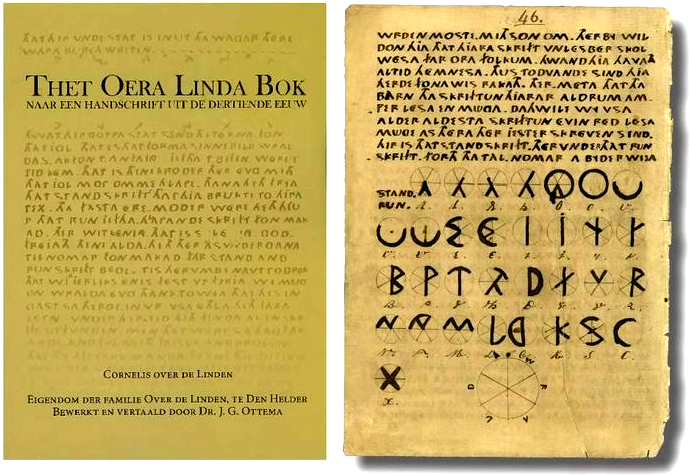
  • Further, concerning the reference to round-head Finns, the Oera Linda Book (OLB),18 (discussed in the post The Oera Linda Book: Explosive power for Aryans) does not speak well of these round-heads. For example:
  • “. . . the Finns came to the defenceless villages and ran away with the children.” (pp 39-40)
  • “. . . just at the time of the Juulfeest, they [the Finns] overran our country like a snowstorm driven by the wind. All who could not flee away were killed.” (p 28)
  • “. . . we call them Finns, because although all the festivals are melancholy and bloody, they are so formal . . . .” (p 28)
  • “. . . they [the Finns] are slaves to their priests, and still more to their creeds.” (p 28)
  • “. . . of Wr-alda’s [God’s] spirit they [the Finns] know nothing.” (p 28)

4. Long-heads and the Frisians

I have not found clear evidence to indicate that the Frisians (the people of the OLB) were predominantly long-heads during the period covered by the OLB (2193 BCE to 803 CE). However, it seems reasonable to assume that the Frisians (a highly God-conscious and virtuous people, as the OLB shows) were predominantly long-head people because:

  • The long-heads in France and England were of Germanic origin (Thurnam 1866).4
  • The Frisians were a Germanic people.
  • The time period covered by the OLB overlaps that during which there was still a large population of long-heads in Europe, although the long-heads were being gradually replaced by the round-heads.

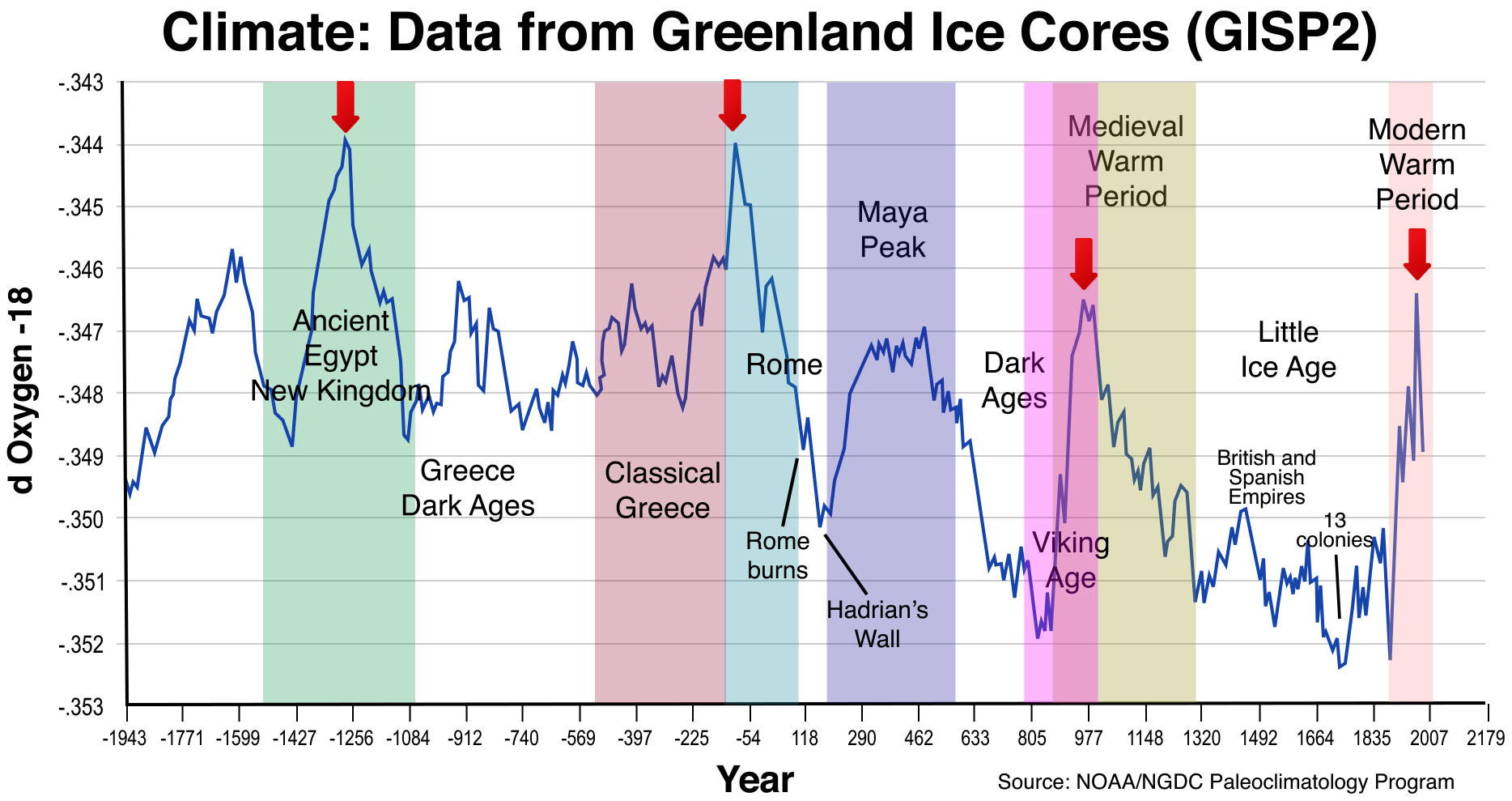
In the above context, it seems that the societal decay as of the great flood in 2193 BCE (documented in the OLB) was associated with the decline of long-heads (agents of yang) and the rise of round-heads (agents of yin). For a discussion of the context (climate, religion, yin and yang) within which our civilization has been collapsing, please see the post The Oera Linda Book: Explosive power for Aryans.

5. Baby long-heads

Countless unusually long skulls have been found all over the world and they are displayed in various museums. Suitably-knowledgeable scientists who have studied the skulls concluded that these long skulls were not artificially elongated and that they are naturally long. In particular, very young babies who are too young to have long heads due to artificial cranial deformation, and unborn babies with long heads, provide unequivocal evidence of naturally long skulls.
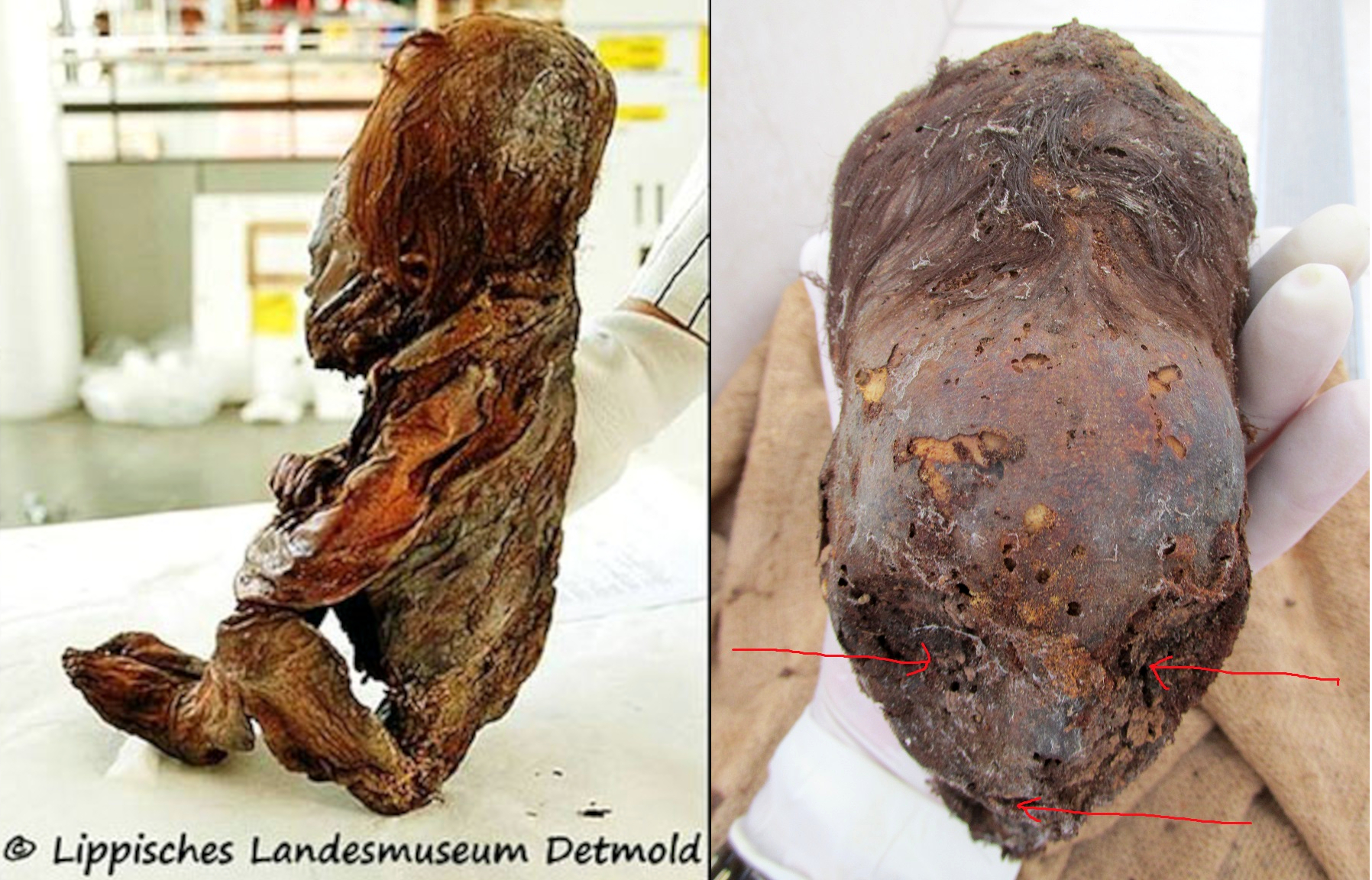

L Detmold child, R Paracas baby skull

Image credits: Detmold child — Cosmick Traveler,19 Paracas baby skull — Hidden Inca Tours.20

Detmold child

In 4,480 BCE this 8 to 10-month-old baby died in Peru. An x-ray scan revealed it died from a malformed heart. Originally the mummy was owned by Völkerkundliches Museum (Ethnological Museum) of the city of Witzenhausen. Later the mummy was donated to Lippisches Landesmuseum Detmold, where it become known as the Detmold child.19

Paracas baby skull

This long skull (owned by a private individual in Peru) is of a three-month-old baby and at least twice the size of a normal human baby skull of that age. The baby was born with this long skull. There was no time for artificial cranial deformation by any means.19 The arrows indicate the positions of the eye sockets and mouth.20

This baby (a) is of the Paracas culture in Peru; (b) has very fine auburn-colour hair (not the typical black colour of Native American People); (c) lived about 2,800 years ago; (d) was not subject to artificial cranial deformation (indicating that the long skull was genetically determined); and (e) has a vertebral column that is located further back in the skull than in normal humans, consistent with an evolutionary adaptation to compensate for the long skull.20,23
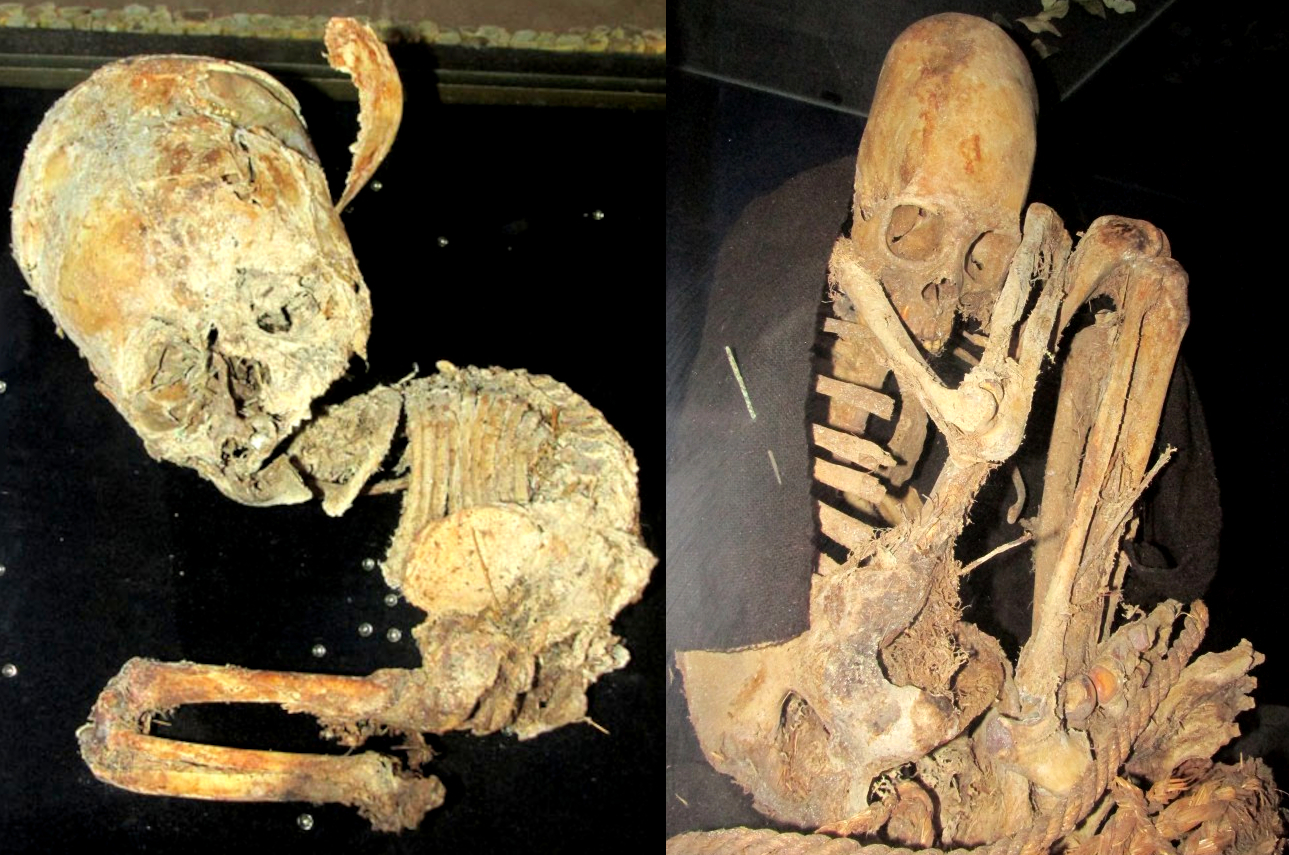

Patapatani fetus and mother

Finnish archaeologists working near the village of Patapatani in Bolivia unearthed the skeletons of a mother and her unborn baby, both of whom had long heads. According to experts: (a) the fetus died between eight and nine months into development, most probably with the mother during birth; (b) the shape of the mother’s pelvis indicates that she likely died between 10 and 12 years old, possibly 13; (c) the mother’s long head exceeds the proportions of an artificial cranial deformation; and (d) the baby would have been born with a long head.21,22
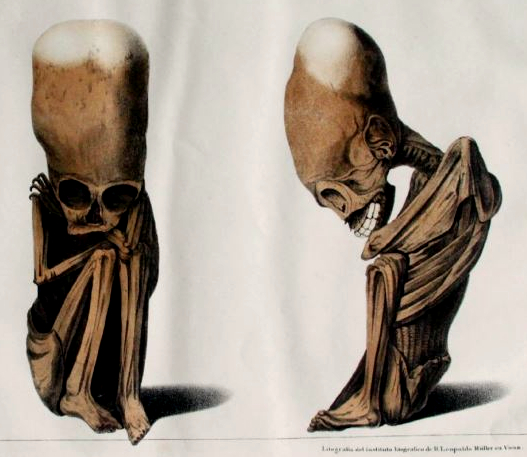

Central Peru fetus

The lithograph is by D. Leopoldo Mueller in the Spanish 1851 edition of Peruvian Antiquities. Professor D’Outrepont in the department of obstetrics determined the fetus to be age seven months and — according to the very clearly defined cranium formation — of the Huancas tribe in Peru.24 The Huancas people occupied the highlands of ancient central Peru and their culture flourished from about 600 CE to 1,532 CE.25 This fetus is discussed by Professor D’Outrepont in Appendix 1.

As the images and discussion below and in future posts will show, there were previously subspecies of long-skull humans living in communities and civilizations on all continents of Earth.

6. Long-heads in Europe

“Leaving out of the question the most ancient palaeolithic [c. 3.3 million — c. 11,700 years BP] inhabitants of Europe, this continent was peopled in neolithic times [c. 10,000 BCE — c. 2,000 BCE] by a long-headed (dolichocephalic) folk who to this day form the substratum of the population” (Bradley, 1912, p 30).26
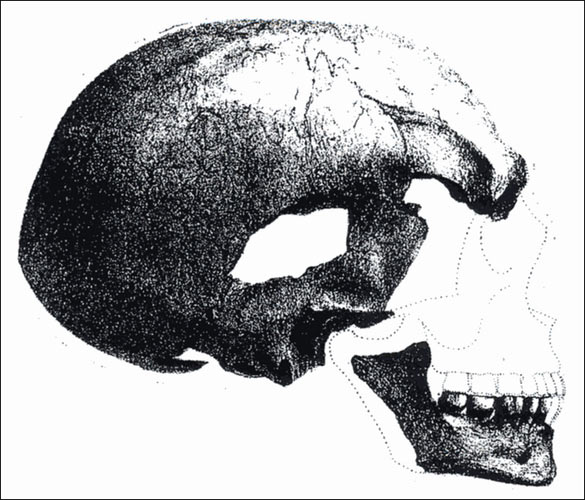


The Galley Hill skull

In 1888 this skeleton was found in Galley Hill, Kent, England and in 1894 E. T. Newton carefully excavated it.27 According to Sir Arthur Keith (1915):27

  • This skeleton is dated to 250,000 years BP (before present). In other words, humans who were at least as intelligent as modern humans (perhaps more so considering the large cranial volume of the Galley Hill specimen) were thriving in Europe three inter-glacial peaks ago (glacial and inter-glacial periods are shown in the chart Ice Age Temperatures, in this post).
  • Previously it was thought that at that time only a very primitive man existed.
  • The skeleton does not show a single feature which can be called Neanderthaloid, nor any simian feature which is not also to be seen in the skeletons of men of the modern type.
  • The Galley Hill man is similar to modern man except that he has a markedly long head — the width is about 69 per cent of the length, i.e. the cephalic index is 69, which is classified as hyperdolichocephalous, or extremely long.
  • Most of the Palaeolithic Europeans (2.6 millions years — 10,000 years BP), especially of the Aurignacian period (40,000 years — 28,000 years BP) had exceptionally long heads.
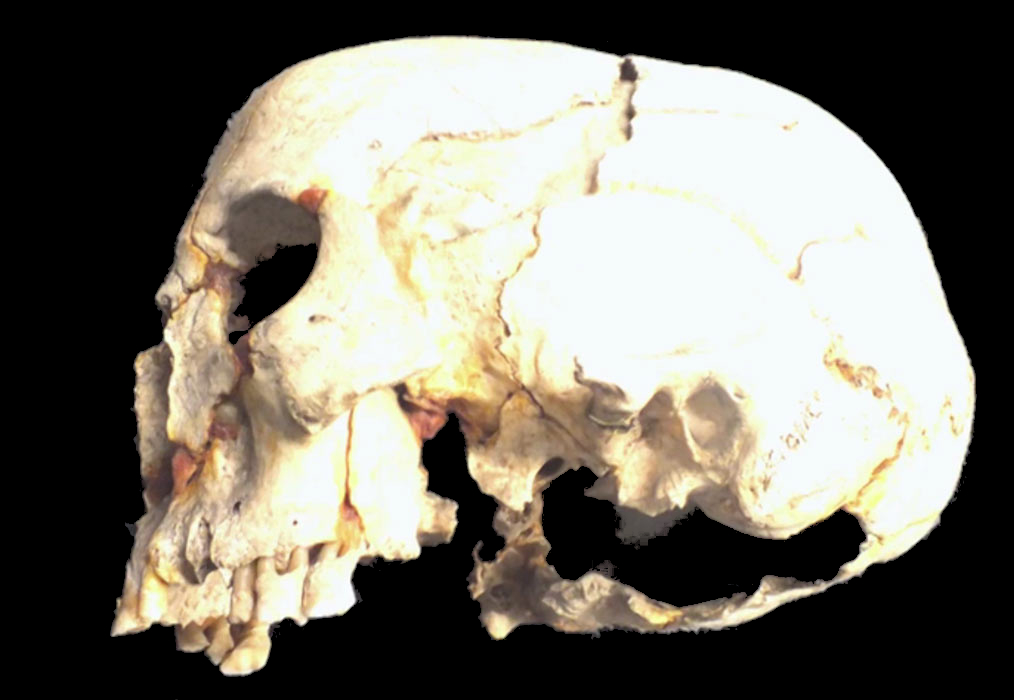


A woman’s long skull from Tilshead Long Barrow

In 1863 John Thurnam4 excavated eight skeletal remains at the Tilshead Long Barrow, Tilshead, Wiltshire county, England, and found the following:

  • The remains seem to be of a family group (three men, three women, and two children age one to two years) that was brutally murdered, as indicated by extensive gashes in the skulls.
  • The limb bone lengths are not above medium and imply a stature of from 5 feet 5 inches to 5 feet 8 inches for the men, and 4 feet 9 inches to 5 feet 3 inches for the women.
  • All the skulls are elongate, with the occiput full and prominent; the mean breadth is about 71 to the length taken as 100; the largest male skull has a breadth of 68; and there is postcoronal [corona in this context refers to the top of the head] depression in most (Thurnam, 1866).4

Although I cannot find information about the age of these skeletal remains, according Wikipedia,28 the barrow dates from 3,500 to 4,000 BCE.
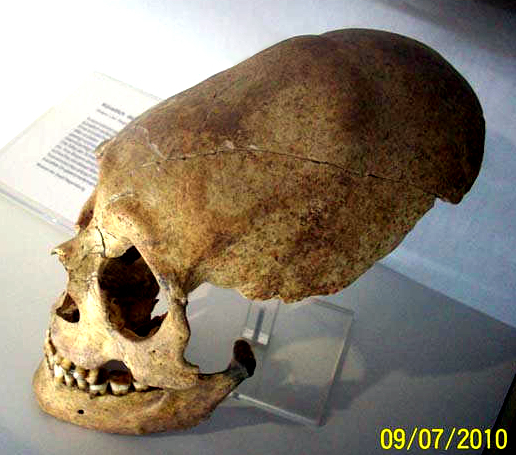

Skull from Bavaria, Germany

This extremely long skull is in the State Collection for Anthropology and Palaeoanatomy in Munich, Germany. Long skulls were found buried in 5th and 6th century sites in Altenerding and Straubing, Bavaria, Germany.29


Skull in Stuttgart, Germany

This skull is of a 30 to 40 year old Alemannic woman of the early 6th century.29 It is in the Württembergisches Landesmuseum, Stuttgart, Germany.
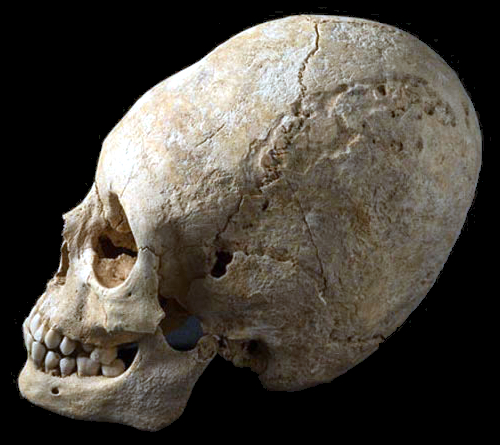

Skull in de Sainte Odile, France

This skull is of a woman who lived in the 5th-8th century CE. The skull was found during excavations in an industrial park in Pays de Sainte Odile, Obernai, in the northeastern French province of Alsace, France.29
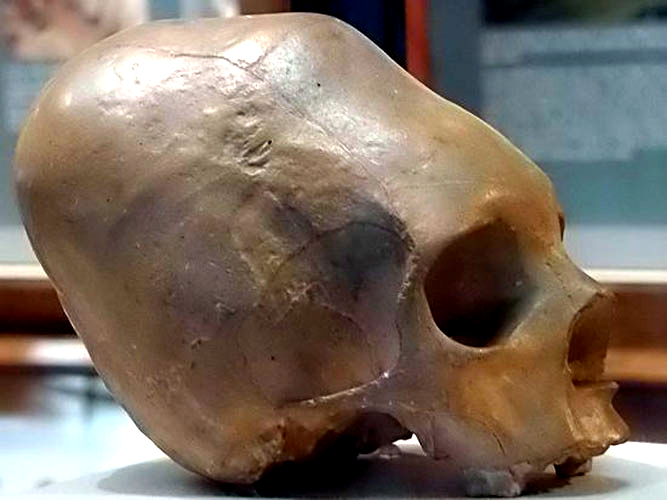

Skull from Globasnitz, Austria

The skull is from the 4th century Globasnitz.29
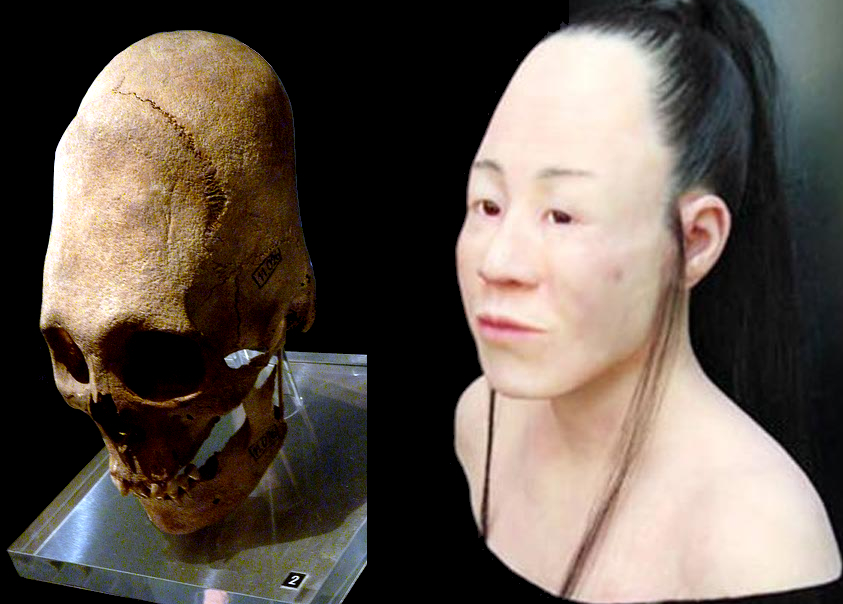

Skull of a female Hun and reconstruction

This skull is at the Hungarian National History Museum. The reconstruction is by Marcel Nyffenegger. Long skulls were common among the the Huns, a nomadic group of people known to have lived in Eastern Europe, the Caucasus, and Central Asia, between the 1st and 7th centuries.29
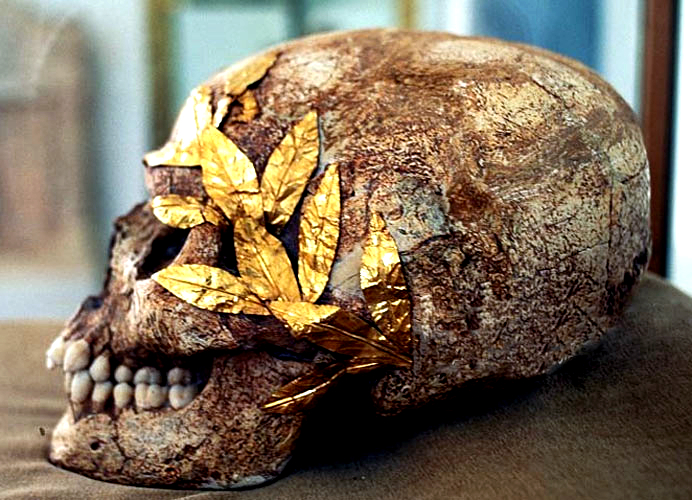

Skull in Agios Nikolaos, Crete

This skull is displayed in Archaeological Museum of Agios Nikolaos, Crete, Greece. The gold wreath of olive leafs suggests that this is the skull of an athlete. The coin in its mouth is from 13-47 CE.29

7. Long-heads in Malta

As in the rest of Europe, in Neolithic times [c. 10,000 BCE to c. 2,000 BCE] Malta was populated by long-head people and these people were of a different subspecies to the round-head Homo sapiens.29 There is so much information about this case of long-head people that it is discussed separately from the other European long-head findings.
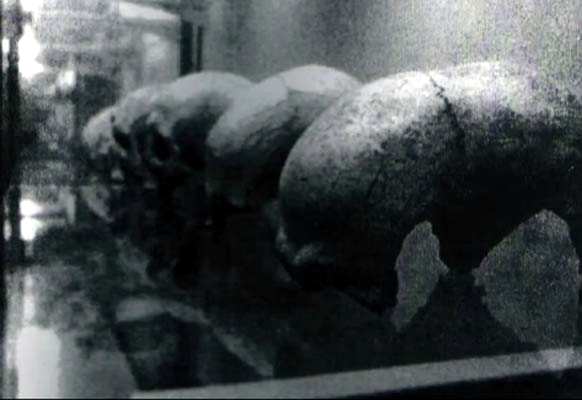

Skulls from the Hypogeum of Hal Saflieni

In 1902 the remains of 7,000 long-head people were discovered at the Hypogeum of Hal Saflieni, an underground temple in Paola, Malta.

The temple is dated to 3,300 – 3,000 BCE but it could have been built as early as 4,000 BCE according to Trump and Cilia (2004, in Ancient Wisdom).16

7.1 The people

The human remains date to about 3,000 BCE (Bradley, 1912).26

Skull characteristics

Below are more findings by Bradley (1912):26

“There are eleven skulls from Hal Saflieni in the Valletta Museum, and the question arises whether we can fit them in to any particular type. Their cephalic indices are as follows: 75.1, 74.4, 72.9, 75.1, 68.5, 76.5, 66.0, 72.1, 70.3, 67.5, one undetermined, but probably below 66. [The indexes of 66 to 68.5 indicate very long skulls compared to the typical dolichocephalic skulls of Neolithic Europe.] All are therefore dolichocephalic except three, which are sub-dolichocephalic. In spite of their dolichocephaly, however, one thing is certain: they have nothing in common with the Cro-Magnon skulls, nor does the stature suggest any such relationship. . . . In general characteristics they seem to approximate most closely to this type of the wider Galley Hill class. A representative specimen is given in Fig. 51. Two, however, have the thick skull, low forehead, prominent brow-ridges, and heavy muscular attachments characteristic of Neanderthal race (Fig. 52), although the excessive dolichocephaly and the convexity of the forehead are foreign to this type. The persistence of such features is not at all strange, as they are found in rare cases even at the present day.” (pp 197-198)

According to Wikipedia:30 Cro-Magnons contributed ancestry to present-day Europeans as of 37,000 years ago. As Bradley (1912)26 concluded that the long-skulls in Malta “have nothing in common with the Cro-Magnon skulls” and that “they seem to approximate most closely to this type of the wider Galley Hill class,” it seems that the ancestry of the long-heads is different to that of other humans as of at least 37,000 years ago. This is consistent with the observation of Sir Arthur Keith (1915),27 referred to above, who said that most of the Palaeolithic Europeans (2.6 millions years — 10,000 years BP), especially of the Aurignacian period (40,000 years — 28,000 years BP), had exceptionally long heads. In fact, as the Galley Hill long skull (discussed above) was dated to 250,000 years BP, it seems that the long-heads and round-heads have been physically and psychologically different for at least the past 250,000 years. This is consistent with fossil and archaeological records showing the existence of Homo sapiens for at least the past 300,000 years.31

Concerning the start of round-head and long-head existence, we can know that it was not through evolution. With reference to the scientific literature, geologist Dr Casey Luskin (2015)32 showed that (a) there are no fossils documenting a transition from ape-like Australopithecus to human-like Homo and (b) this gap is real and not due to a poor fossil record.

In contrast, evidence presented in a future post in this series will show that (a) the Anunnaki (Aryan extraterrestrials) created humans with genetic material from different species, (b) the long-heads were genetically closer to our ET creators than were the round-heads, and (c) the long-heads were up to over half pure Anunnaki.

Books written by doctors Anton Mifsud and his colleague Charles Savona Ventura indicate that the long skulls from Hal Saflieni had drilled and swollen occiputs, suggesting treatment and recovery from traumas, and that these features are similar to those seen in long skulls from other locations.16 As was noted above in relation to trepanation, the medical problems implied by the drilling or cutting of a hole in the skull seem consistent with the known susceptibility of mixed-subspecies (mixed “race,” i.e. hybrids, which is what these round- and long-head people would be according to the Anunnaki method of creating them) people to medical hazards of species / subspecies-mixing.

Social status

The skeletons were likely representative of a group of peoples who were considered important (as attested to by the location of their discovery) and who were closely involved in the activities of the temple builders.16

Stature and migration

Examination of the skeletons indicated that these long-skull people were a subspecies of lower medium height, akin to the early people of Egypt, who migrated westward along the north coast of Africa, to Malta, Sicily, Sardinia, and Spain.16

7.2 The temple


The Hypogeum of Hal Saflieni

The hypogeum is a massive underground structure comprising three levels carved into stone and would have required the removal of over 2,000 tonnes of stone. The temple is aligned to allow illumination of the ‘Holy of holies’ within the heart of the hypogeum by the annual winter solstice sunrise (the shortest day of the year), which would have shone through the entrance and directly onto the furthest parts of the underground complex.16

The hypogeum includes replicas of features from megalithic structures above ground on Malta, has trilithons and ‘doorways’ in the same style as those found in the numerous other temples on the islands, and is similar in design to other large temple complexes on Malta. This indicates that the hypogeum is contemporary with several large temple structures found on Malta. As Maltese temples are often ‘paired’, the nearby Tarxien temple is most likely a partner.16,33
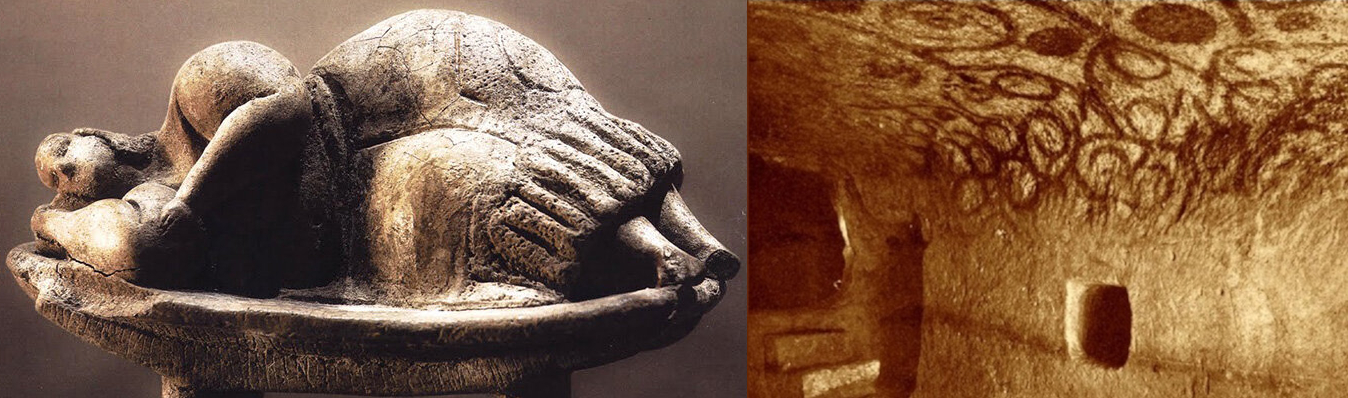

L Sculpture of obese woman, R Painting on wall and ceiling

The temple includes the following features:

Obese woman

The ‘main chamber’ included the terracotta figurine of a reclining obese woman, associated to a relic with a snake inscription on it.16,33 Similarly, carved onto a rock wall situated directly over the trilithon that leads into a small cave is the image of an obese woman holding an axe.16

Meaning

According to Johnson et al. (2020),34 figurines of obese or pregnant women (“Venus figurines”) are (a) among the earliest art in Europe, (b) characterize the period from 38,000 to 14,000 years BP, and (c) are associated with proximity to glaciers, i.e. nutritional stress, regional extinctions, and a reduction in the population. Further to (c), the authors found that figurines are less obese as distance from the glaciers increases, which they interpreted as support for the view that the over-nourished woman was a symbol of survival and beauty during episodes of starvation.

A literature review16 shows that obese women holding axes were found (a) scratched in some ancient tombs in Spain and Portugal, and (b) sculpted and painted in Chieftains Chamber tombs in Champagne, France.

Although the two representations of an obese woman in the hypogeum seem to have been made after the period covered in the above-mentioned study, the meaning is likely similar, i.e. the long-head people in Malta at that time were concerned about food availability and the risk of starvation and defence (obese woman with axe) against such. On a related point, perhaps famine was a causal factor in the huge number of long-head deaths in that location in about 3,000 BCE.

Snake

Meaning

The snake inscription would represent the serpent, which was linked with the Annunaki. Serpent worship was common among ancient peoples. Throughout the world, the serpent was associated with gods and goddesses.35,36

The religion of the long-heads would have been a star-god religion that recalled a visiting star-god. In some variations of this religion, the star-god visited with his companions. The god was known by a variety of names but the description of him and his behaviour was always the same. Similar sky-god symbolism is evident at Avebury (Wiltshire, England), Tiwanaku (Bolivia), Egypt, Babylon, Assyria, parts of Asia, and Central America.35,36

The Ancients linked this god to the Pleiades stars, and some peoples believed that their ancestors came from these stars. As the Pleiades is close to the ecliptic in the constellation of Taurus, it is a spring and autumnal object in both the northern and southern hemispheres. The Pleiades regulated early calendars. Early temples, pyramids, and religious sites were aligned to the rising and setting of the Pleiades. This event marked the end of an era or a new beginning.35,36

The hypogeum also contains a two-metre-deep pit in which snakes might have been kept according to some sources.37,38,39 If that structure was indeed a snake pit, it would be consistent with the serpent worship that was part of this star-god religion.

Paintings

Many different images are painted inside the hypogeum. On the walls and ceilings, ‘spiral’ and ‘floral’ patterns, and pentagons (polygons with five sides and five angles) are painted in red ochre. Variations of the ‘spiral’ and ‘floral’ patterns on walls and ceilings can be seen in different chambers.16,33

In the main hall, painted spirals within pentagons extend to the ceiling, where the spirals are interwoven with a honeycomb pattern. From the ceiling of one chamber, a honeycomb design transforms into a collection of ‘floral’ spirals on the ceiling of another chamber.16,33

On the right hand side wall of the Holy of Holies, a bull is painted in black pigment. The bull resembles the bulls found carved on stone blocks at the Tarxien Temples (an archaeological complex in Tarxien, Malta), dating to about 3,400 BCE40 and is also about the same size.16,33

Meaning

‘Spiral’ and ‘floral’ patterns. Further to the discussion above in relation to the snake / serpent, as this temple was for the long-head people’s star-god religion, the pervasive ‘spiral’ and ‘floral’ patterns in the temple would represent the Pleiades stars.

Pentagons

From Cirlot (1962),41 A dictionary of symbols: Odd numbers and their geometric forms (e.g. three, five, triangle or pentagon) indicate dynamism. Concerning the number five in particular (as in a pentagon), the number five (a) corresponds to the five Elements (four material Elements + spirit or quintessence), (b) it denotes love, health and humanity, and (c) the number five is analogous with the human figure (four extremities + head).

The D&M pyramid in the Cydonia region of Mars illustrates this symbolism.


The D&M pyramid on Mars

This five-sided pyramid is in the Cydonia region of Mars. At its apex there are two 90 degree angles and three 60 degree angles.42

This pentagon (5 sides) pyramid symbolizes a dynamic (interactive, aware / active) relationship with our Creator (all pyramids are about material world – heaven communication) in all things (the five Elements) for the purposes of love, health and humanity.

Honeycomb pattern

The meaning of the honeycomb pattern is closely related to that of the Flower of Life, a sacred geometric figure composed of overlapping circles. The Flower of Life is an ancient symbol, believed to contain the blueprint of all creation, found in various spiritual and religious contexts throughout history, and it represents the interconnectedness of all living things and the divine order of the universe. In some spiritual practices, honeycomb-like hexagonal grids are used to represent this interconnectedness, raise levels of consciousness, and connect with the Divine.43 For example, honeycomb patterns were used in ancient pagan traditions of Europe and the Near East.44

In other words, the honeycomb pattern in the temple amplifies the meaning of the Pleiades and pentagon symbolism in the temple by showing that (a) our connection to the Pleiades stars (representing our creators and ancestry) for the purposes of love, health and humanity (represented by the pentagon) involves (b) an elevated state of God-consciousness.

Bull

This would represent Taurus the Bull, the constellation within which the Pleiades star cluster occurs.

‘Speaking chamber’

The ‘speaking chamber’ is a hole in the wall carved with a rounded interior surface. Anything spoken into the chamber produces an echo that reverberates throughout the hypogeum. It is thought that this chamber was used in ceremonies.

Other small chambers in the hypogeum are also thought to have been used in rituals because echoes from the ‘speaking chamber’ reverberate within those other chambers in a rhythm that is similar to the human heartbeat. It seems that the builders of this temple possessed knowledge of acoustics that enabled them to precisely alter the consciousness of worshippers.16

Meaning

Using frequencies for the purpose of elevating consciousness and connecting to the Divine was an important aspect of ancient culture. This included the wine culture of ancient Sumer. Sumerians and later Assyrians consumed wine to tap into a certain frequency of the vertical plane for this spiritual purpose.45

Similarly, music enabled Mesopotamians to have a direct and intimate relationship with the gods. There were many types of music, songs, rituals, and beautiful chants for each deity at religious occasions to enable such Divine connections. The sounds of musical instruments became associated with the voices of worshipped gods, who were differentiated by their voices. For example, Enki (later known as Ea), god of the deep sea, was associated with the drum, whose sound personified his essence; Ramman, who commanded the thunder and winds, was the “spirit of sonorous voice;” and the goddess Ishtar was represented musically by “the soft reed-pipe.”46

Talented and enterprising people have recreated the melodies of Mesopotamia with the help of ancient musical instruments recovered from burial sites. An example of such recreated music is Hurrian Hymn to Nikkal / No. 6 (1,400 BCE). Imagine the spiritual high of worshippers in the Hypogeum of Hal Saflieni when such music was played in the ‘speaking chamber’!

8. References

  1. Cosmick Traveler. Elongated skulls from Europe.
  2. Graves. R. J. (1834). Remarkable skulls found in Peru, Dublin J of Medical and Chemical Science, 15: 477.
  3. Cosmick Traveler. Elongated skulls: physical features.
  4. Thurnam, J. (1866). Further Researches and Observations on the Two Principal Forms of Ancient British Skulls, J of the Anthropological Society.
  5. Bellamy, P. F. (1842). A brief account of two Peruvian mummies in the Museum of the Devon and Cornwall Natural History Society, Annals and magazine of natural history: including zoology, botany and geology, 10: 96-100, London.
  6. Verma, V. (2023). Seth: Most mysterious Egyptian god with the head of extraterrestrial animal? How&Whys.
  7. Rossetti, C. (2018). Mixed race infants are unhealthy because of complex gene-environment interaction, National Vanguard, 7 Apr 2018.
  8. Health Colombia (2014). Mixed race people are more likely to develop metabolic syndrome, 30 May 2014.
  9. Black Issues (2003). Students of mixed race suffer more health problems, Diverse, 19 Nov 2003.
  10. Thurnam, J. (1861). Examination of a chambered long barrow at West Kennet, Wiltshire. Oxford U.
  11. Deniker, J. (1900). The races of man: an outline of anthropology and ethnography, London: W. Scott.
  12. Fernandes, D., Sirak, K., Cheronet, O. et al. (2019), Cranial deformation and genetic diversity in three adolescent male individuals from the Great Migration Period from Osijek, eastern Croatia, PLOS, 21 Aug 2019.
  13. Veeramah, K., Rott, A., Groß, M. et al. (2018), Population genomic analysis of elongated skulls reveals extensive female-biased immigration in Early Medieval Bavaria, PNAS, 12 Mar 2018, 115 (13) 3494-3499.
  14. Schiller, Francis, (1979). Paul Broca, Founder of French Anthropology, explorer of the brain, Los Angeles: U of California Press.
  15. Osborn, Henry Fairfield, (1918). Men of the old stone age, their environment, life and art, New York: C. Scribner’s sons.
  16. Ancient wisdom. The Hypogeum of Hal Saflieni.
  17. Taylor, Canon Isaac (1891). The prehistoric races of Italy, From the Smithsonian report for 1890, Washington: Govt. printing office.
  18. The Oera Linda Book, English translation by William R. Sandbach, 1876.
  19. Cosmick Traveler. Elongated skulls: A genetic feature.
  20. Hidden Inca Tours (2017). The most amazing Paracas elongated skull found so far: New born baby.
  21. Strange sounds (2016). Skeletons with anomalous large elongated skulls newly discovered in Bolivia, 5 Jul 2016.
  22. Hidden Inca Tours (2017). Possible discovery of ancient mother and baby with elongated heads in Bolivia.
  23. Awake Goy (2017). The most fascinating Paracas mummy found so far: Newborn baby with elongated skull, Jew World Order, 24 Jan 2017.
  24. Gontcharov, I. (2021). Elongated skulls in utero: A farewell to the artificial cranial deformation paradigm? Ancient origins.
  25. Cartwright, M. (2014). Wanka Civilization, World History Encyclopedia, 4 May 2014.
  26. Bradley, Robert Noël (1912). Malta and the Mediterranean race, London: T. F. Unwin.
  27. Keith, Sir Arthur (1915). The Antiquity of man, London: Williams and Norgate.
  28. Wikipedia: White Barrow
  29. Cosmick Traveler. Elongated skulls from Europe: Genocide of the long heads.
  30. Wikipedia: Cro-Magnon
  31. Ragsdale, A., Weaver, T., Atkinson, E. et al. (2023). A weakly structured stem for human origins in Africa, Nature 617, 755–763, 17 May 2023.
  32. Luskin, C. (2015). Abrupt appearance of species in the fossil record does not support Darwinian evolution, Evolution News, 29 Jan 2015.
  33. Black, J. (2014). The Hypogeum of Hal Saflieni and an unknown race with elongated skulls, Ancient Origins.
  34. Johnson, R., Lanaspa, M., & Fox, J. (2020). Upper Paleolithic figurines showing women with obesity may represent survival symbols of climatic change, Obesity, 29 (1): 11-15, 1 Dec 2020.
  35. Farra, L. (2012). The Pleiades enigma, 18 Jan 2012.
  36. Farra, L. (2014). Stonehenge revealed, 9 Nov 2014.
  37. Interesting Engineering (2013). Hypogeum, the underground temple in Malta, 24 Feb 2013.
  38. Jewelbai (2022). Hal Saflieni Hypogeum, 2 Jul 2022.
  39. Papa, R. (2015). The only known prehistoric underground temple worldwide is located in Malta, Learning Mind, 10 Apr 2015.
  40. Wikipedia: Tarxien Temples
  41. Cirlot, Juan E. (1962, extensively revised in 1971). A dictionary of symbols
  42. Haas G. J., Saunders, W. R., Miller, J. S. et al. (2017). Three-sided pyramidal formation in the western region of Candor Chasma, J Space Explor. 2017; 6 (3): 133.
  43. Spiritual meaning of everything (2025). Unlocking the profound symbolism and spiritual significance of the honeycomb pattern in various cultures and belief systems, 27 Jan 2025.
  44. Cralle, T. (2024). The spiritual meaning and symbolism of honeycomb, 27 Mar 2024.
  45. Cherne, O. (2023). The Wine Culture of Mesopotamia
  46. Miri, A. PhD. Ancient Mesopotamian music

9. Appendices

Appendix 1

Graves. R. J. (1834). Remarkable skulls found in Peru. The Dublin J of Medical and Chemical Science, 15: 477:

“A careful examination of these skulls has convinced me that their peculiar shape cannot be owing to artificial pressure. The great elongation of the face and the direction of the plane of the occipital bone are not to be reconciled with this opinion, and therefore we must conclude that the peculiarity of shape depends on a natural conformation. If this view of the subject be correct, it follows that these skulls belonged to a race of mankind now extinct, and which differed from any now existing.”

Bellamy, P. F. (1842). A brief Account of Two Peruvian Mummies in the Museum of the Devon and Cornwall Natural History Society, Annals and magazine of natural history: including zoology, botany and geology, 10: 96-100, London:

“It will be manifest from the general contour of these skulls that they are allied to those in the Museum of the College of Surgeons in London, denominated Titicacans. Those adult skulls are very generally considered to be distorted by the effects of pressure; but in opposition to this opinion Dr. Graves has stated, that “a careful examination of them has convinced him that their peculiar shape cannot be owing to artificial pressure;” and to corroborate this view, we may remark that the peculiarities are as great in the child as in the adult, and indeed more in the younger than in the elder of the two specimens now produced; and the position is considerably strengthened by the great relative length of the large bones of the cranium; and by the direction of the plane of the occipital bone, which is not forced upwards, but occupies a place in the under part of the skull; by the further absence of marks of pressure, there being no elevation of the vertex nor projection of either side; and by the fact of there being no instrument nor mechanical contrivance suited to produce such an alteration of form (as these skulls present) found in connexion with them.”

Ustariz, R., Eduardo, M., Tschudi, J., & Lilly, L. (1853). Peruvian antiquities: 35-38, New York: G.P. Putnam:

“The two crana (both of children scarce a year old) had, in all respects, the same form as those of adults. We ourselves have observed the same fact in many mummies of children of tender age, who, although they had cloths about them, were yet without any vestige or appearance of pressure of the cranium.

More still: the same formation of the head presents itself in children yet unborn; and of this truth we have had convincing proof in the sight of a foetus, enclosed in the womb of a mummy of a pregnant woman, which we found in a cave of Huichay, two leagues from Tarma, and which is, at this moment, in our collection. Professor D’Outrepont, of celebrity in the department of obstetrics, has assured us that the foetus is one of seven months’ age. It belongs, according to a very clearly defined formation of the cranium, to the tribe of the Huancas. We present the reader with a drawing of this conclusive and interesting proof in opposition to the advocates of mechanical action as the sole and exclusive cause of the phrenological form of the Peruvian race.

The same proof is to be found in another mummy which exists in the museum of Lima, under the direction of Don M. E. de Eivero.

It is not possible to explain how, by means of pressure with fillets or bandages, the occipital bone can be transformed to a plane almost horizontal, without producing, at the same time, a considerable declination of the sinciput; which last is entirely wanting in the Aymaraes, and which we yet find in the Huancas, whose occiputs, notwithstanding, show no sign of pressure, not being, by any means, able to preserve their regular inclination as the points of resistance to a frontal pressure.

The considerable extension in length of the frontal bone of the parietals, and of the occipital in the last two races, might sometimes lead one to suspect pressure on the sides; but to this opinion is opposed the inclination of the frontal and occipital bone; but the most effectual proof against the use of mechanical means will, after all, be found in the actual existence of the three races in distinct though limited localities, in which there cannot be found any traces of envelopment or pressure of the head in the newly-born.”

Appendix 2

Children’s skulls can be artificially deformed from about age three months until about age one year, when the anterior and posterior fontanels (soft spots) make the skull amenable to deformation (Winters, R., 2017, Why Did Parents in the Chinookan tribe Perform Cranial Deformation on their Babies? Ancient Origins, 12 Feb 2017). As artificial cranial deformation does not change cranial volume, such craniums look small compared to the craniums of naturally long heads. Methods and results of artificial cranial deformation are shown below.
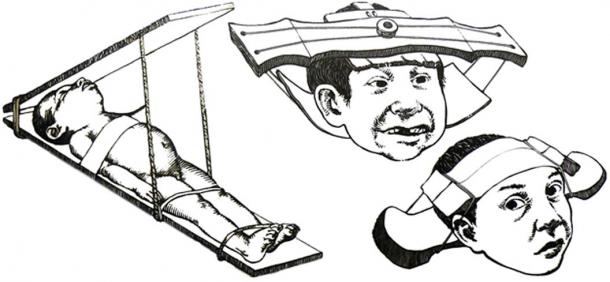


Three methods of cranial deformation
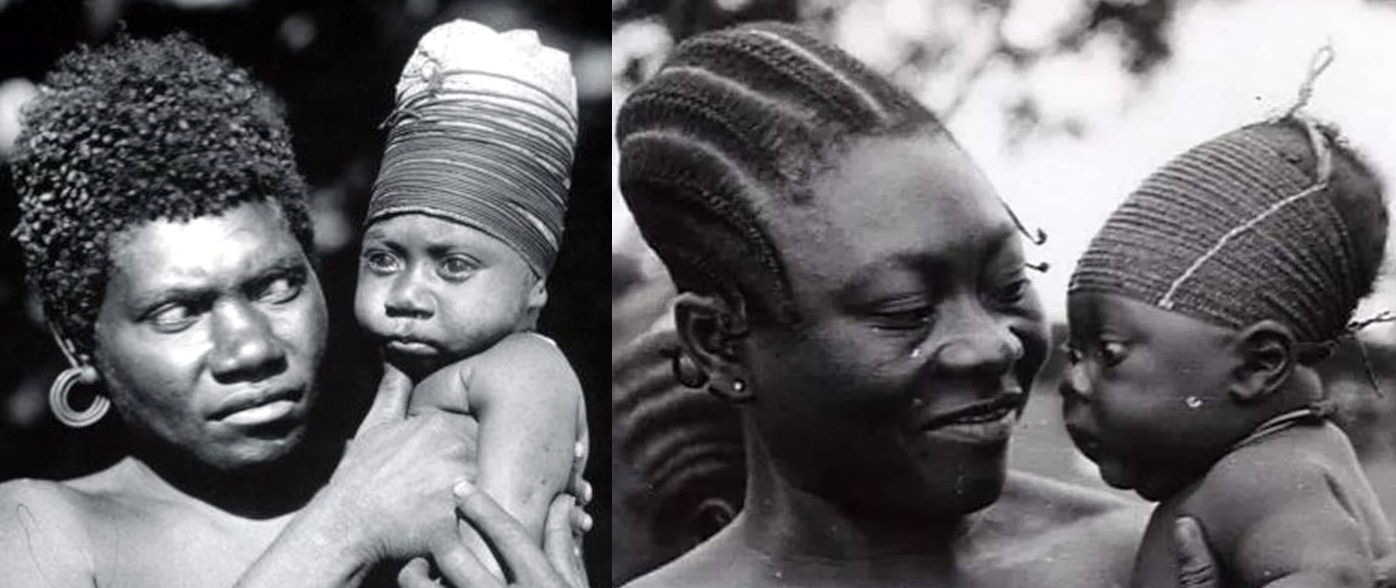

Cranial deformation by head binding
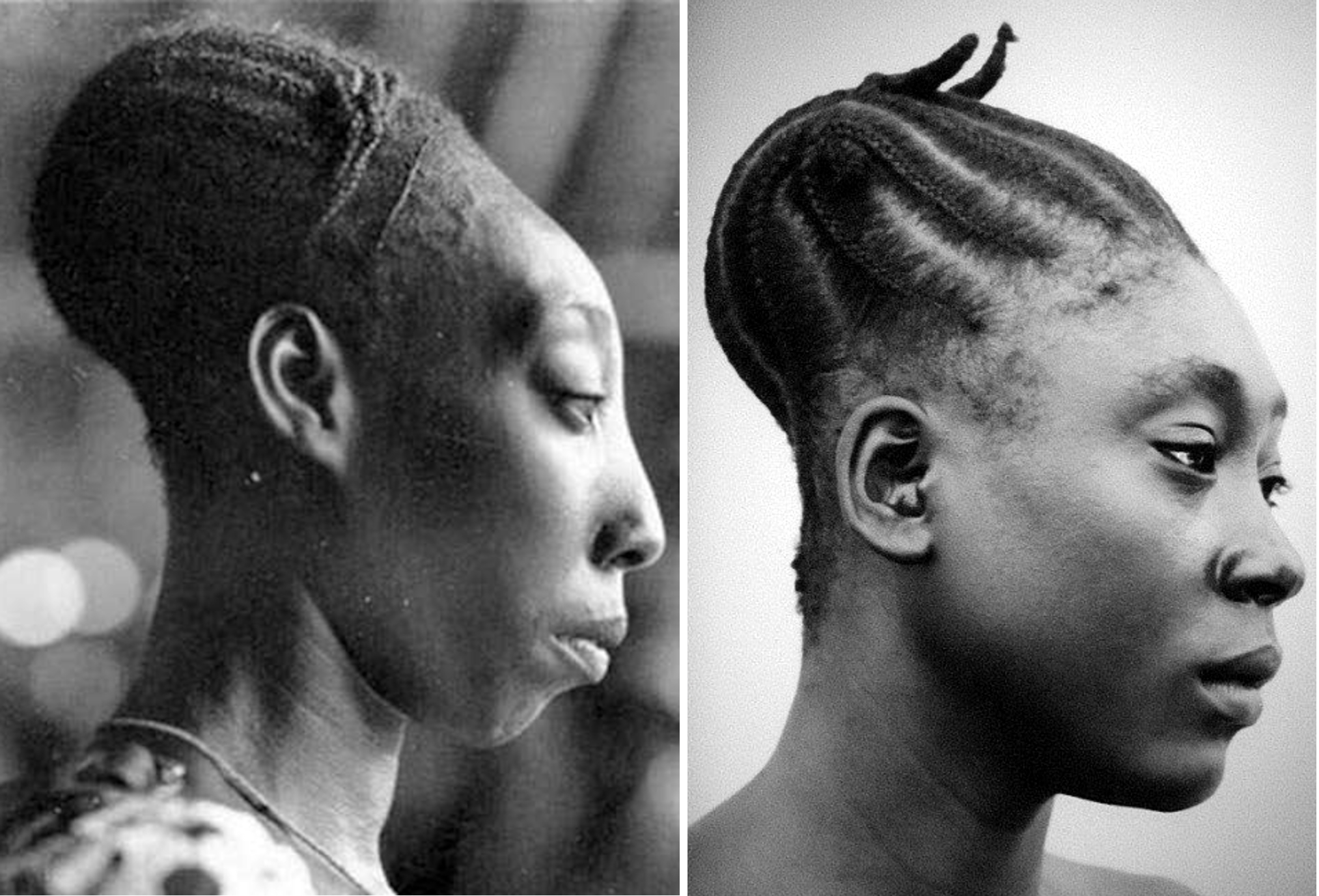

Results of head binding


Family from afar
The Oera Linda Book: Explosive power for Aryans

Post outline

  1. Introduction
  2. Context
    2.1 Climate
    2.2 Religion
    2.3 Yin and yang
  3. Concepts in the OLB
    3.1 Sky god and Earth mother
    3.2 Ethnocentrism
    3.3 Respectful treatment of other groups
    3.4 Freedom
    3.5 Contempt for arrogance
    3.6 Language
    3.7 Other
  4. The destruction of Atlantis
  5. Jessos
  6. References
  7. Appendices

1. Introduction

The Oera Linda Book (OLB)1 resonates with the Aryan psyche like no other. This ancient text offers a blueprint for our spiritual, religious, and political recovery. The OLB is extremely dangerous to the liars, thieves, and murderers presently in control of our societal levers. For example, they have attacked the authenticity of the OLB in Wikipedia (‘jewpedia’).2

It is easy to see why Heinrich Himmler (a German National Socialist politician) was greatly impressed by the OLB and consequently, together with Herman Wirth and Richard Walther Darré, on 4 May 1934, he founded Ahnenerbe (Ancestral Heritage), an organization comprising academics and scientists from a broad range of academic disciplines to investigate the prehistoric roots of the Aryan race.3 More recently, in 1999, Russian political philosopher Alexander Dugin highlighted what any perceptive reader of the OLB can see: the book can easily be transformed into political ideologies that resonate with all Aryans.4

Dr J. G. Ottema (1871, in the introduction to the OLB)1 states the following about the OLB:

  • It is a very ancient manuscript written by generations of a Fryan (named after their deity Frya) family over a period of five centuries as of 1256 BCE. It records a succession of dates and events starting from the destruction of Atland [âldland, old land, in Latin Atlantis] in 2193 BCE. Since time immemorial, the manuscript was preserved in the family of C. over de Linden, Chief Superintendent of the Royal Dockyard at the Helder.
  • The writing bears no mythical character and it has no traces of acquaintance with the Northern or Scandinavian Mythology.
  • It records ideas of religion that are entirely different from the mythology of other nations and in some points is closest to Greek and Roman Mythology.
  • The whole contents of the book are entirely new — there is nothing in it with which we were previously acquainted.
  • The Frisian religion is extremely simple and pure Monotheism: (a) Wr-alda [God] is the only eternal, unchangeable, perfect, and almighty being, (b) He created everything, and (c) out of Wr-alda proceeds everything—first the beginning, then time, and afterwards Irtha, the Earth.

Authenticity

In his presentation at a meeting of the Frisian Society, February 1871, Dr J. G. Ottema said that Dr E. Verwijs had examined the manuscript and immediately recognised it as very ancient Fries, and that Dr J. G. Ottema too was convinced of the document’s great age.1 Evidence cited by Dr Ottema to substantiate his conclusion includes:

  • Origin of the writing. The language used in the first part of the book is very old Fries, even older and purer than the Fries Rjuchtboek or old Fries laws. The locality of this spoken language must have been between the Vlie and the Scheldt.
  • Changes in the writing. Peculiarities of the successive writers show changes in pronunciation that occurred over the five centuries of their writing.
  • Paper and ink. The large size, cotton material, origin of such paper, and type of ink, unequivocally indicate that the manuscript could not have been started later than 1256 BCE.
  • Revealed knowledge. Information in the latter part of the book indicates that the writer was a contemporary of Julius Caesar.
  • Consistency. The accounts never contradict each other and are always consistent with each other in time and place.

2. Context

2.1 Climate


Civilizations as of the New Kingdom of Ancient Egypt

Climate and resource availability are major factors in the rise / fall of civilizations.5 For further evidence of the positive association of nations’ rise / fall with climate, consider the start / end dates of empires as listed on Wikipedia6 in relation to this chart.

The positive association of nations’ rise / fall with climate can also be seen on the larger time-scale of the following chart.


Holocene, great flood, and religious decay

Warm temperatures of the Holocene period spawned agricultural and industrial advances over the past 10,000 years, making modern civilization possible. Since peaking about 8,000 years ago, temperatures in the Holocene have trended downward. According to the OLB,1 in 2193 BCE a great flood occurred and Atlantis sank. This catastrophe was part of what scientists today know as the 4.2-kiloyear (thousand years) BP aridification event,7 one of the most severe climatic events of the Holocene epoch. It involved flooding in some areas and drought in others.

That catastrophic event marked the onset of religious decay as global cooling continued. Donald A. Mackenzie (1915, in Myths of Babylonia and Assyria)8 found that (a) religion in Mesopotamia peaked and started to decline by no later than 2000 BCE and (b) this decline was associated with the arrival in Mesopotamia of Akkadians, a people of Semitic speech with pronounced Semitic affinities, and who from the earliest times were depicted by sculptors as having abundant locks, long full beards, and the prominent distinctive noses and full lips, which we usually associate with the characteristic Jew type.

2.2 Religion

Religious symbols and myths that manifest from a people’s collective unconscious are experiences of deep spiritual realities, consciousness-raising, favourable to life by Nature’s laws, and a coping resource to increase individual and group resilience.9, 10

If the flow of spiritual Force via organic religious roots is corrupted, we can die as a nation, race and species. A viable religion cannot be contrived or forced onto people. The violent imposition of an alien Semitic religion (Christianity) onto Europeans, who in turn corrupted the successful religions of non-Europeans, has had disastrous consequences.

There is no question about the critical importance of organic religion in long-term group survival. The decisive role of viable religion in determining the fate of a community, nation and race is well known to sociologists, e.g. Wallis and Bruce (1992).11


Ice age, great flood, and religious decay

This chart shows the catastrophe of 2193 BCE and the downturn in both global temperature and religion in the wider context of the present ice age.

Within relatively small contexts and time-frames, we can see evidence of cause and effect as it applies to humans. However humans are subject to cosmic processes that are beyond their control and comprehension. Within larger contexts and time-frames (e.g. glacial / inter-glacial periods, geological ages, solar system) the significance of human behaviour vanishes. Everything in our universe is subject to cycles and has a lifespan, including stars, species and civilizations. We can reasonably assume that if our civilization had not decayed via Judaism and its negative expressions (Christianity, Islam, materialism, liberalism, multi-racialism, atheism), it would have succumbed to other similarly-destructive mediating factors. When a system (e.g. tree, human, civilization) nears the end of its life, the universe (God) will have ways to weaken / remove it from the manifest realm of evolution.

2.3 Yin and yang

Yin and Yang is the foundational principle of Chinese philosophy and Chinese medicine. The concept offers a way of understanding the rise / fall of our civilization in conjunction with the rise / fall of global temperatures.

Yin and Yang

  • In Chinese the term Yin means the shady side of the hill, and Yang means the sunny side of the hill.
  • Is a symbol of balanced opposites.
  • Are contradictory and inseparable, e.g. day and night.
  • Are equal — neither is superior.
  • Everything contains a bit of its opposite – shown by two small dots within the Yin and Yang symbol.
  • Can be used to describe any and everything in the universe.
  • Increase in one leads to decrease in the other.

Examples of Yin — Yang: feminine — masculine, moon — sun, passive — active, cold — hot, death — life, young — old, dark — light, negative — positive, lies — truth, ignorance — knowledge.

Evil and good cannot be classified as yin or yang. Appropriate terms would include dark — light, negative — positive, lies — truth, ignorance — knowledge.

Agents of Yin (e.g. Jews, Christians, Muslims, materialists, liberals, multi-racialists, atheists) are neither evil nor good.

Similarly, agents of Yang (e.g. Pagans, nature-lovers, the spiritually enlightened, race realists, National Socialists / supporters of Hitlerism, truth-speakers, activists against the Yin-serving group) are neither good nor evil.

Yin and Yang are equally important aspects of evolutionary (creative) processes.

3. Concepts in the OLB

3.1 Sky god and Earth mother

Sky god


The face sculpture in Cydonia, Mars

These images from NASA,12 taken by Viking 1 Orbiter in 1976, show the face sculpture in the Cydonia region of Mars. The face sculpture is a kilometer wide, and the largest central pyramid is almost ten times larger than the famous pyramid of Cheops in Egypt.13

In natural religion there is a recurring concept of a sky god or sky father, which can be traced to An (Sumerian) and Anu (Akkadian) of the Anunnaki.14 Evidence indicates that the huge face sculpture in the Cydonia region of Mars represents Anu (please see the explanation in Appendix 1).

Other names for the sky god include Horus (Egyptian), Zeus (Hellenic) and Týr (Germanic). In the Oera Linda, the sky god is known as Wr-alda.

From the OLB:

“Wr-alda is the ancient of ancients, for he created all things. Wr-alda is all in all, for he is eternal and everlasting. Wr-alda is omnipresent but invisible, and therefore is called a spirit. All that we can see of him are the created beings who come to life through him and go again, because from Wr-alda all things proceed and return to him. Wr-alda is the beginning and the end. Wr-alda is the only almighty being, because from him all other strength comes, and returns to him. Therefore he alone is the creator, and nothing exists without him. Wr-alda established eternal principles, upon which the laws of creation were founded, and no good laws could stand on any other foundation.” (p 47)

“To Wr-alda’s spirit only shall you bend the knee in gratitude—thricefold—for what you have received, for what you do receive, and for the hope of aid in time of need.” (p 9)

Earth mother

As with the sky god, there are many different names for the Earth mother, dating back to Ki and Ninḫursaĝ (Sumerian). Other names for the Earth mother include Gaia (Greek), Terra Mater (Rome), and Pachamama (Inca). In the OLB, the Earth mother is known as Irtha.

From the OLB:

“It is true that Irtha [the Earth] is named sometimes the feeder of all, because she brings forth all the fruits and grains on which men and beasts are fed; but she would not bear any fruit or grain unless Wr-alda gave her the power.” (p 74)

3.2 Ethnocentrism

Ethnocentrism is the tendency to view one’s group as centrally important and as superior to other groups at the expense of an out-group. It is a universal human reaction found in all known societies, in all groups and in practically all individuals. Everyone learns ethnocentrism while growing up. History for example, is often taught to glorify the achievements of one’s own nation, while religious, civic and other groups disparage their competitors openly. People such as White nationalists who exhibit a healthy and positive evaluation of their own ethnic group are normal human beings. Ethnocentrism is a key mechanism facilitating in-group cooperation. Groups high in ethnocentrism have a “we” feeling; loyalty to comrades; shared ethics and morality; less conflict; high contentment; a positive self-image; pride; love for self and community; and devotion to community, society and country. In-groups do not needlessly hate out-groups or seek to attack them. In-group members concentrate on the performance of altruism within the group rather than aggression toward outsiders unless the competing out-group comes to be seen as a threat.15, 16

The OLB shows that Frisians had healthy levels of ethnocentrism.

Racial and ethnic differences

The OLB describes three archetypal racial figures named Lyda, Finda, and Frya:

“Lyda was black, with hair curled like a lamb’s,” “violent,” “her voice was loud, and when she screamed in anger every creature quailed,” “she had no regard for laws; her actions were governed by her passions,” and “to help the weak she would kill the strong.” (p 7)

“Finda was yellow, and her hair was like the mane of a horse,” “seductive” and “her voice was sweeter than any bird’s,” “her eyes were alluring and enticing, but whoever looked upon them became her slave,” “unreasonable,” “she wrote thousands of laws, but she never obeyed one,” “she despised the frankness of the good, and gave herself up to flatterers,” “she loved nobody but herself, and she wished that all should love her,” “false,” “selfish,” “treacherous,” “one wrong word would irritate her, and the cruelest deeds did not affect her,” and “she wished to rule everybody.” The “fruits of [Finda’s] vanity: the earth overflowed with blood.” (pp 7-8)

“Frya was white like the snow at sunrise, and the blue of her eyes vied with the rainbow,” “beautiful,” “like the rays of the sun shone the locks of her hair, which were as fine as spiders’ webs,” “clever,” “powerful,” “pure,” “sensible,” “wise,” “generous,” and “happy.” “The first lesson that she taught her children was self-control, and the second was the love of virtue; and when they were grown she taught them the value of liberty; for she said, ‘Without liberty all other virtues serve to make you slaves, and to disgrace your origin.’ . . . She never allowed metal to be dug from the earth for her own benefit, but when she did it it was for the general use.” (p 8)

Other (healthy) negative comparisons with groups seen as inferior to Frisians:

  • “Lyda’s people can neither make laws nor obey them, they are too stupid and uncivilized. Many are like Finda. They are clever enough, but they are too rapacious, haughty, false, immoral, and bloodthirsty.” (p 19)
  • “The toad blows himself out, but he can only crawl. The frog cries “Work, work;” but he can do nothing but hop and make himself ridiculous. The raven cries “Spare, spare;” but he steals and wastes everything that he gets into his beak. Finda’s people are just like these. They say a great deal about making good laws, and every one wishes to make regulations against misconduct, but does not wish to submit to them himself. Whoever is the most crafty crows over the others, and tries to make them submit to him, till another comes who drives him off his perch.” (p 19)
  • “. . . the spiteful Finda’s people with their false priests come and attack your ports, ravish your daughters, corrupt your morals, and at last throw the bonds of slavery over every freeman’s neck.” (p 20 )
  • “. . . we must not have anything to do with Finda’s people, wherever it may be, because they are full of false tricks, fully as much to be feared as their sweet wine with deadly poison.” (p 22)
  • “The people of Finda have also their rules and regulations, but these are not made according to what is just — only for the advantage of priests and princes — therefore their states are full of disputes and murder.” (p 23)
  • “Finda’s people are a wicked people, for although they presumptuously pretend among themselves that they are gods, they proclaim the unconsecrated false gods, and declare everywhere that these idols created the world and all that therein is — greedy idols, full of envy and anger, who desire to be served and honoured by the people, and who exact bloody sacrifices and rich offerings; but these presumptuous and false men, who call themselves God’s servants and priests, receive and collect everything in the name of the idols that have no real existence, for their own benefit.” (p 48)
  • “The people who live on the south side of the Mediterranean Sea, come for the most part from Phœnicia. The Phœnicians (Puniers or Carthaginians) are a bastard race of the blood of Frya, Finda, and Lyda. The Lyda people were there as slaves, but by the unchastity of the women these black people have degenerated the other people and dyed them brown.” (p 77)
  • “You must teach the children how great our country has been, what great men our forefathers were, how great we still are, if we compare ourselves to others. . . . You must tell them of the sea-heroes, of their mighty deeds and distant voyages. All these stories must be told by the fireside and in the field, wherever it may be, in times of joy or sorrow; and if you wish to impress it on the brains and the hearts of your sons, you must let it flow through the lips of your wives and your daughters.” (p 5)

3.3 Respectful treatment of other groups

  • No slaves. “Frya has said we must not admit amongst us any but free people; but what have they done? They have imitated our enemies, and instead of killing their prisoners, or letting them go free, they have despised the counsel of Frya, and have made slaves of them.” (p 4)
  • No interference or harm. “Meddle not with the people of Lyda, nor of Finda, because Wr-alda would help them, and any injury that you inflicted on them would recoil upon your own heads.” (p 10)
  • Help if requested but retaliate violently. “If it should happen that they come to you for advice or assistance, then it behoves you to help them; but if they should rob you, then fall upon them with fire and sword.” (p 10)
  • No intervention unless the request is insistent. “If any of our neighbours quarrel and fight about any matter except land, and they request us to arbitrate, our best course will be to decline; but if they insist upon it, it must be done honourably and justly.” (p 18)
  • No involvement in others’ conflicts and problems. “If any one comes and says, I am at war, you must help me; or another comes and says, My son is an infant and incompetent, and I am old, so I wish you to be his guardian, and to take charge of my property until he is of age, it is proper to refuse in order that we may not come into disputes about matters foreign to our free customs.” (p 18)
  • Kindness toward non-Whites at arm’s length. “Ten years after that the seafarers came from Forana and Lydasburgt. They wished to drive the black men, with their wives and children, out of the country. They wished to obtain the opinion of the mother upon the subject. She asked them: Can you send them all back to their country? If so, then lose no time, or they will find no relatives alive. No, they said. Gosa replied: They have eaten your bread and salt; they have placed themselves entirely under your protection. You must consult your own hearts. But I will give you one piece of advice. Keep them till you are able to send them back, but keep them outside your citadels. Watch over their morals, and educate them as if they were Frya’s sons.” (p 54)

Note: The tone of OLB advice on dealing with other groups echoes that which ET Aliens (presumably Tall Whites / Nordics / Pleiadians / Anunnaki) gave Wilbert B. Smith (1910-1962, B.Sc. and M.Sc. in Electrical Engineering, occupied a responsible position in the Canadian government, authored several technical papers, and undertook formal research into the subject of ETs). The ETs told Wilbert Smith that (a) ETs are interested in us and (b) they stand by ready, able and willing to help us, but (c) ETs cannot help us until we are ready for their help, because (d) to intervene before we are ready would be in violation of a universal law against interference in the affairs of others and (e) violation of this universal law leads to suffering.17

3.4 Freedom

  • “Every man knows that he wishes to live free and undisturbed, and that others wish the same thing.” (p 23)
  • “All free-born men are equal, wherefore they must all have equal rights on sea and land, and on all that Wr-alda has given.” (p 13)
  • “Prosperity awaits the free. At last they shall see me again. Though him only can I recognise as free who is neither a slave to another nor to himself.” (p 9)
  • [Wichhirte to Alexander] “Oh greatest of kings, we sailors go everywhere; we have heard of your great deeds, therefore we are full of respect for your arms, and still more for your wisdom; but we who are free-born Fryas children, we may not become your slaves; and even if I would, the others would sooner die, for so it is commanded in our laws.” (p 55)
  • “If by force or necessity any regulations should be imposed upon us at variance with our laws and customs, we must submit; but should we be released, we must always return to our own again.” (p 10)
  • “Our descendants shall teach their people and their slaves the meaning of three words; they are universal love, freedom, and justice. At first they shall shine, then struggle with darkness, until every man’s head and heart has become bright and clear. Then shall oppression be driven from the earth, like the thunder-clouds by the storm-wind, and all deceit will cease to have any more power.” (p 63)

Threats to freedom

  • Defencelessness. “At last they were at a loss themselves for weapons and necessaries, and this difficulty was their punishment. Their bodies were brilliantly adorned, but their cupboards and their sheds were empty. . . . The child asked its mother for food; she had no food to give, only jewels. The women applied to their husbands, the husbands appealed to the counts; the counts had nothing to give, or if they had, they hid it away. . . .” “. . . the Finns came to the defenceless villages and ran away with the children. As they had no good weapons, they lost the battle, and with it their freedom, and Magy became master.” (pp 39-40)
  • Timidity. “The Hindoos are timid and submissive before their princes, like hinds before wolves. Therefore the Yren and others have called them Hindoos, which means hinds. But their timidity is frightfully abused.” (p 72)
  • Traitorous religious figures. “Beloved successors, for the sake of our dear forefathers, and of our dear liberty, I entreat you a thousand times never let the eye of a monk look on these writings. . . . they destroy in an underhand manner all that relates to us Frisians. In order to gain rich benefices, they conspire with foreign kings, who know that we are their greatest enemies, because we dare to speak to their people of liberty, rights, and the duties of princes.” (p 3)

3.5 Contempt for arrogance

  • “The foreign kings, who follow their own will, place Wr-alda below the crown. . . . they had statues of themselves made, and erected in the churches beside the statues of the idols, and those who would not bow down to them were either killed or put in chains.” (pp 74-75)
  • “But it is not only that some of your men have been guilty of stealing titles, I have also much to complain of against your wives. If there are men among you who wish to put themselves on a level with Wr-alda, there are also women who wish to consider themselves equals of Frya.” (p 75)
  • “You all fancy that you are the better for this name-stealing, but you forget that jealousy clings to it, and that every wrong sows the seed of its own rod. If you do not alter your course, in time it will grow so strong that you cannot see what will be the end. Your descendants will be flogged by it, and will not know whence the stripes come. . . . Your ghosts will rise frightened out of their graves.” (p 75)
  • “God’s servants and priests, receive and collect everything in the name of the idols that have no real existence, for their own benefit. They do all this with an easy conscience, as they think themselves gods not answerable to any one. If there are some who discover their tricks and expose them, they hand them over to the executioners to be burnt for their calumnies, with solemn ceremonies in honour of the false gods; but really in order to save themselves.” (p 48)
  • “Among Finda’s people there are false teachers, who, by their over-inventiveness, have become so wicked that they make themselves and their adherents believe that they are the best part of Wr-alda, that their spirit is the best part of Wr-alda’s spirit, and that Wr-alda can only think by the help of their brains.” (pp 47-48)
  • “The Romans, moreover, live at enmity with the Phœnicians; and their priests, who wish to assume the sole government of the world . . . and they have always driven away the Phœnician priests . . . .” (p 77)

3.6 Language

  • “When Wr-alda gave children to the mothers of mankind, he gave one language to every tongue and to all lips.” (p 69)
  • “As thus our language . . . is rightly named the language of the gods, and all those by whom it is held in honour derive honour from it”. (p 69)
  • “. . . you must never allow any language but God’s language to pass your lips, and take care that your own language remains free from outlandish sounds.” (p 70)
  • “If foreigners come to buy ironwares from you, and want to talk and bargain, they must come back to God’s language. If they learn God’s language, then the words, “to be free” and “to have justice,” will come to them, and glimmer and glitter in their brains to a perfect light, and that flame will destroy all bad princes and hypocritical dirty priests.” (p 71)
  • “The deceitful priests and the malignant princes, who always clung together, wished to live according to their own inclinations, without regard to the laws of right. In their wickedness they went so far as to invent other languages, so that they might speak secretly in anybody’s presence of their wicked and unworthy affairs without betraying themselves . . . .” (p 70)
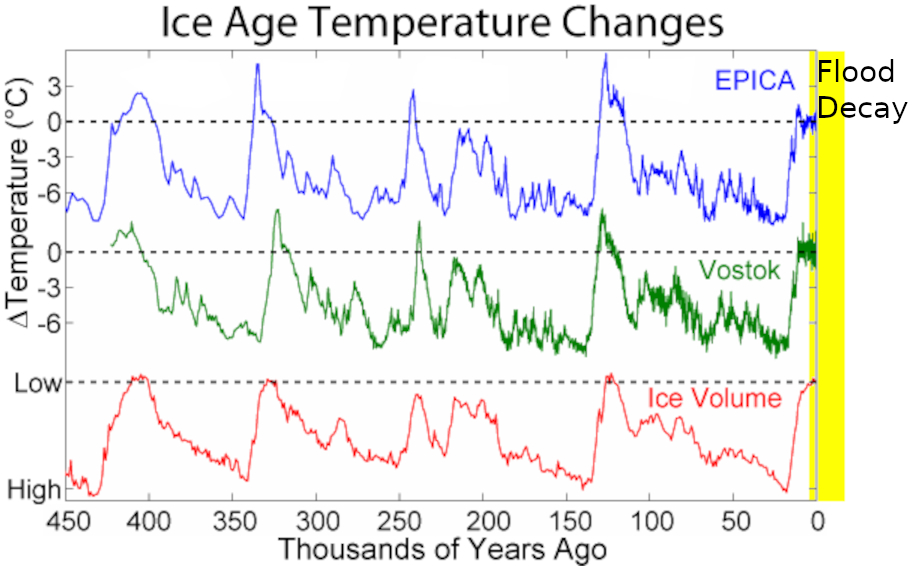
3.7 Other

  • Dishonest foreigners. “Whenever a foreign trader comes to the open markets at Wyringen and Almanland, if he cheats, he must immediately be fined, and it must be published by the maidens throughout the whole country. If he should come back, no one must deal with him. He must return as he came.” (p 18)
  • Ill-treatment in a foreign market. “If we should be ill-treated in a foreign market, whether distant or near, we must immediately attack them; for though we desire to be at peace, we must not let our neighbours underrate us or think that we are afraid.” (pp 18-19)
  • Usurers. “There shall be no usurers in the market. If any should come, it will be the duty of the maidens to make it known through the whole land, in order that such people may not be chosen for any office, because they are hard-hearted. For the sake of money they would betray everybody—the people, the mother, their nearest relations, and even their own selves.” (p 14)
  • Sale of freedom. “If ever it should happen that one of your people should sell his freedom, he is not of you, he is a bastard. I counsel you to expel him and his mother from the land. Repeat this to your children morning, noon, and night, till they think of it in their dreams.” (p 10)
  • Depriving another of liberty. “If any man shall deprive another, even his debtor, of his liberty, let him be to you as a vile slave; and I advise you to burn his body and that of his mother in an open place, and bury them fifty feet below the ground, so that no grass shall grow upon them. It would poison your cattle.” (p 10)
  • Traitors. “If any man should prove a traitor and show to our enemies the paths leading to our places of refuge, or creep into them by night, he must be the offspring of Finda; he must be burnt.” (p 24)
  • The common good. “Whenever new laws are made or new regulations established, they must be for the common good, and not for individual advantage.” (p 16)
  • Wisdom and rectitude. “Eternal and unalterable are the signs wisdom and rectitude, which must be sought after by all pious people, and must be possessed by all judges. If, therefore, it is desired to make laws and regulations which shall be permanent, they must be equal for all men.” (p 19)
  • Education. “The writer must teach the girls to read, to write, and to reckon. The elders, or “Greva,” must teach them justice and duty, morals, botany, and medicine, history, traditions, and singing, besides all that may be necessary for them to give advice.” (p 51)

4. The destruction of Atlantis

The OLB records the destruction of Atland (âldland, old land, in Latin Atlantis) in 2193 BCE. That date is given by the year 1256 of our era, when Hiddo overa Linda made the copy, stating that it was was 3449 years after Atland sank (3449 – 1256 = 2193 BCE).
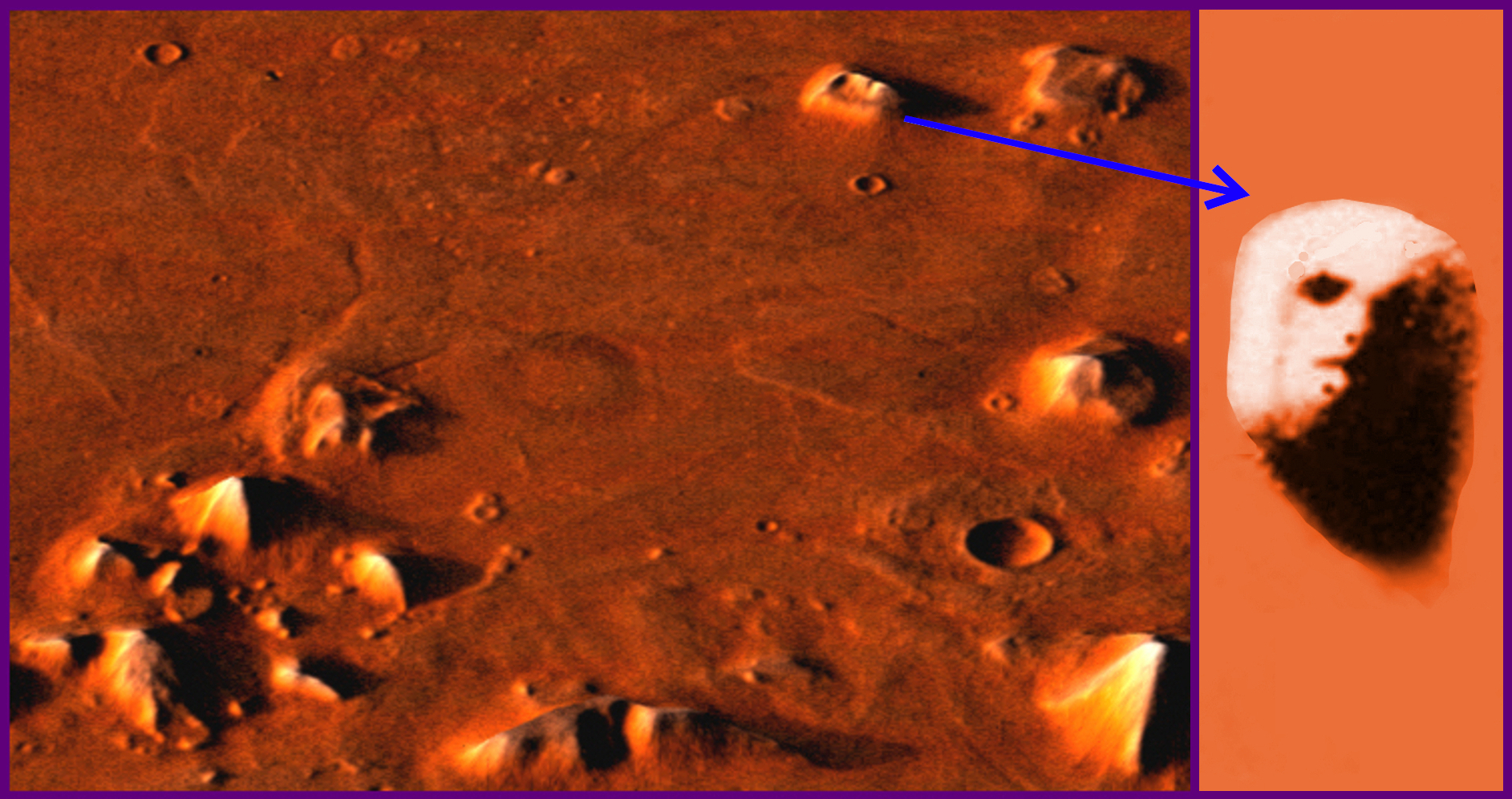
“From this writing it appears that [Atlantis] was land stretching far out to the west of Jutland, of which Heligoland and the islands of North Friesland are the last barren remnants. This event . . . occasioned a great dispersion of the Frisian race . . . . [and] is known by geologists as the Cimbrian flood” (Dr J. G. Ottema, 1871, in the introduction to the OLB English translation by William R. Sandbach, 1876, p 85).1

From the OLB:

“Before the bad time came our country was the most beautiful in the world. The sun rose higher, and there was seldom frost. The trees and shrubs produced various fruits, which are now lost. In the fields we had not only barley, oats, and rye, but wheat which shone like gold, and which could be baked in the sun’s rays. The years were not counted, for one was as happy as another.” (p 26)

How the bad time came

“During the whole summer the sun had been hid behind the clouds, as if unwilling to look upon the earth. There was perpetual calm, and the damp mist hung like a wet sail over the houses and the marshes. The air was heavy and oppressive, and in men’s hearts was neither joy nor cheerfulness. In the midst of this stillness the earth began to tremble as if she was dying. The mountains opened to vomit forth fire and flames. Some sank into the bosom of the earth, and in other places mountains rose out of the plain. Aldland, called by the seafaring people, Atland, disappeared, and the wild waves rose so high over hill and dale that everything was buried in the sea. Many people were swallowed up by the earth, and others who had escaped the fire perished in the water.

It was not only in Finda’s land that the earth vomited fire, but also in Twiskland (Germany). Whole forests were burned one after the other, and when the wind blew from that quarter our land was covered with ashes. Rivers changed their course, and at their mouths new islands were formed of sand and drift.

During three years this continued, but at length it ceased, and forests became visible. Many countries were submerged, and in other places land rose above the sea, and the wood was destroyed through the half of Twiskland (Germany). Troops of Finda’s people came and settled in the empty places. Our dispersed people were exterminated or made slaves. Then watchfulness was doubly impressed upon us, and time taught us that union is force.” (p 27)

“At the time of the submersion of Atland, the first spoke of the Juul [winter solstice, Yule] stood at the top. After that it went down, and our freedom with it. When two spokes, or two thousand years, shall have rolled down, the sons shall arise who have been bred of the fornication of the princes and priests with the people, and shall witness against their fathers. They shall all fall by murder, but what they have proclaimed shall endure, and shall bear fruit in the bosoms of able men, like good seed which is laid in thy lap. Yet a thousand years shall the spoke descend, and sink deeper in darkness, and in the blood shed over you by the wickedness of the princes and priests. After that, the dawn shall begin to glow. When they perceive this, the false princes and priests will strive and wrestle against freedom; but freedom, love, and unity will take the people under their protection, and rise out of the vile pool. The light which at first only glimmered shall gradually become a flame.” (pp 40-41)

“When our land was submerged I was in Schoonland. It was very bad there. There were great lakes which rose from the earth like bubbles, then burst asunder, and from the rents flowed a stuff like red-hot iron. The tops of high mountains fell and destroyed whole forests and villages. I myself saw one mountain torn from another and fall straight down. When I afterwards went to see the place there was a lake there.” (p 59)

“One hundred and one years after the submersion of Aldland a people came out of the East. . . . like the Egyptians, they have priests and also statues in their churches. The priests are the only rulers; they call themselves Magyars, and their headman Magy. He is high priest and king in one. . . . they are slaves to their priests, and still more to their creeds. . . . of Wr-alda’s spirit they know nothing. . . . When they were well established, the Magyars sought our friendship . . . they always kept their people within their own boundaries, and that outwitted our watchfulness. . . . Eighty years afterwards, just at the time of the Juulfeest, they overran our country like a snowstorm driven by the wind. All who could not flee away were killed.” (pp 27-28)

5. Jessos

The OLB (pp 61-62 ) records that at the time Atlantis was submerged, upon a mountain, on a plain called Kasamyr (Cashmere), Jessos was born. His mother was the daughter of a king, and his father was a high-priest. “In order to hide the shame they were obliged to renounce their own blood. Therefore it [Jessos] was taken out of the town to poor people. As the boy grew up, nothing was concealed from him, so he did all in his power to acquire wisdom. His intellect was so great that he understood everything that he saw or heard. The people regarded him with respect, and the priests were afraid of his questions.” (p 61) Jessos wandered about. Wherever he went he taught the people:

  • To not tolerate rich men or priests.
  • To guard themselves against false shame, which harms love and charity.
  • The earth bestows her treasures on those who dig and plough.
  • To sow if they wish to reap.
  • No one is obliged to do anything for another unless it be out of goodwill.
  • Do not seek gold, silver, or precious stones, which causes envy and destroys love.
  • No man is able to make everybody equally rich and happy.
  • But it is the duty of all men to make each other as equally rich and as happy as possible.
  • Men should not despise any knowledge.
  • Justice is the greatest knowledge, because it wards off offences and promotes love.

The priests hated Jessos but the people called him Krishna (shepherd) and his Frisian friend called him Buddha (purse), because he had in his head a treasure of wisdom, and in his heart a treasure of love.

Eventually Jessos had to flee from the wrath of the priests but his enemies followed him like his shadow. Wherever Jessos went, his teaching had preceded him. After traveling like this for twelve years, he died. His friends preserved his teaching and shared it wherever they found listeners.

6. References

  1. The Oera Linda Book, English translation by William R. Sandbach, 1876.
  2. Wikipedia: Oera Linda Book
  3. Der Tag, Berlin, 31 December 1933.
  4. Dugin, Aleksandr (1996). The Racial Archetypes of Eurasia in the Oera Linda Chronicle (1996). Transl. Jafe Arnold) (Absoliutnaia Rodina), Moscow, Arktogeya: 1999, chapter 8.
  5. Cooper, Paul. Fall of Civilizations
  6. Wikipedia: List of empires
  7. Wikipedia: 4.2-kiloyear event
  8. Mackenzie, Donald A. (1915). Myths of Babylonia and Assyria.
  9. Lazarus, Richard, & Folkman, Susan (1984). Stress, appraisal, and coping, New York: Springer.
  10. Lazarus, Richard (1999). Stress and emotion: A new synthesis, New York: Springer.
  11. Wallis, R. & Bruce, S. (1992). Religion and Modernization. Pub. Oxford University Press.
  12. NASA
  13. Petrovych, V. A. & Fedorovich, S. A. (2023). Microrelief of the Martian surface.
  14. Wilkin, Stanley (2019). Jesus and Bel Christianity and the Continuation of Paganism.
  15. MacDonald, Prof. Kevin (2012) Ethnocentrism is normal and rational.
  16. Sociology Guide (2019).
  17. Smith, Wilbert B. (1958). Video: The Ottawa Address, 31 Mar 1958.


7. Appendices

1. Tall Whites on Mars

The Greada Treaty

According to former naval intelligence officer William Cooper in Chapter 12 of his book Behold a Pale Horse (1991), in 1953 astronomers discovered large objects heading toward Earth. Later evidence revealed that the objects could only be spaceships. The spaceships contained Grey ETs and took up a very high orbit around the equator. Through radio communications using the computer binary language, face-to-face contact with the ETs was arranged. Consequently during 1954 these Greys landed at Holloman Air Force Base for a meeting with President Eisenhower and others. At this meeting an agreement known as The Greada Treaty was signed. According to William Cooper, the treaty included the following: (a) We would keep their presence on Earth a secret, (b) They would give us advanced technology and help us to develop technologically, and (c) They could abduct humans on a limited and periodic basis for scientific and medical purposes.

Tall Whites’ reaction to the above

According to William Cooper in Chapter 12 of his book Behold a Pale Horse (1991), when Grey ETs visited Earth in 1953 and 1954, Tall Whites (aka Nordics, Pleiadians, Anunnaki, although these are not necessarily all the same beings — please see Appendix 2) quickly reacted by contacting the US Government, warning against the Grey ETs then orbiting the equator. The Tall Whites offered to help us with our spiritual development. They refused to share their advanced technology with us, saying that we were not spiritually ready for it and would use such technology for destructive purposes.

Literature reviewed by engineer and educator Andrew Johnson (2019) in Acknowledged: A perspective on UFOs, Aliens and Crop Circles indicates that on 20 February 1954 at Edwards (Muroc) Air Force Base, President Eisenhower and others met with two white-haired Tall Whites / Nordics. They had pale blue eyes and colourless lips. These ETs arrived in a bi-convex saucer that stood on tripod landing gear on the landing strip. The Eisenhower administration rejected the Nordics’ offer of spiritual rather than technological help and instead formed the above-mentioned agreement with the Greys.

The Tall Whites’ immediate origin

Their observation of the Greys’ arrival, quick reaction, and speedy visit to Earth suggests that the Tall Whites were relatively close to Earth at that time.

Specifically, evidence suggests that they could have been on Mars:

In May 1984 the US Government discovered an ET race on Mars via the remote viewing (non-local perception, sensing with the mind) of the esteemed remote viewer Joseph McMoneagle. In addition to other features of Mars such as huge dust storms, massive pyramids, megaliths, intersecting roads, and aqueducts, Joseph McMoneagle saw a group of tall and slender humanoids. His description of these ETs seems to suggest that they were Tall Whites.

As will be shown in future posts, the evidence linking Tall Whites (typically referred to as Anunnaki in this context) to both Mars and Earth is now compelling, and includes (a) matching human/oid-made structures on Mars and Earth, (b) matching symbolism of those structures, (c) physical remains found on Earth of fair-skinned, blonde- and red-haired humanoids with substantially larger-than-human cranium capacities (superior intelligence), (d) related evidence indicating the historic presence of highly-advanced Aryan-type ETs on Earth, and (e) a genetic link between those ETs and humans. As the Anunnaki sky god is An (Sumerian) and Anu (Akkadian), (Stanley Wilkin, 2019, University of London, Jesus and Bel Christianity and the Continuation of Paganism) and the huge Face sculpture faces the sky, logically, the Face sculpture is most likely an Anunnaki representation of Anu.

2. German crews of ET-type craft

There is reason to believe that the beings who are variously referred to as Tall Whites, Nordics, Pleiadians, and Anunnaki are not all the same beings. For example, Ernst Zündel’s (1974) carefully researched book UFOs: Nazi secret weapon? suggests that Germans are pursuing the Aryan cause secretly with advanced technology from bases on Earth and perhaps elsewhere. This seems to explain (a) the reported encounters with German-speaking / looking anti-gravity craft crews who do not fit the usual picture of ET Alien encounters and (b) the onset of those ET-type encounters — they only occurred post-WW2. For example, it is written that in 1959, three large newspapers in Chile reported front-page articles about encounters with UFOs that seemed to be crewed by German soldiers, and in the early 1960s there were reports in New York and New Jersey of ET-type flying saucers crewed by ‘aliens’ who spoke German or English with a German accent.

New Order

Quotes from the website of New Order, one of the most enlightened, educational, and practically useful sites of its kind that I have ever seen:

  1. “Every age on Earth is represented by a name, by an extraordinary figure who appears but once in thousands of years to give mankind a new symbol, a new law to guide and inform its destiny. . . . The great figure and archetype of our age is Adolf Hitler.” — New Order
  2. “The prerequisite for action is the will and the courage to be truthful.” — Adolf Hitler
  3. “All roads lead to Hitler — or they lead nowhere.” — Matt Koehl
  4. “National Socialism is infinitely more than a mere political creed; the fact is that it is a way of life . . . .” — Savitri Devi
  5. “It is the mission of NEW ORDER electronic services . . . to uphold and advance the Cause of Adolf Hitler and his Cause without fear or favor, and to show how unique and special this man and this Cause are.” — from the mission statement of New Order
  6. New Order is “a National Socialist organization that is a revolutionary idea, a spiritual faith and a great historical Movement.” — New Order
  7. “Life without purpose is mere existence. As such it has no meaning or value. It is worthless. It is of no consequence. It doesn’t count.” — Matt Koehl
  8. “Today most people exist as mere protoplasmic blobs. Spiritually and actually they are zeroes, nobodies – zilch.” — Matt Koehl
  9. “These walking dead have but one concern: to “feel good,” “be happy,” and go along with the brainless herd. But that is not a purpose – it is merely an excuse for somnambulism and selfishness. It has no enduring value for the future.” — Matt Koehl
  10. “Today’s artificial, materialistic, politically correct, neo-Bolshevik, hee-haw society can, in fact, offer no higher purpose. It can only serve up decadence, degeneracy, disintegration, alienation and ultimately – death.” — Matt Koehl
  11. “There is an alternative, however. There is a purpose that can transform mere existence into real, creative living and give meaning to the life of the individual.” — Matt Koehl
  12. “If you would like to find out more about a great historic movement of White men and women working to build a better future, contact us today.” — New Order

Five questions

Question 1. What do Christards, Libtards, Climate-Clowns, Covidiots, and Vaxxtards have in common?

Answer. They are all suckers for mass jew bullshit.

Question 2. Remembering the hostility of suckers toward those of us who saw through jews’ lies and deception, including the pan-vaxx control / cull op,

Should we encourage surviving suckers to go for “boosters?”

Answer. It’s not necessary. Those suckers are so devoid of critical thinking ability that they line up for “boosters” and other “vaccines” as often as they can.

Question 3. Why did no Odinists (European pagans, like me) fall for the ever-so-obvious jew lies and deception?

Answer. In contrast to Christ-insanity, which promotes a feeble slave mentality, Odinism promotes intelligent thinking and independence.

Question 4. Why are there no Libtard Odinists?

Answer. In contrast to Christ-insanity, Odinism is not universalistic. It promotes respect and appreciation for all races and cultures, including White people.

Question 5. Should we be sad or glad that the jew is wiping out the suckers?

Answer. Grief is inevitable, even when the suckers effectively chose suicide by freely rejecting the abundant expert medical advice against pan-vaxx. However we might feel about it, Nature is brutal on those who are not survival-fit.


To the wisdom of our Creator!

New Dawn

As other people will also have noticed — and this was entirely foreseeable — the jew is acting crazily as his JWO plans fall apart. We are witnessing a violent end to the Abrahamic Dark Age. Survivors will be fully into the Golden Age before the end of this solar cycle peak.

Keep going

The increased suicide rates since the intensified jew attack is bullshit. Do not hang, shoot, poison, jump etc on account of problems caused by the ugly vermin afflicting our people. Keep going.

You never know what’s around the next corner. However bad and hopeless the situation might seem now, keep going.

As per the teachings of our true religion (paganism, Odinism in the case of Europeans), if our purpose is true, we stand up and return from defeat, and we continue until successful.

As the Hávamál states, “… of what gain is a good man dead?”

Yule

I again wish you a blessed Yule!

FWIW, I will celebrate Yule quietly on my own, in nature. As the sun rises, I will thank God for all that He has provided to sustain my life — the sun, water, air, plants, insects, birds, mammals, fish, and all the people I’ve known and loved. Then I will raise a glass of home-made wine in gratitude.

At home I will light a candle for each of my loved ones (people and pets) who have passed on during recent years.

Incidentally, I used to have special people with whom to celebrate Yule but now they are dead. I have loved ones who are still alive in this realm but they are Christ-insane and not interested in religious truth.

Future posts

I intend posting an article on the Oera Linda Book early in the New Year. If you don’t already know, this ancient book is of explosive significance to us.

I also intend finally posting the 12 articles on the reality of our gods in the New Year.

My work on those articles was delayed by personal circumstances but I am now back on the case.

Wishing you and your loved ones a happy New Year!

AoM


Thank God we are not jews or Christ-insane!

Yule Blessings

Blessings to you from the Earth Mother.
Blessings to you from the Sky Father.
Blessings to you from the Great Spirit.
May you have a wonderful Holiday.
The time has come for the sun to be reborn.

What is Yule?

  • Yule is an ancient multi-day Pagan winter solstice festival dating back thousands of years (long before jews invented Christianity).
  • Yule (21 or 22 Dec in the Northern Hemisphere, 20 or 21 June in the Southern Hemisphere) is an important Pagan holiday.
  • We celebrate the longest night of the year, the shortest day, the return of the sun, and the eventual return of spring, life, and fertility.
  • Yule is a bright, light-filled feast with friends, family and loved ones.
  • It is a perfect reminder in the dark depths of winter that light and life are always present.
  • The word Yule may have Anglo-Saxon origins relating to the word wheel in reference to the sun’s cycles. [The solar wheel is referred to below.]
  • Christmas is a perverse corruption of Yule.
  • Celebrate Yule with insight, at the correct time of the year and in the correct manner, for enormous power of our true culture.

How is Yule celebrated?

Feasting

  • Farmers slaughter cattle and hunters provide boar and stag for feasting.
  • Wine, beer, and other spirits created in the previous six months are consumed.
  • Plenty of wheat products are eaten. This includes breads, cookies, and cakes.

Evergreen Trees

  • Evergreen trees are valued at Yule because they represent protection, prosperity, and the continuity of life.
  • The evergreen trees remind us that although everything seems dead, life continues.
  • People hang gifts for the gods in the groves of evergreen trees and shrubs.

Yule Log

  • The oak tree is considered the most potent force because it is a strong and solid wood that represents triumph and victory.
  • Pagans light bonfires during Yule and these are typically made of oak wood.
  • The fire is kept burning at a slow rate for 12 days and then the ashes are sprinkled in the field for good luck.

Plants and Berries

  • Plants like mistletoe, ivy, and holly are brought indoors to assure safety to the residing woodland spirits over the harsh winter months.
  • In particular, ivy stands for healing, fidelity, and marriage, and is fashioned into crowns, wreaths, and garlands.
  • Druids greatly value the power of mistletoe and they dance around oaks that bear mistletoe.

Symbols of Yule

The symbols are of fertility, life, renewal, and hope. In addition to the above-mentioned symbolism:

  • Colour. The main colours are red, green, and white. The holly’s red berries mean blood of life, the mistletoe’s white berries stand for purity and necessity of wintertime, and green symbolizes continuity of life.
  • Holly. The masculine element and protection (due to the prickliness of the leaves).
  • Yule Tree. The Tree of Life. It is decorated with symbols of deities, as well as natural objects such as pine-cones, fruit, candles, and berries.
  • Wreaths. These symbolize the cyclical nature of the year and also friendship and joy.
  • Carol singing. People go from door to door singing songs. In return, they are given a small gift as a symbol of blessings for the new year.
  • Bells. Bells are rung to ring away the darkness of winter, and to welcome the sunshine of spring.

From Solar Wheel to dynamic Solar Wheel, i.e. Swastika.

The Swastika is a geometric symbol found in nearly all ancient societies. The Swastika is a form of Solar Wheel. Like the Solar Wheel, it is (a) a type of cross, (b) a symbol of the supreme deity and (c) a symbol of spiritual enlightenment. In addition, the Swastika denotes rotation about an axis and swift movement, i.e. dynamism.

A Pagan Yule song: Solstice Carole
Lively Celtic music: The Laxey Reels (Laxey is in Isle of Man)

Keep the yid out of Yule.

Design a site like this with WordPress.com
Get started