
Pleiades — central to our true religion
Previous posts in this series:
Family from afar 1: Long-heads of Europe
Family from afar 2: Long-heads of Asia
Unless otherwise indicated, the images presented below are from Cosmick Traveler.1,2
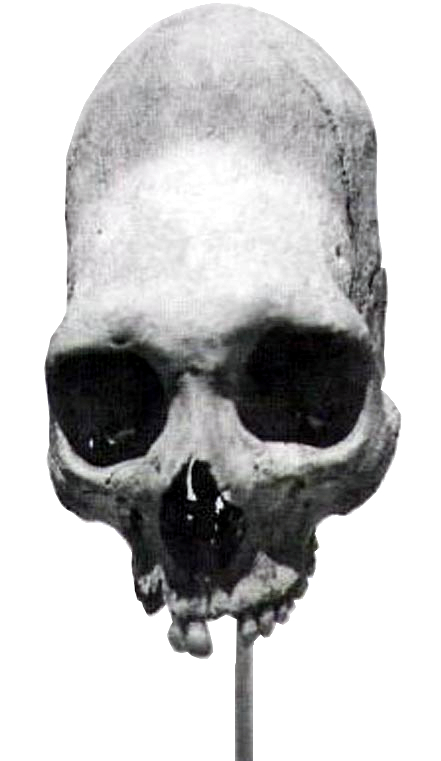
Long skull found at Lake Superior
This skull was found at Lake Superior Copper Mines, USA.1
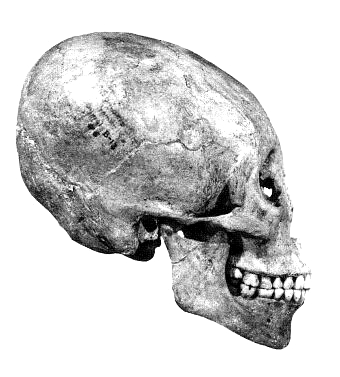
Sanders Mound long skull
This skull was excavated ca. 1932 in Lamar County, Texas, USA.1 It has a brain capacity of about 2000 cc, which is a significantly larger brain capacity than occurs in normal humans. The skull does not show any evidence of artificial cranial deformation.3 Further, the length of the interparietal bone (os interparietale or Inca bone or os inca var.), a dermal bone situated between the parietal and supraoccipital, and which gives this skull its length, is genetically determined.4
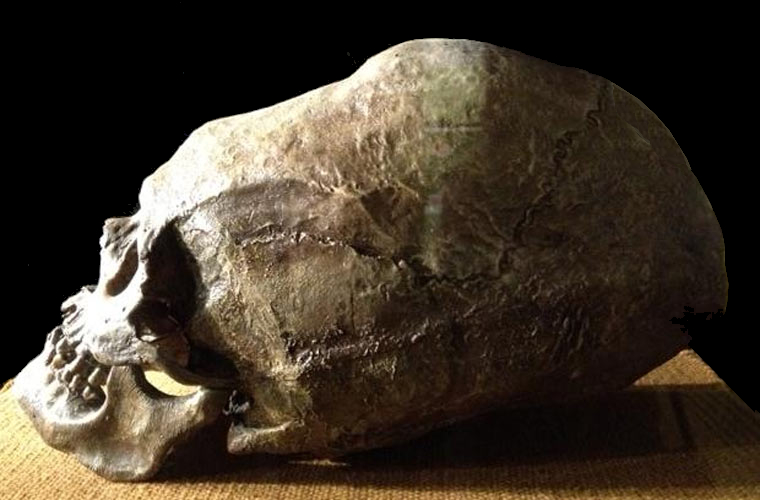
Long skull in Cusco, Peru
I could not find more information about this skull.
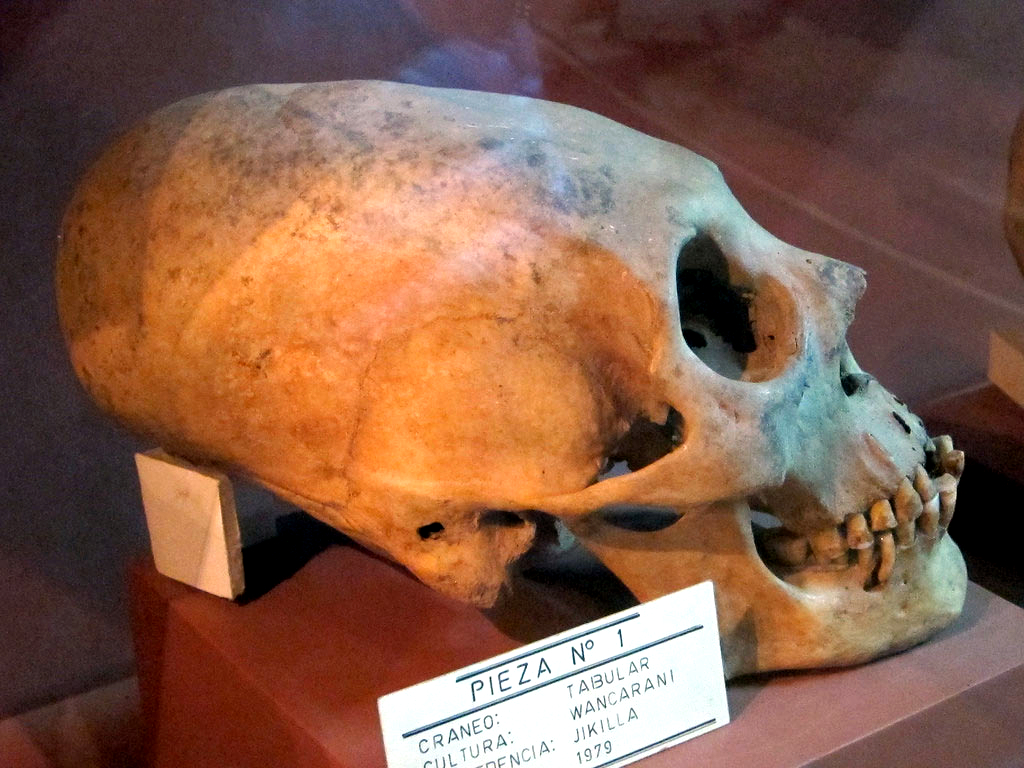
Long skull in Oruro, Bolivia
This long skull is in the Archaeological Museum in Oruro, Bolivia. The skull is of the Wankarani culture, a group that lived south of Lake Titicaca some 1,000 years BCE.5
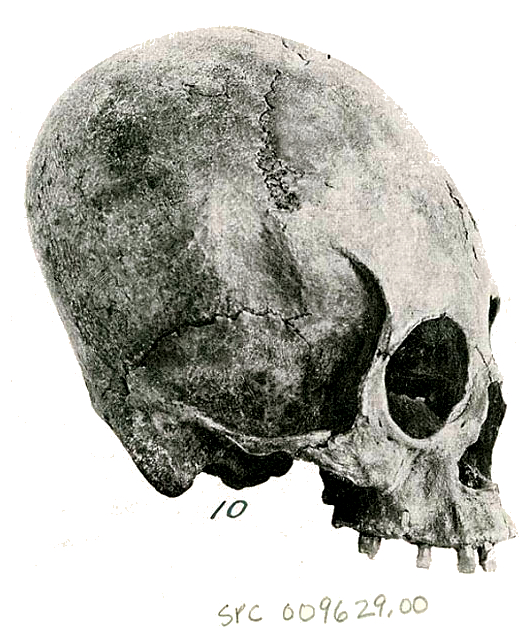
Long skull in Argentina
This is an old photomechanical print from National Anthropological Archives, Smithsonian Institution, showing a Diaguita skull from Argentina.2 The Diaguita culture existed from 300 to 700 CE.6
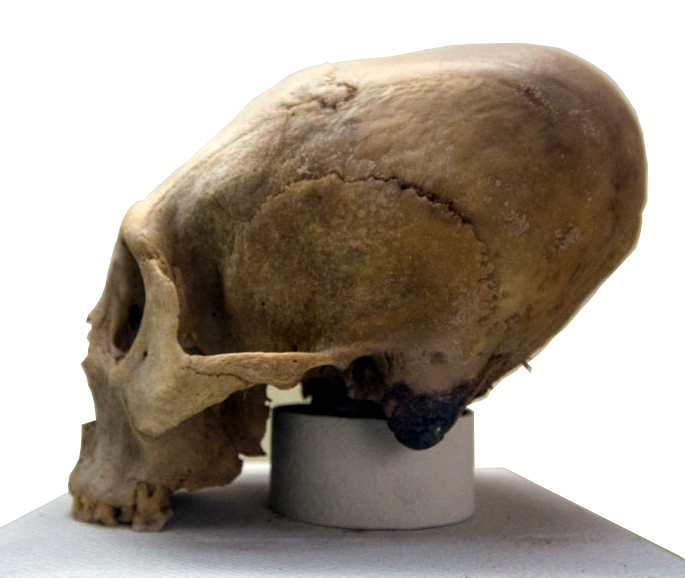
Long skull in Chile
This long skull is in the Museo Regional de Iquique, Chile.2 The skull dates to 500-1000 BCE.7
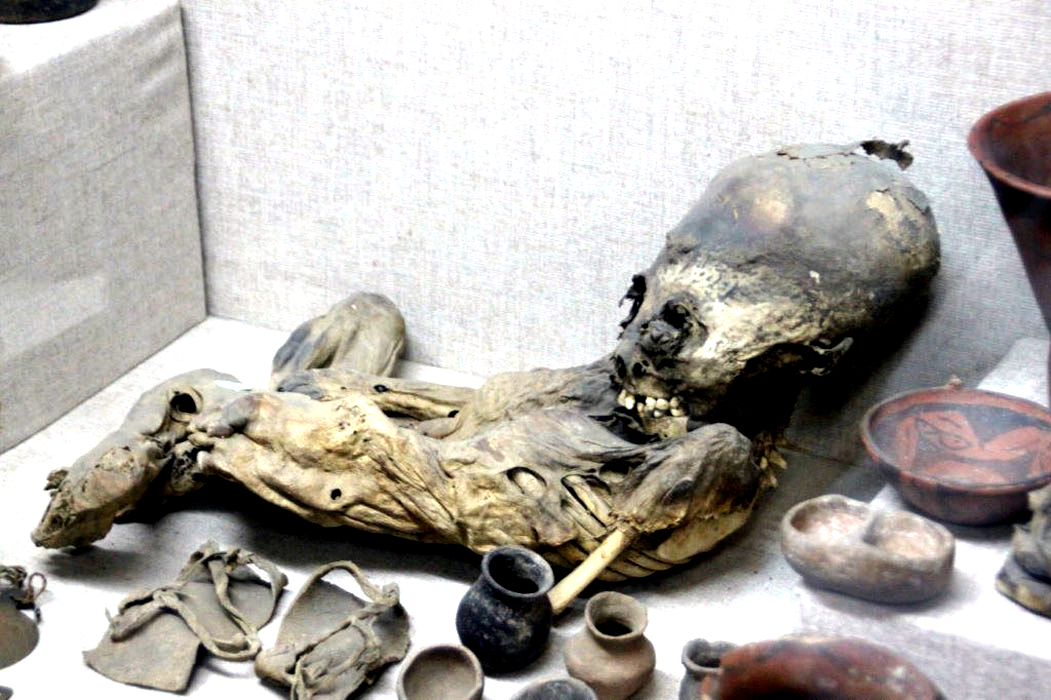
Long-skull skeleton in Bolivia
This long-skull skeleton is in the Cochabamba Archaeology Museum, Bolivia.2

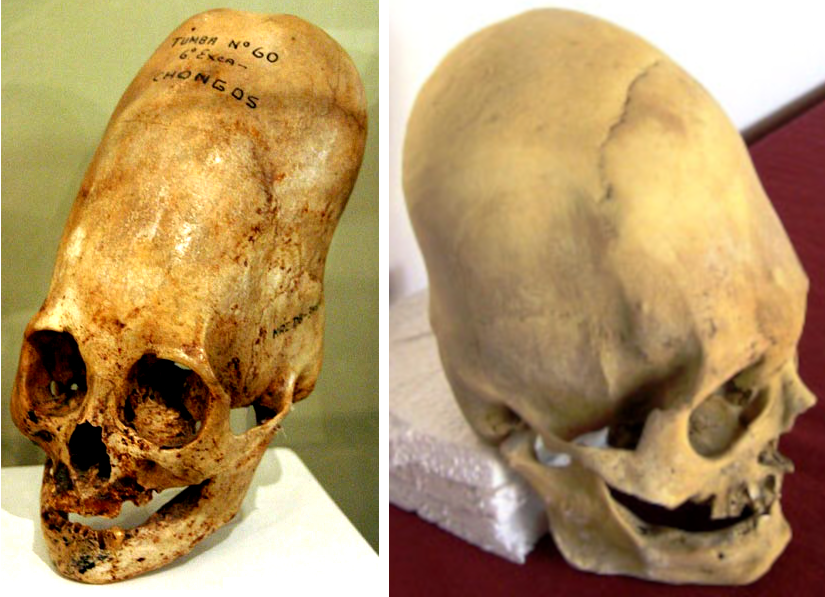
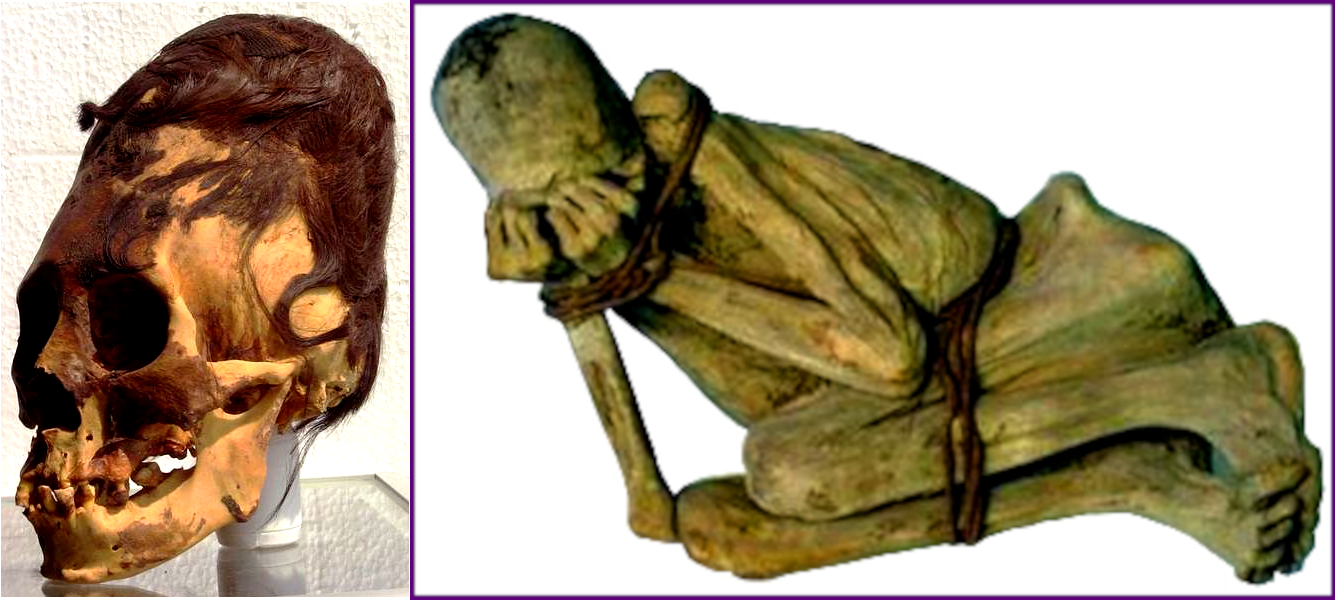
Long-skull Paracas remains
Shown in the above images are some of the long skulls and full body remains from the Paracas desert of Peru.
In 1928 the archaeologist Julio C. Tello discovered a cemetery in the Paracas desert of Peru containing over 300 skulls. Studies of these Paracas skulls showed that they are:
- Dated to about 1,000 BCE in some cases.
- The largest long skulls found anywhere on Earth.
- At least 25% larger and up to 60% heavier than normal human skulls.
- Not artificially deformed by techniques (head binding or head flattening) used by some tribes.
- Structurally different to normal human skulls — (a) only one parietal plate (normal human skulls have two), (b) the foramen magnum (hole in skull through which spinal cord passes) is back towards the rear of the skull (in a normal skull it is closer to the jaw line) and also smaller than normal, and (c) some of the Paracas skulls have a very pronounced zygomatic arch (cheek bone), different eye sockets, and no sagittal suture (connective tissue joint between the two parietal bones of the skull).
- Genetically very different to humans and (a) the mitochondrial DNA (inherited from the mother) in hair samples showed a Haplogroup (genetic population group) found most frequently in Eastern Europe, and at a low frequency in Western Europe and (b) a similar analysis of bone powder from the most elongated skull showed a Haplogroup that originates in Mesopotamia,8 i.e. where the Nephilim lived according to ancient Sumerian and biblical texts.
- Dark red and blond-haired. This is consistent with the DNA results — red hair originates in Europe and the Middle East. Also, their red / blond hair is 30% thinner than native American hair.8,9
- Nephilim and Nephilim x human hybrids.8
According to biologist Brien Foerster (2018)10 the Paracas were a royal family, had light-coloured skin, probably sensitive eyes, and they lived in underground houses due to the extreme sunshine.
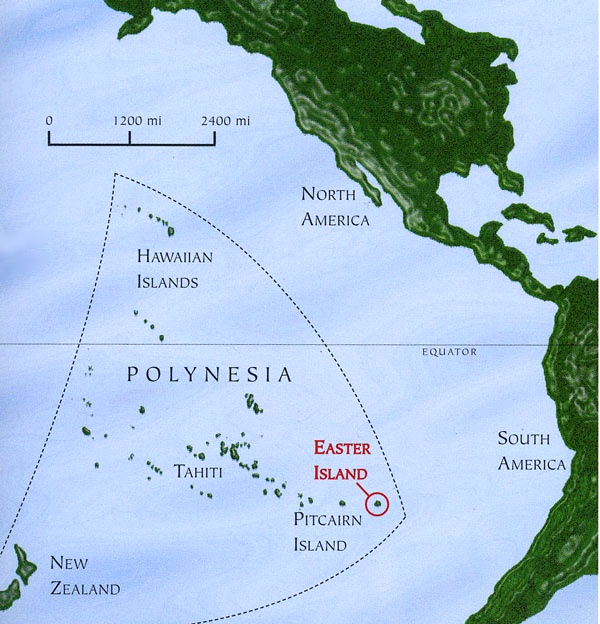
Easter Island in relation to South America
When English geographer, explorer and writer Sir Clements Robert Markham addressed the Royal Geographical Society in 1870, he explained that when the Spanish conquered
Tiwanaku (archaeological site in western Bolivia), they found ruined platforms, similar to those of Easter Island (Rapa Nui), and that on them were enormous, ornate, long-eared statues wearing crowns.11
Mrs Scorseby Routledge (one of the first scholars to visit Easter Island) and others visited Easter Island in 1913 and saw that there were two races of people on the Island: (a) tall, red-haired, white-skinned people with European features, their ears stretched down to their shoulders with discs or chocks in their earlobes, and in some cases wearing white feather headdresses, and (b) Polynesian people. The two races were known as the Long Ears and the Short Ears.11
According to the Island’s legends, the first migration came from the east (South America) and the second from the west (the direction of Polynesia). For reference, there was a widespread custom of ear extension in South America. For example, the Incan nobility, also stretched their ears and wore discs in their earlobes. In other words, Long Ears were the first people on the island (Thor Heyerdahl, 1978, Early Man and the Ocean, in Farra, 201511).
Note: The custom of ear extension could have been an Aryan influence as it was so widespread. For example, ear extension was also evident in Moche culture (Peru), a gold disc was worn in the ears of Mayan rulers, men and women in India wore ear plugs, some Melanesian tribes deformed their ear lobes, and many African tribes stretched their ears and often wore a disc in them. Similarly, Buddha is depicted with long ears.11
Further evidence of the South America – Easter Island connection: (a) Easter Island’s sweet potato came from the Andes and its tapioca also came from South America; (b) some of the Island’s stonework is the same or similar to that of early Peru; (c) in particular, the Cyclopean work of the burial platforms is identical to that of Cuzco (including colossal stones as in the old temple of the Sun in Cuzco) and the adjacent regions in the Andes; and (d) the Island’s stone towers are similar to those found in the Titicaca basin, Bolivia (Thor Heyerdahl, 1978, Early Man and the Ocean, in Farra, 201511).
According to Jean Michael Schwartz (1979, The Secrets of Easter Island, in Farra, 201511), the tall long-head, white people with European features, who the Spanish first encountered in the Incan empire, were said to be the survivors of the race which preceded the Incas and who built Tiwanaku.
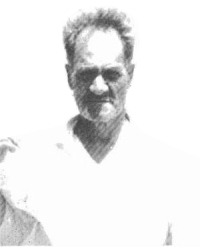
Nicolas Pakomio of Easter Island in 1964/5
Image credit: Robert Langdon, 1995, The significance of Basque genes in Easter Island prehistory, Rapa Nui Journal: Journal of the Easter Island Foundation, Volume 9, Article 3, Issue 1, March 1995.12
Nicolas Pakomio, an Easter Island resident, is pictured above at about age 67. He was photographed during the Canadian Medical Expedition to Easter Island in 1964-65. Researchers who met Mr Pakomio in 1964-5 described him as having blue eyes, red hair, and fair skin. This photograph and information about Mr Pakomio is included in an article by Robert Langdon (1995).12 Although the article does not refer to Mr Pakomio’s long head, it is clear from the photograph that Mr Pakomio is descended from a race of long-head people.
The history of Easter Island indicates that Mr Pakomio’s ancestors would have been a race of long-head Aryans in South America. Specifically, the information of Jean Michael Schwartz (1979, The Secrets of Easter Island, in Farra, 201511) referred to above suggests that Mr Pakomio is descended from survivors of the race which preceded the Incas and who built Tiwanaku.
On a related point, this picture of Nicolas Pakomio is the most recent example I have seen of a living Aryan person with such a pronounced vertically-orientated long skull. Normally such skulls are only seen in museums. It is also notable that Mr Pakomio has the characteristically strong Aryan jaw seen in long skulls found all over the world.
References
- Cosmick Traveler. Elongated Skulls from North America.
- Cosmick Traveler. Elongated Skulls from South and Middle America.
- Greater Ancestors (2011). Sounders Mound elongated skull, 27 Dec 2011.
- Ghost hunting theories (2017). Where the Giants Lived: Evidence of Their Presence, 11 Aug 2017.
- Foerster, Brien (2017). Massive Elongated Humanoid Skulls Of Oruro Bolivia, Hidden Inca Tours.
- Wikipedia: Diaguita
- Wikipedia: Deformed craniums
- Holloway, April (2016). New DNA Testing on 2,000-Year-Old elongated Paracas skulls changes known history, Ancient Origins, 23 Jul 2016.
- Gaia (2017). What are the Paracas skulls? Explore the ancient mystery, 22 Sep 2017.
- Megalithic Marvels (2018). DNA results released from the Paracas elongated skulls, 3 Feb 2018.
- Farra, Leonard (2015). Easter Island Revealed.
- Langdon, Robert (1995). The significance of Basque genes in Easter Island prehistory, Rapa Nui Journal: Journal of the Easter Island Foundation, Volume 9, Article 3, Issue 1, March 1995.

Family from afar
 Aspects of Mind
