By Marduk Abzu, DSc, educator and consultant on climate.
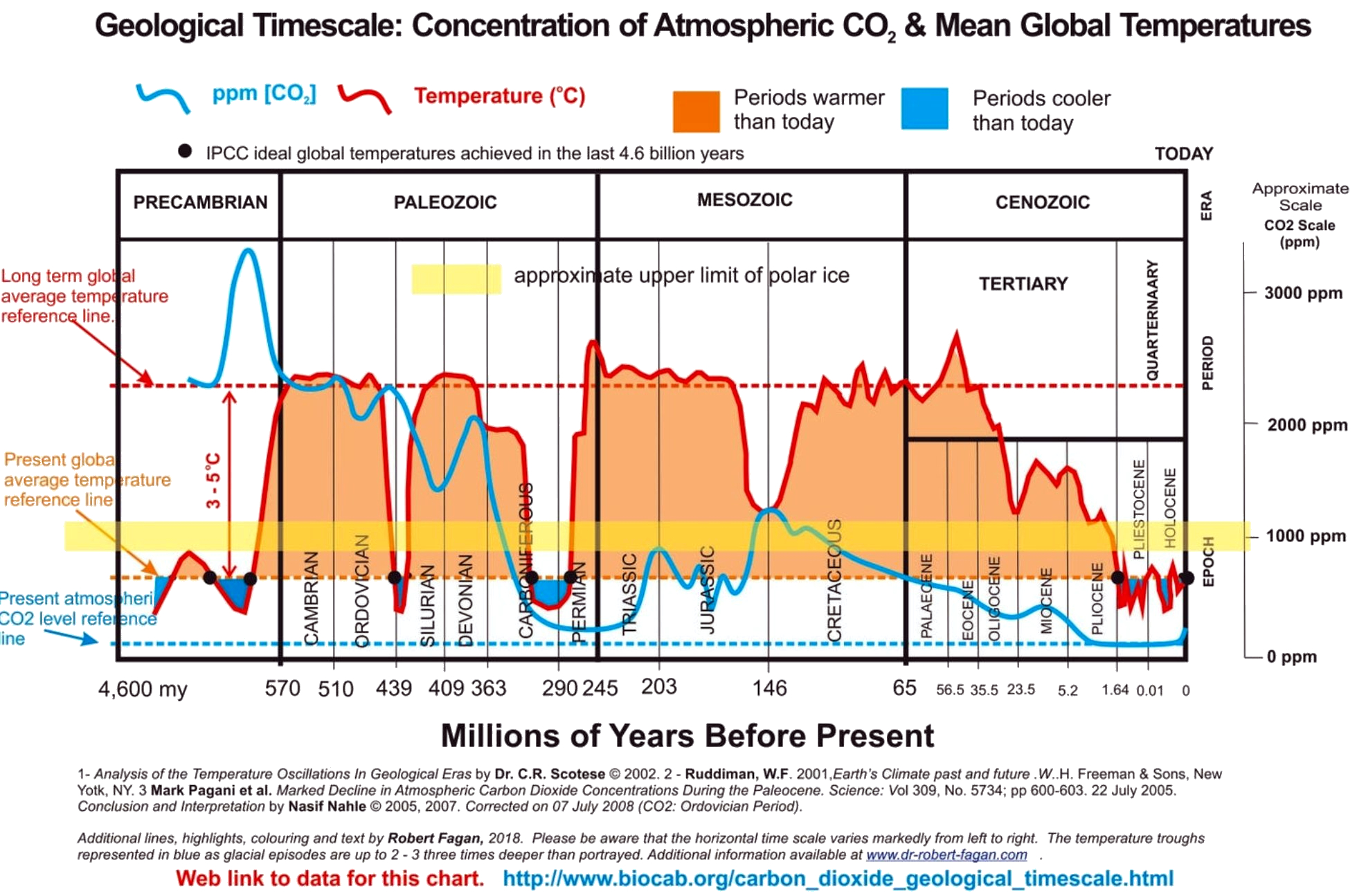
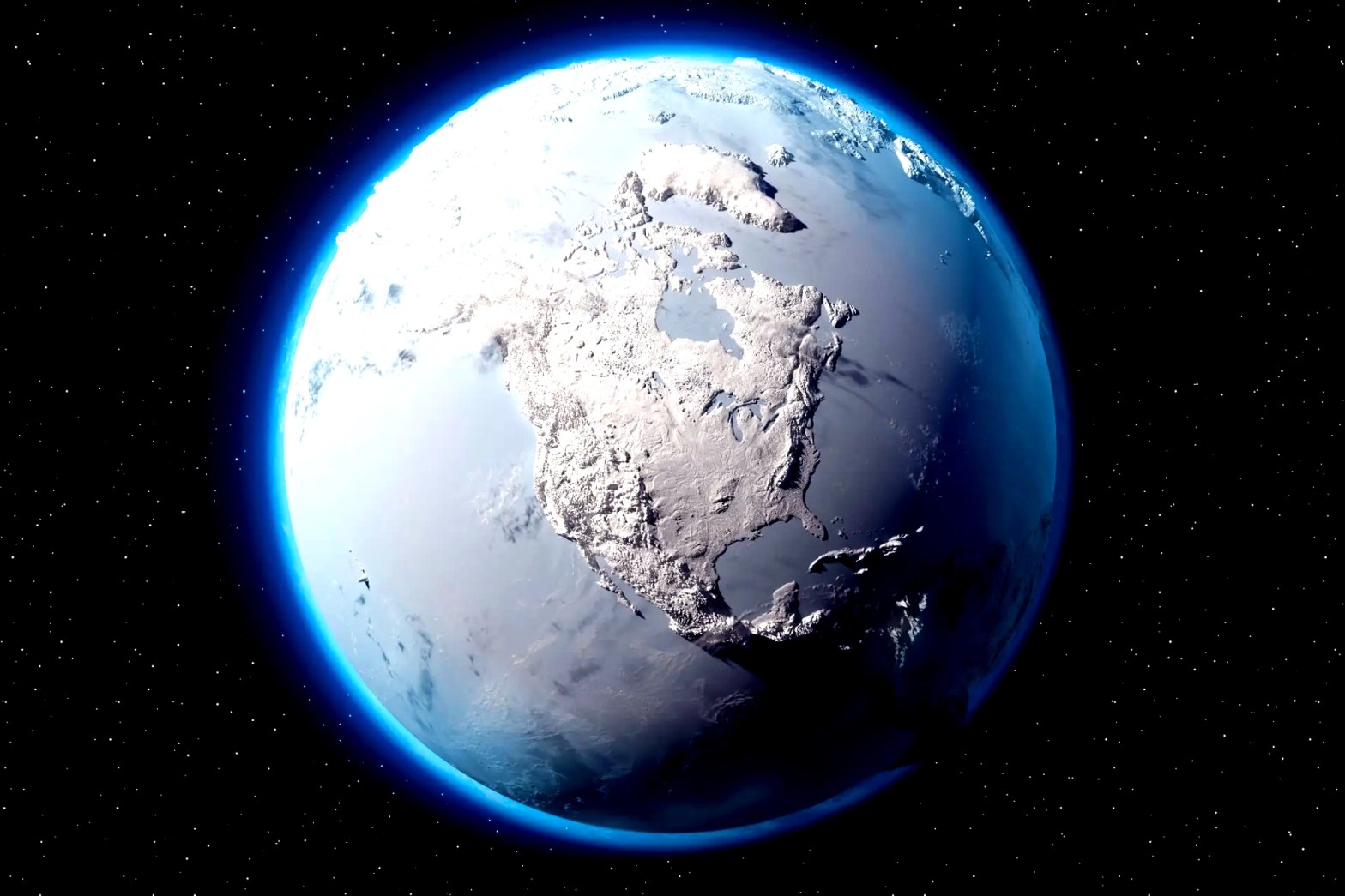
600 million years ago, the planet we call Earth emerged from an event that geologists refer to as Snowball Earth. Due to the complete absence of fossils, it was concluded that the whole planet was covered in ice and snow, all the way to the equator, for over 100 million years.
Since then, there have been four major temperature decreases, at approximately 150-million-year intervals: 450 million years ago (mya), 300 mya, 150 mya, and now! The present temperature decrease started around 50 mya. Then, 30-40 mya, the planet entered an ice age when permanent ice caps became evident.
What causes ice ages?
There is no known mechanism of the sun’s activity that can explain ice ages. Therefore, ice ages must be due to an influence from outside the solar system.
Is such an influence known? YES!
The sun’s orbit of the galaxy
In addition to Earth orbiting the sun, the sun, with its system, orbits the centre of the galaxy, independently from the rotation of the galaxy. The sun follows a sinusoidal path through the plane of the galaxy. As it passes through the plane, interstellar dust reduces solar radiation reaching Earth’s surface. This causes minor extinction events at approximately 30-million-year intervals.
Further, as Earth orbits the galaxy, it periodically passes through the arms of the galaxy. During these passages, interstellar dust attenuates solar energy reaching Earth to the extent that an ice age ensues. This may be accompanied by increased earthquake and volcanic activity caused by gravitational effects and also increased frequency of meteor strikes. The period of this orbit is 600 million years.
Milankovitch cycle
The other major influence is the Milankovitch cycle, which has a period of around 100 thousand years. This cycle is caused by the combined effects of the variation of Earth’s orbit from elliptical to nearly circular, and the ‘wobble’ of Earth’s axis.
A Milankovitch cycle has two periods: a glacial period and an inter-glacial period. The glacial period lasts around 85,000 – 90,000 years and the inter-glacial period around 10,000 –15,000 years. Earth is currently transitioning from inter-glacial to glacial.
Brief warming before the plunge
Paradoxically, as the climate transitions to a glacial period, it always gets warmer briefly before temperature starts to drop rapidly. This has been ascertained from deep seabed and deep lakebed core drillings covering the last one million years, or 10 Milankovitch cycles.
The mechanisms
Environmental events of the inter-glacial period cause this warming. As glaciers retreat at the end of a glacial period, they leave behind vast quantities of very finely ground rock dust of multiple types. This rock dust is superb fertilizer, especially for trees. However, during the inter-glacial period, the rock dust gets gradually washed down through the soil to a point when it becomes inaccessible to tree roots. The trees then start to suffer malnutrition and starvation. Further, the weakened trees are more susceptible to disease and infestation. This in turn causes them to transpire less water.
One mature tree can transpire 150,000 litres of water per year. This transpiration causes cooling of the atmosphere. (That’s why Napoleon had trees planted alongside French roads, to provide shade and cooling for his armies to march in comfort.) If this effect is multiplied by trillions of trees worldwide, the effect is cooling of the whole planet. Remove trees and the climate heats up. Remove them totally and a hot desert can result. There’s no shortage of examples of that. Therefore, at the end of an inter-glacial period, when the trees are suffering and dying, the climate always heats up.
Typical effects of a transition
Typical effects of an approaching transition:
- Worldwide and widespread forest fires, due to the trees transpiring less water and being drier.
- Increased earthquake and volcanic activity, due to the changes in loading on the tectonic plates, caused by ice melt.
Earthquake activity has increased tenfold since 1972.
Speed of the transition
In the past, the transition from inter-glacial to glacial has occurred in as little as 20-50 years. The present transition has already been in progress for at least 20 years. As the transition progresses, the changes accelerate. Winters start sooner and finish later, so summers become shorter. Snow lasts longer, and as snow reflects the sun’s radiation, this causes additional cooling and accelerates the whole process. The process is exponential, so the acceleration increases rapidly.
But what about CO2?
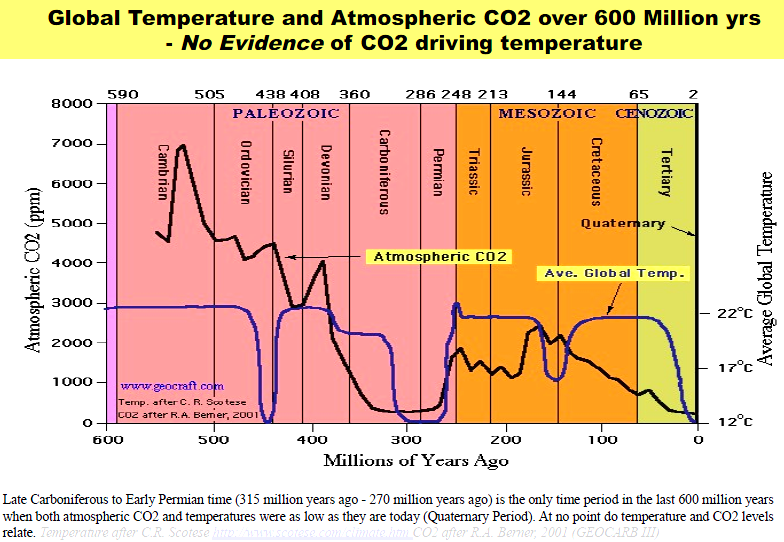
Despite us being told that “the current rise in global average temperature is primarily caused by humans burning fossil fuels since the Industrial Revolution” (Wikipedia article on Climate change), what does the evidence say? As the above graph shows, there is no evidence of carbon dioxide driving temperature.

Rinda, goddess of the frozen earth
Rinda (also known as Rind and Rindr) rules over the rune Is, which represents the element Ice. It is a rune of stopping activity, movement with irresistible force (as in a glacier) and deceptive depth (as in an iceberg).
 Aspects of Mind